Hoi An to Nha Trang

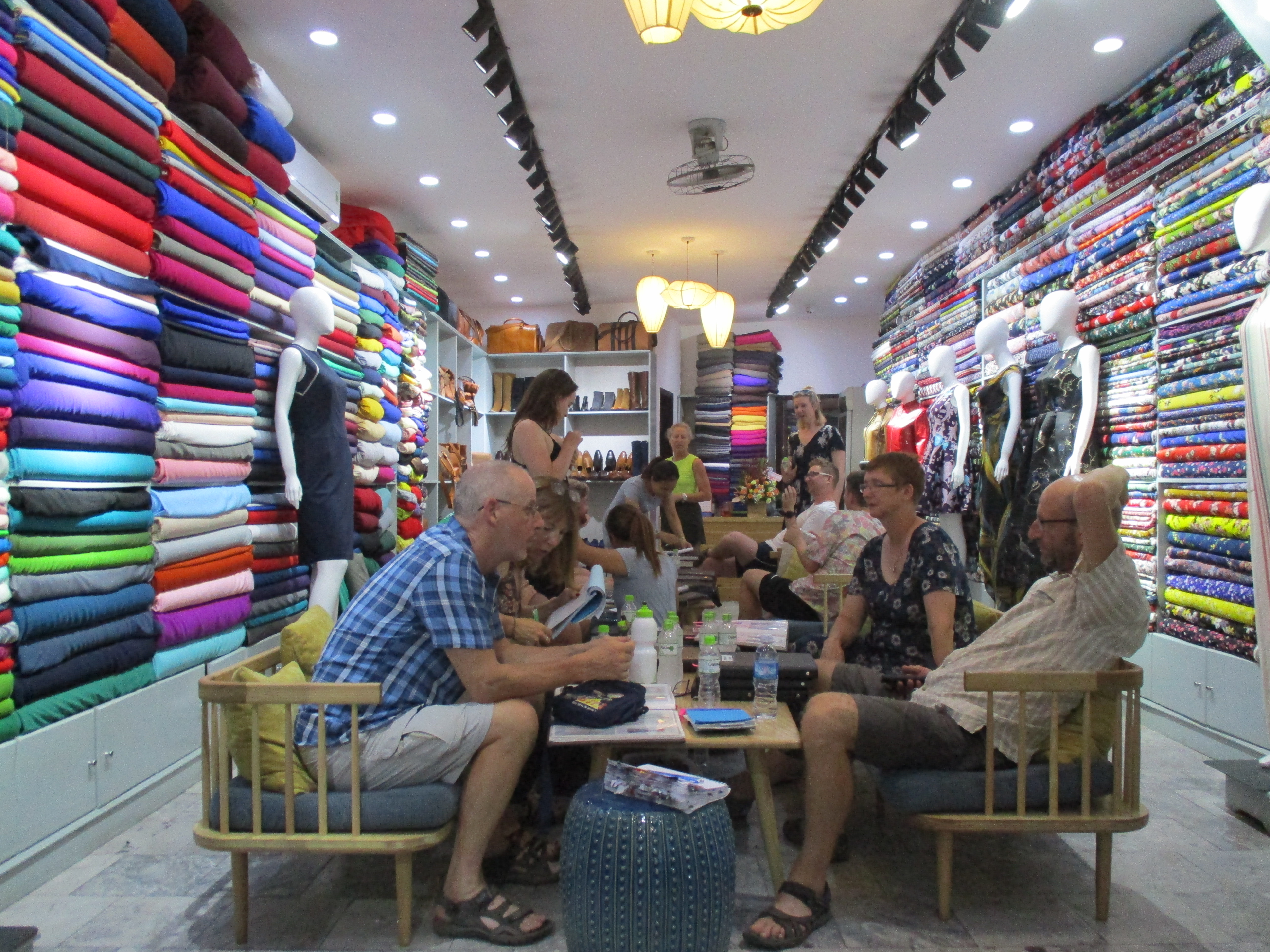
We had a rest day in quaint and touristy Hoi An to enjoy the history, shopping, and beach. Several folks had clothes made, which required fittings. Hoi An is renowned for its overnight custom clothing trade, and there are hundreds of tailor shops.
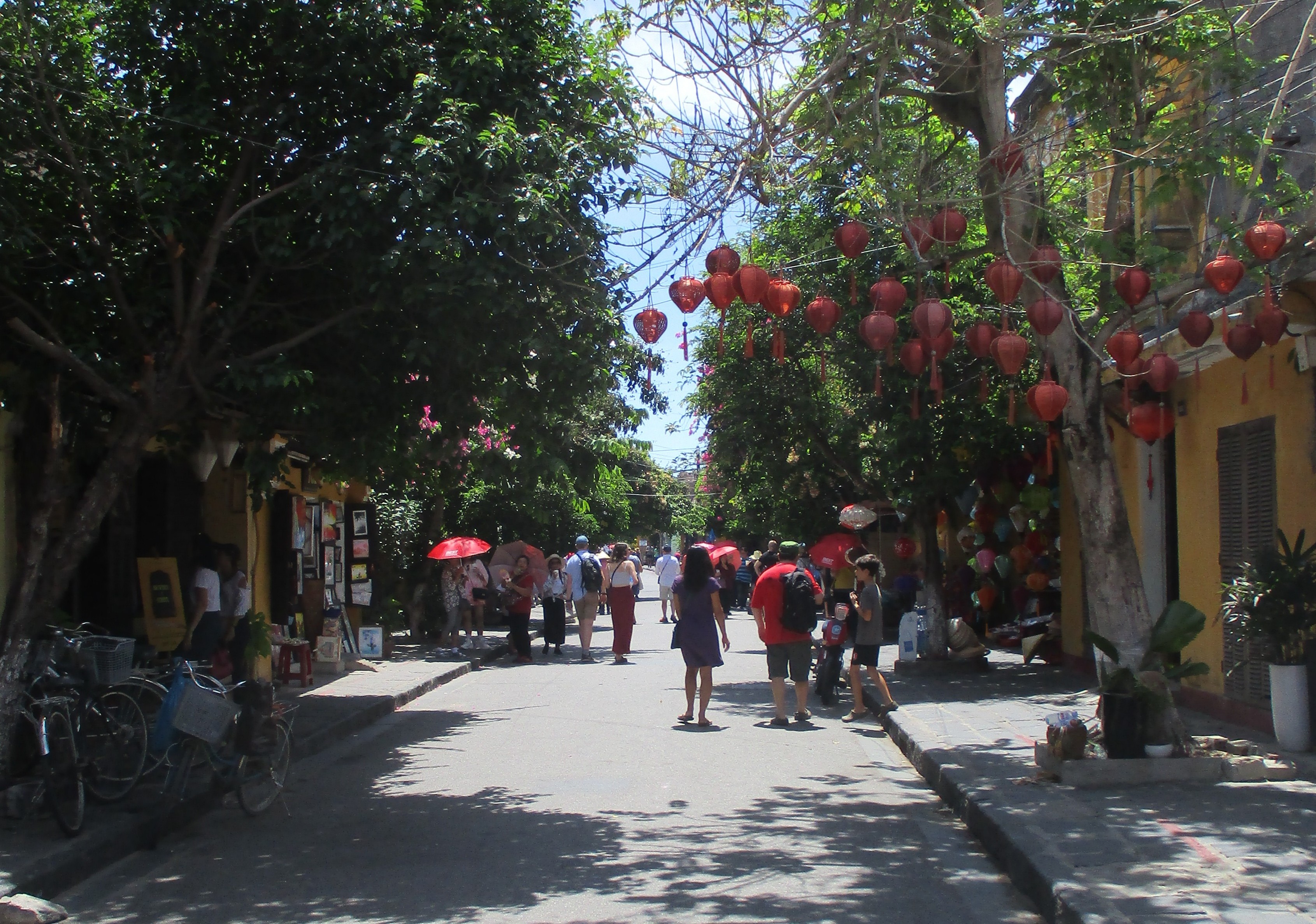
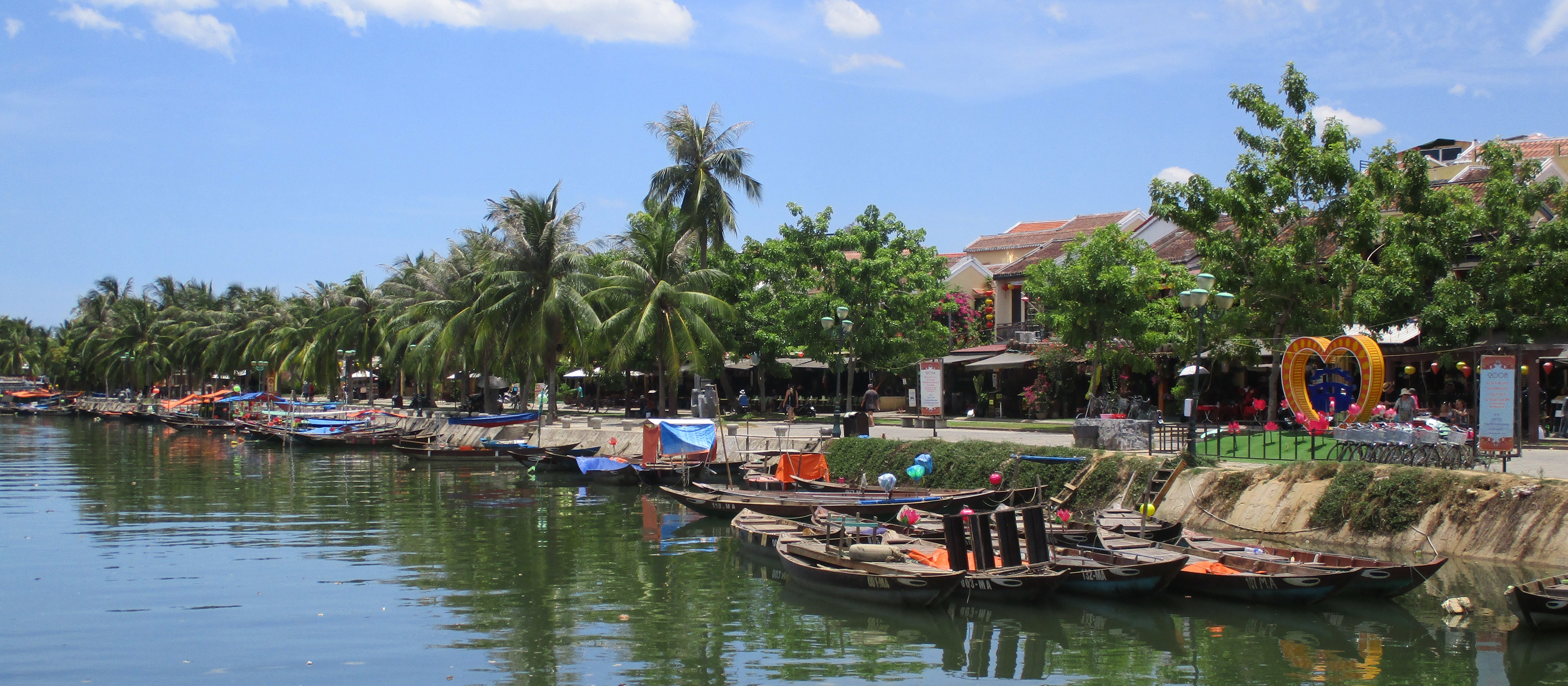
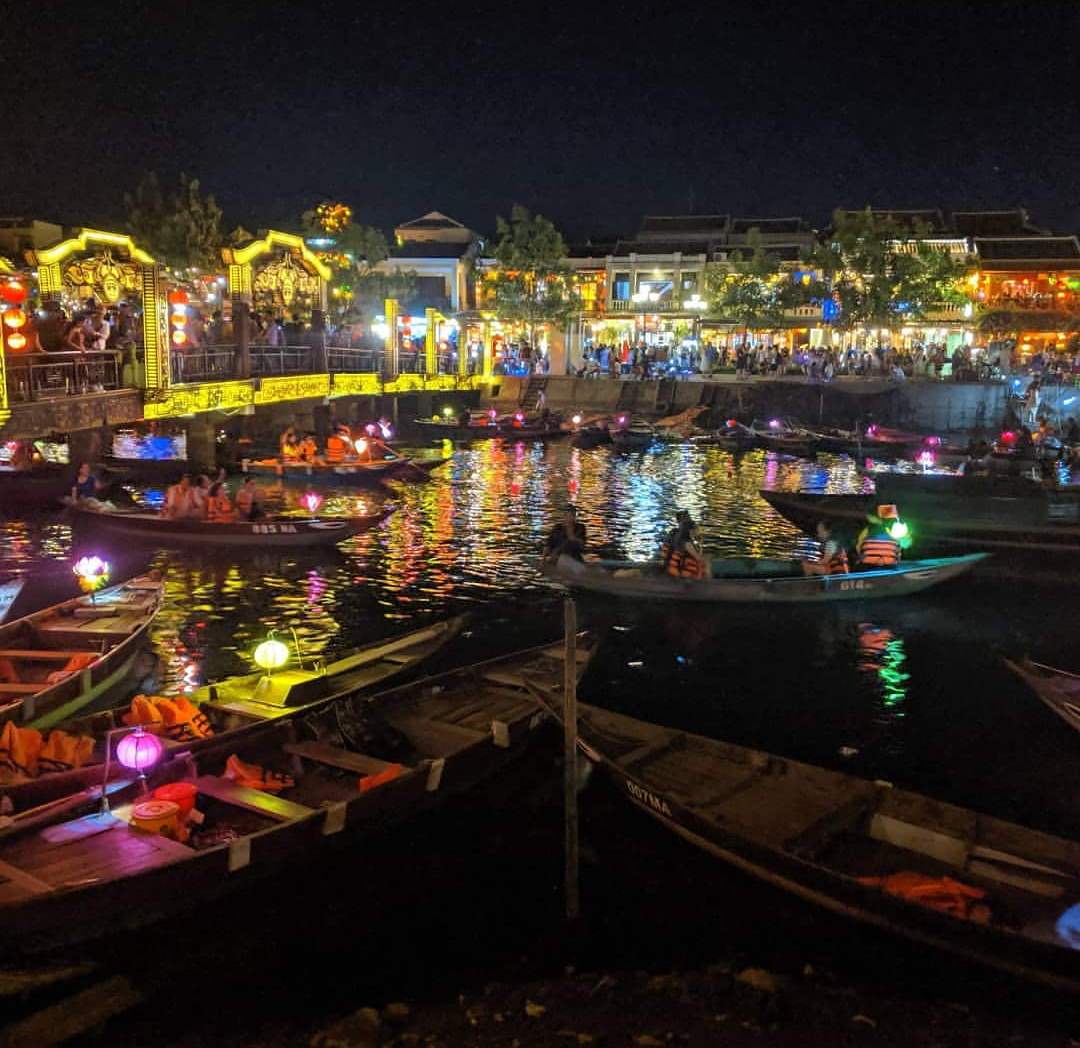
along the river
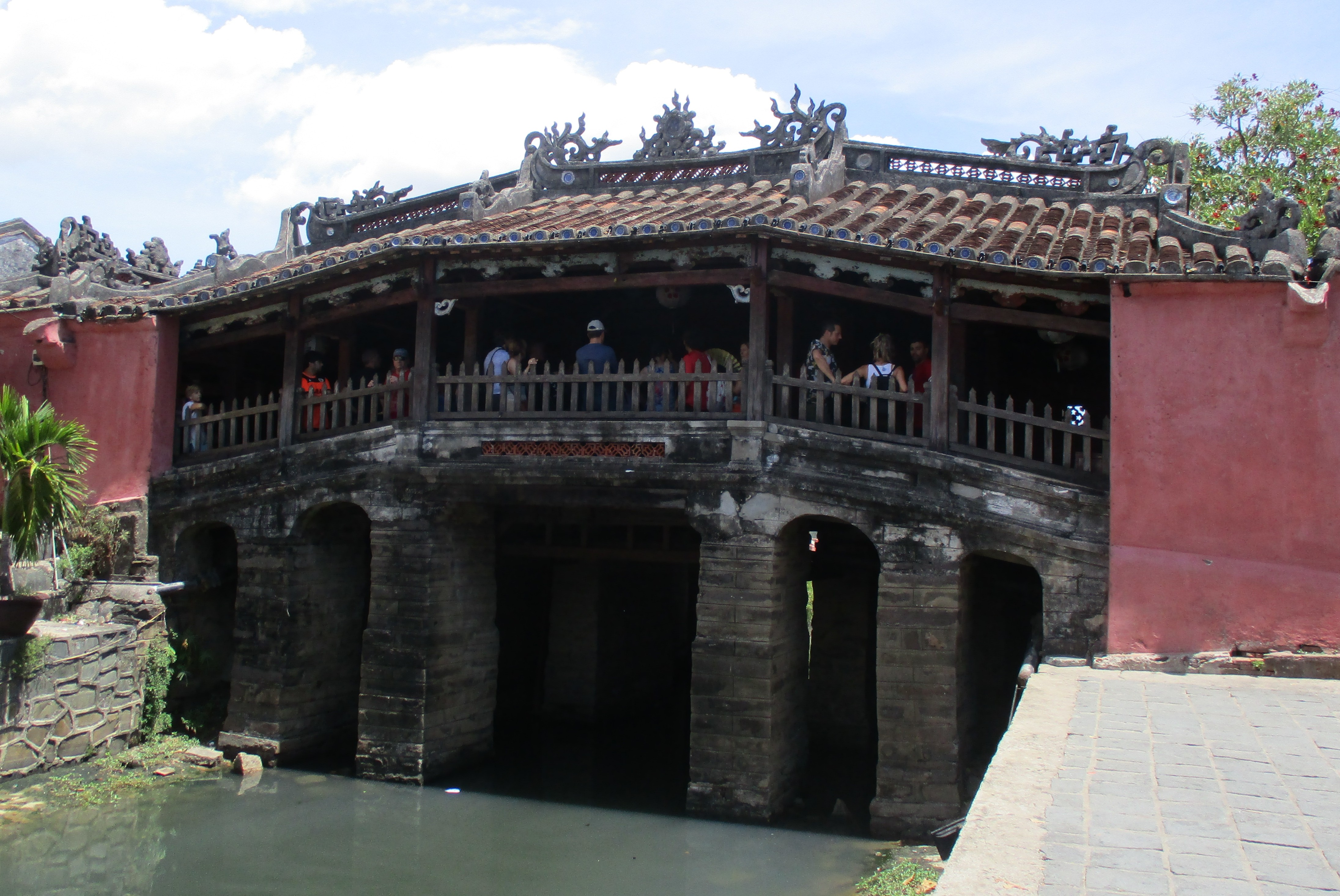
obligatory pic of the 1538 Japanese bridge
Our group perusing patterns at one of the nicest tailor shops in town.
photo by Andy

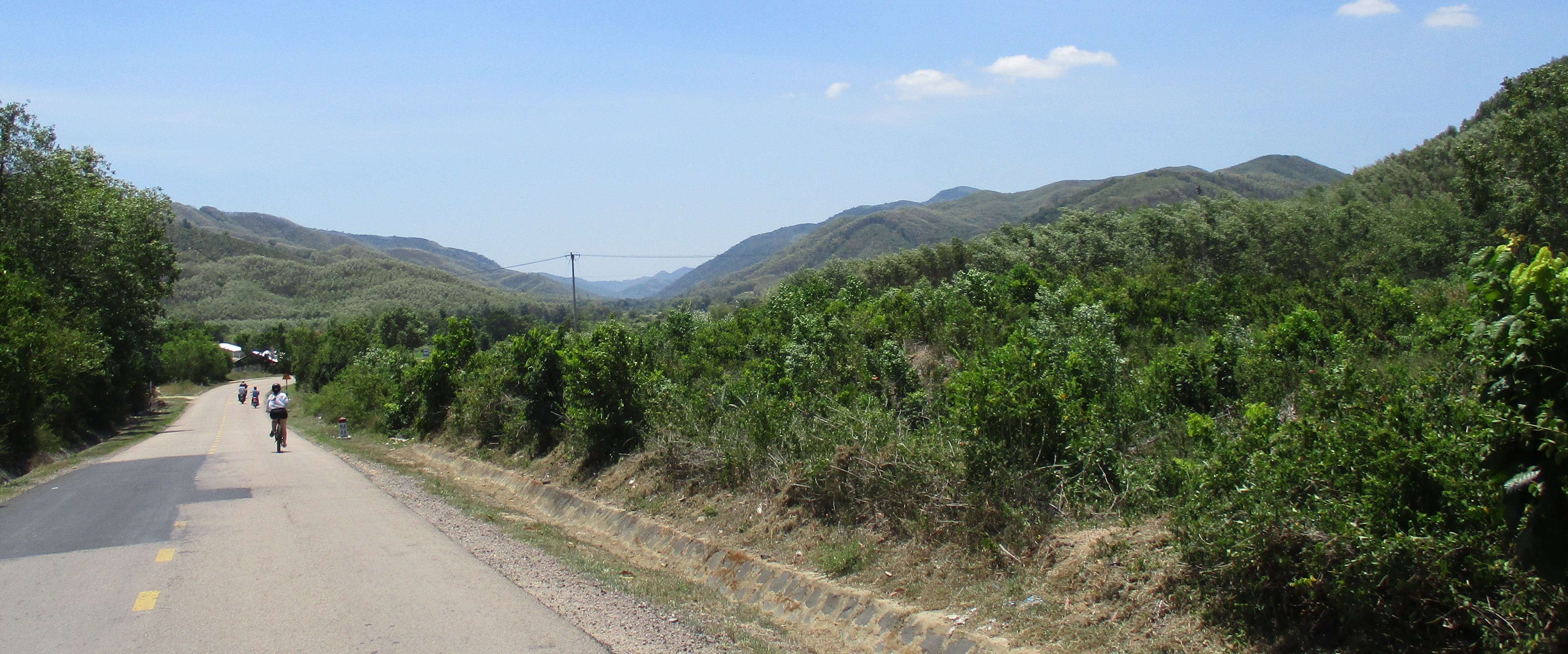
We had a tolerable 28-mile coastal ride on the way to Quy Nhon. Though the humidity dipped into the 65% range, the heat and sun remained high and demanding.
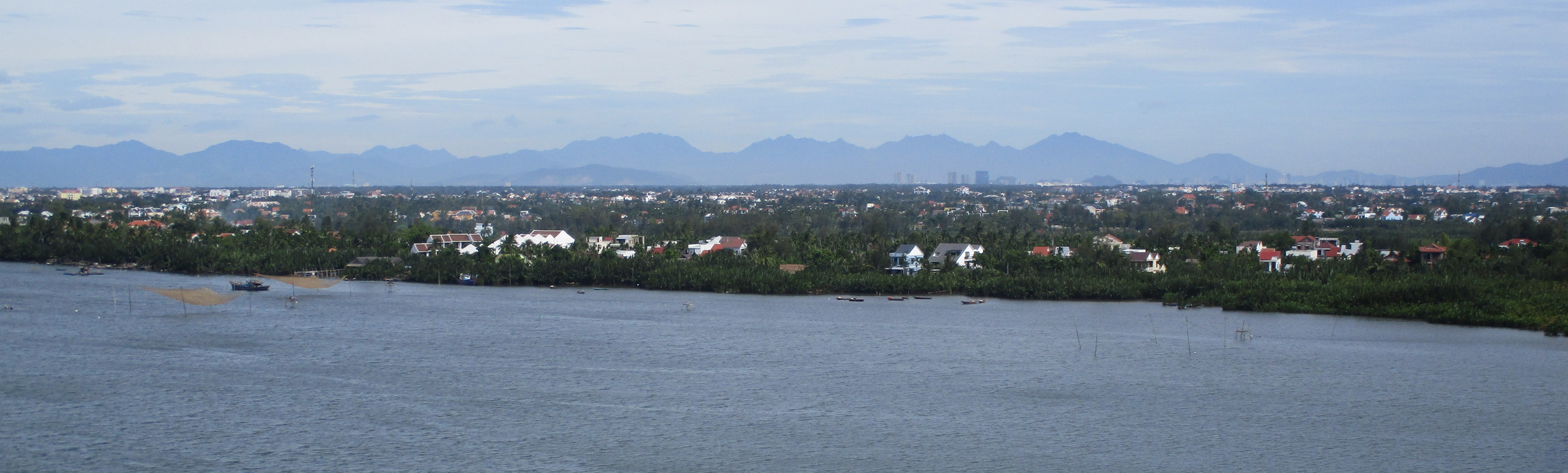
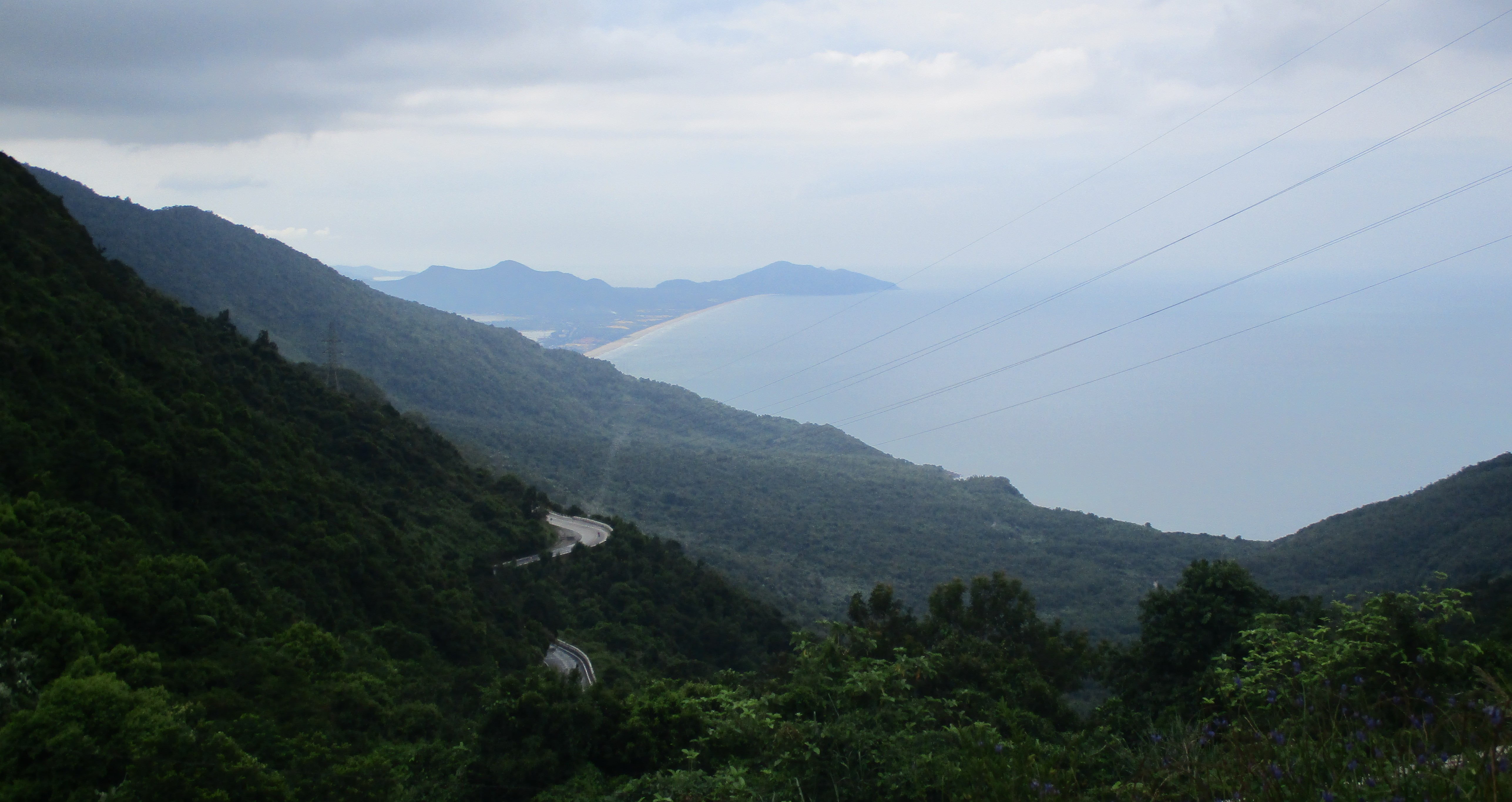
looking back toward Da Nang and Hoi An

Quy Nhon is a beach town that isn’t a huge tourist resort. It was nice to be somewhere so laid back with wide, sandy shores in a calm bay.
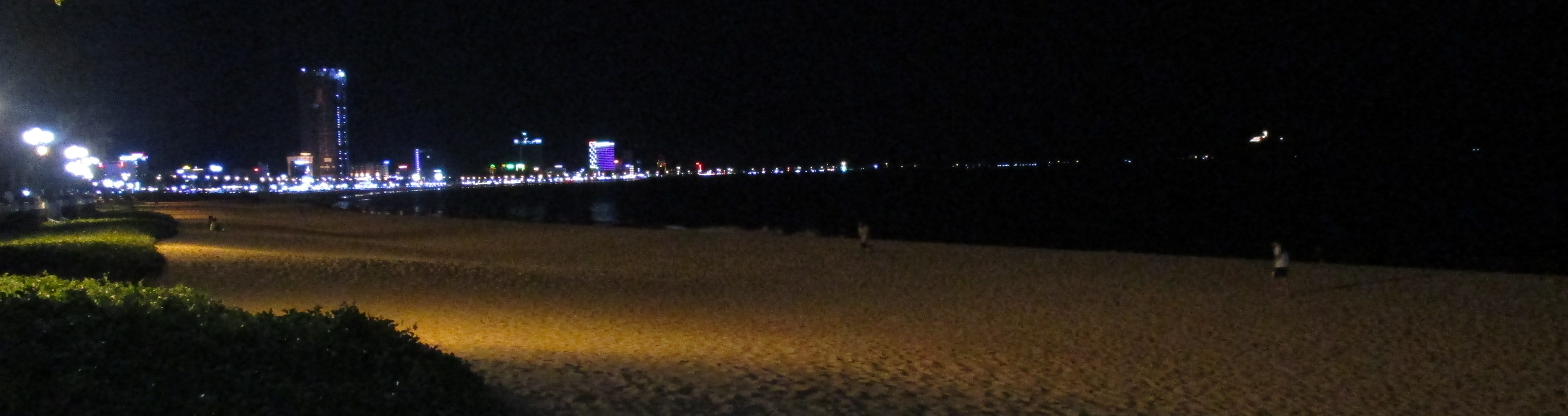
It was a 57-mile ride on the way to Nha Trang. With no turns to navigate on the smooth asphalt, Chi turned us loose. I sped along, enjoying stretching out at my own pace and feeling the miles click by. However, I struggled at the end with the gusty headwinds, hills, and 100+ temps. After lunch, it felt like we were riding in a convection oven. We bused into Nha Trang in a celebratory mood after finishing our longest day.

Rest day in a Russian Riviera

Russians can fly direct from several cities into Nha Trang, where they invest heavily in resort development. There is a large Chinese presence as well. The longest oversea cable car in the world (2+ miles) takes you to Vinpearl Land theme park and resort on a nearby island.
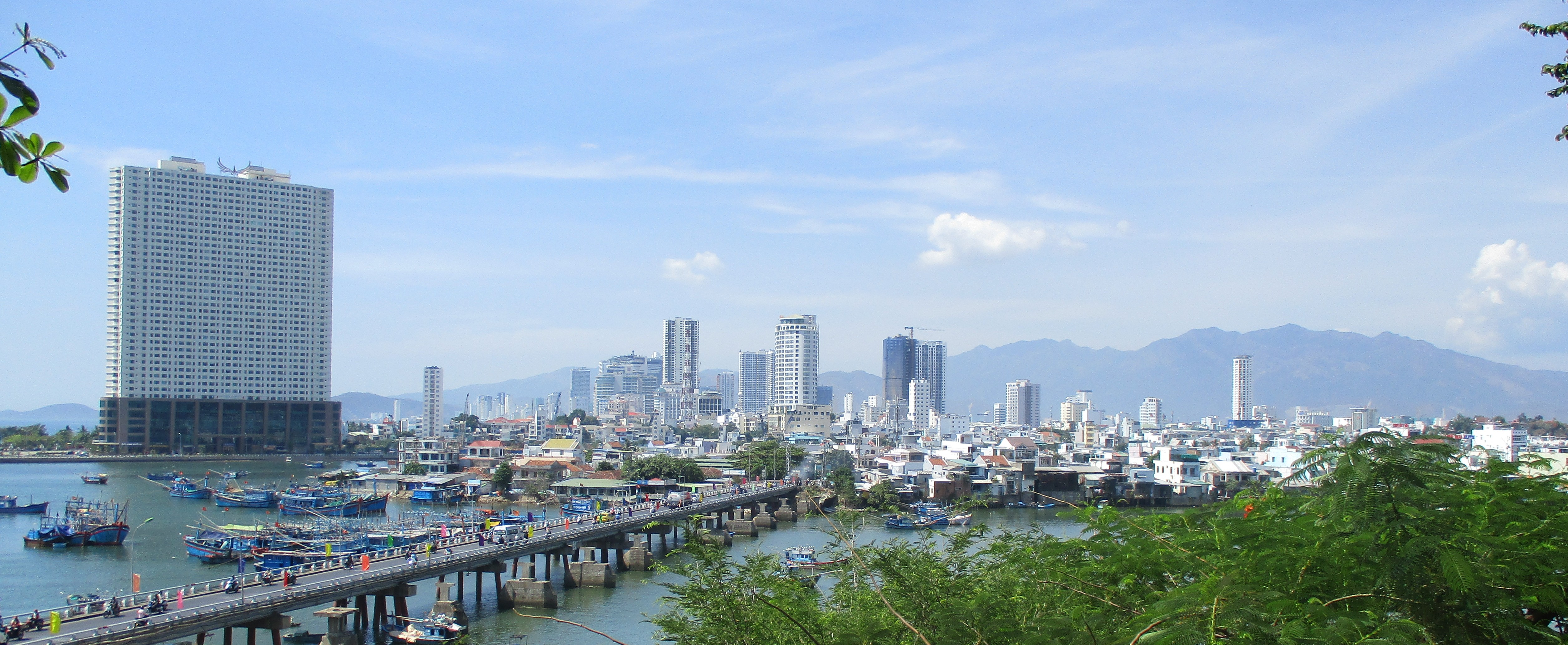
Nha Trang
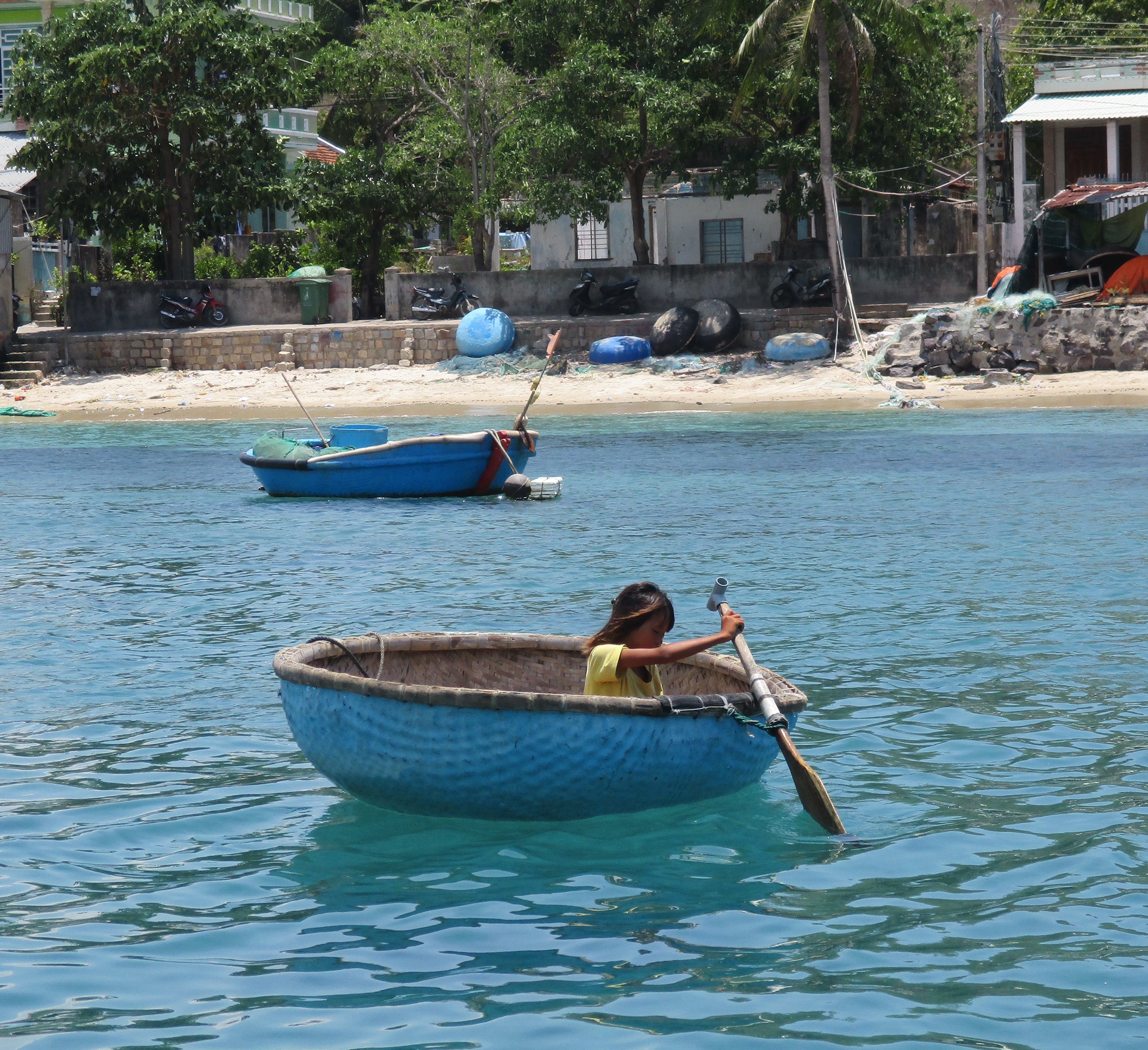
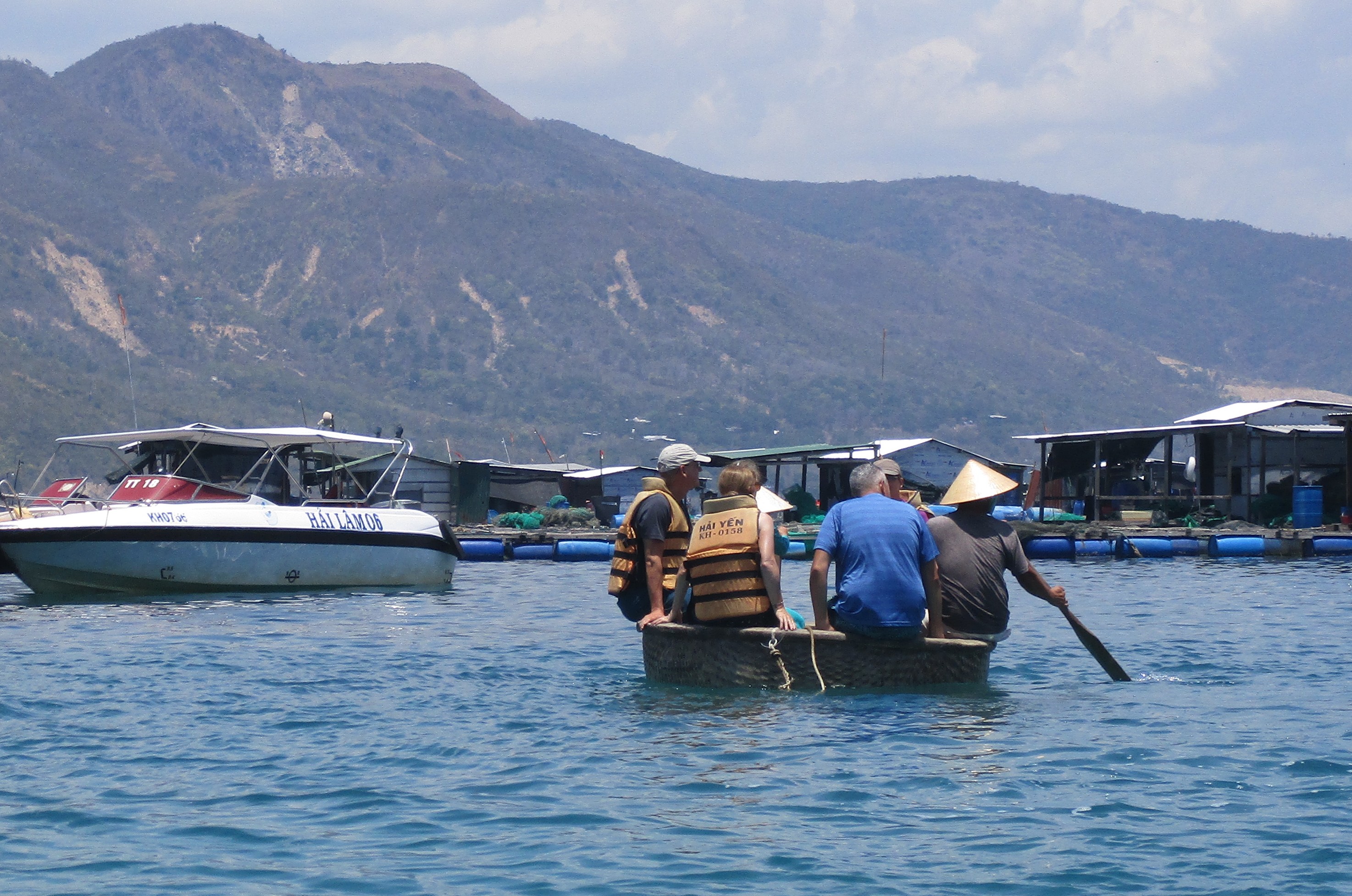
We experienced the round basket boats, and joked with our Kiwis who pronounced them as “biscuit boats.”
A young girl playing in the cove provided a demonstration of propelling the boats from the front using a figure-8 motion of the paddle.
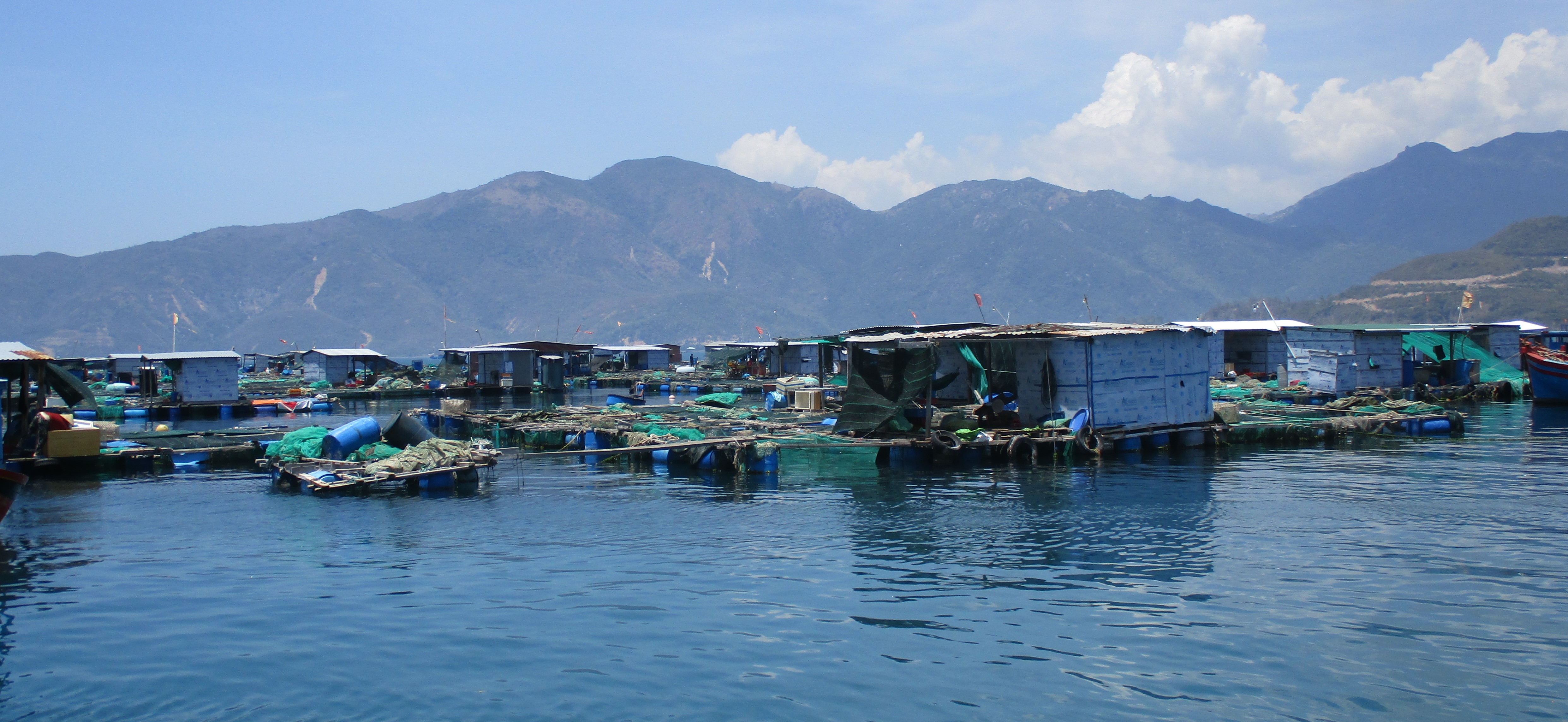
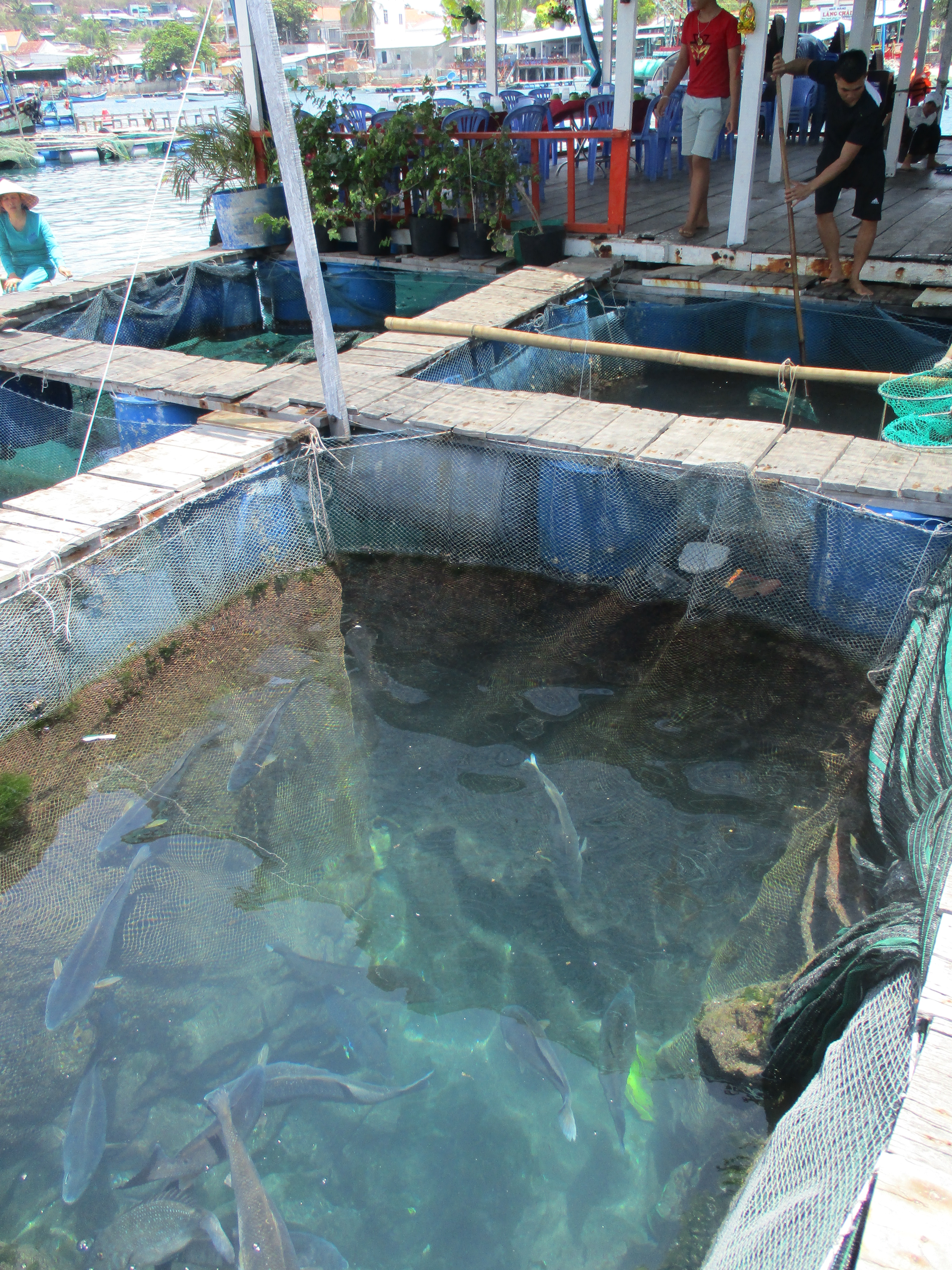
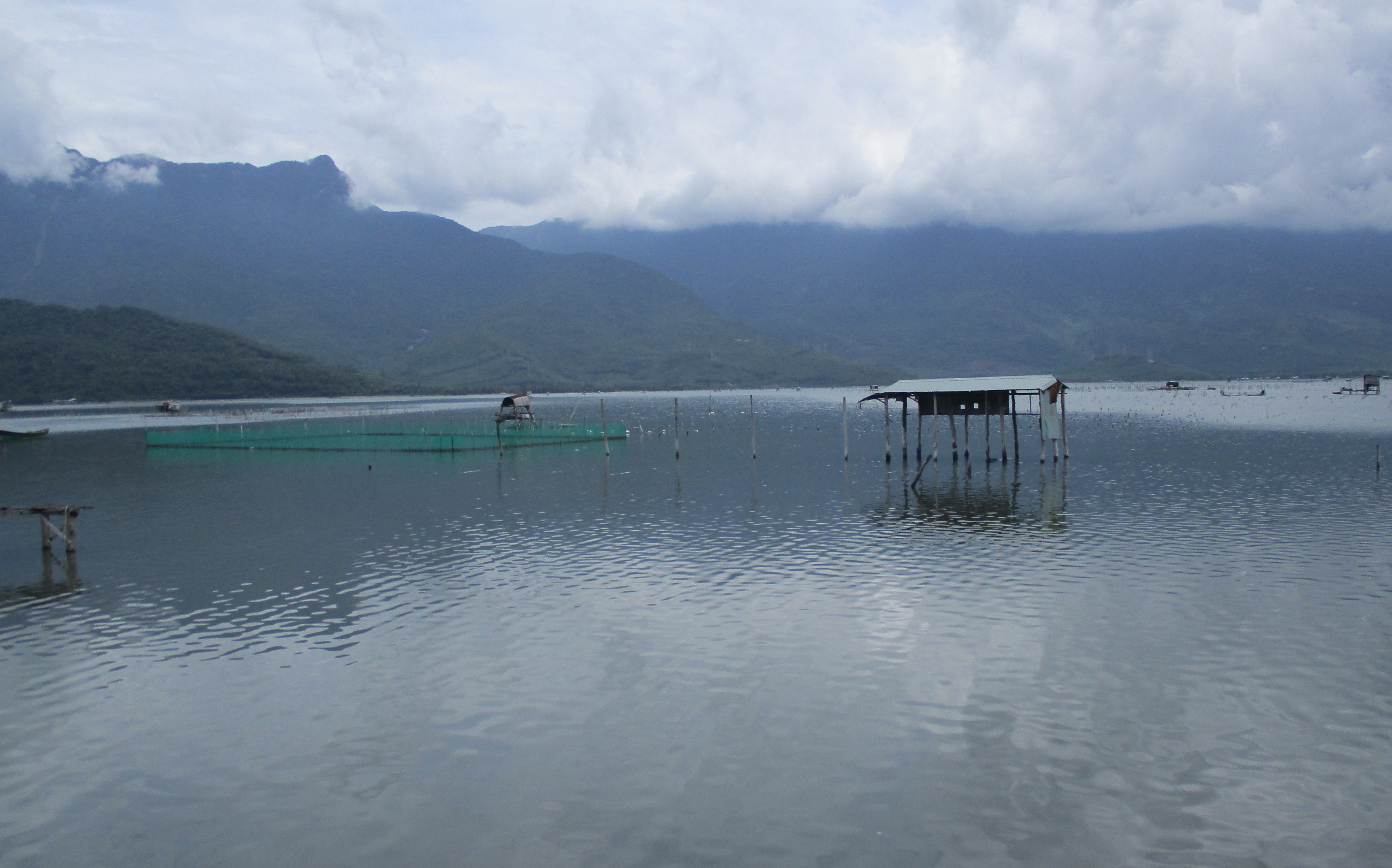
large collection of floating seafood farms
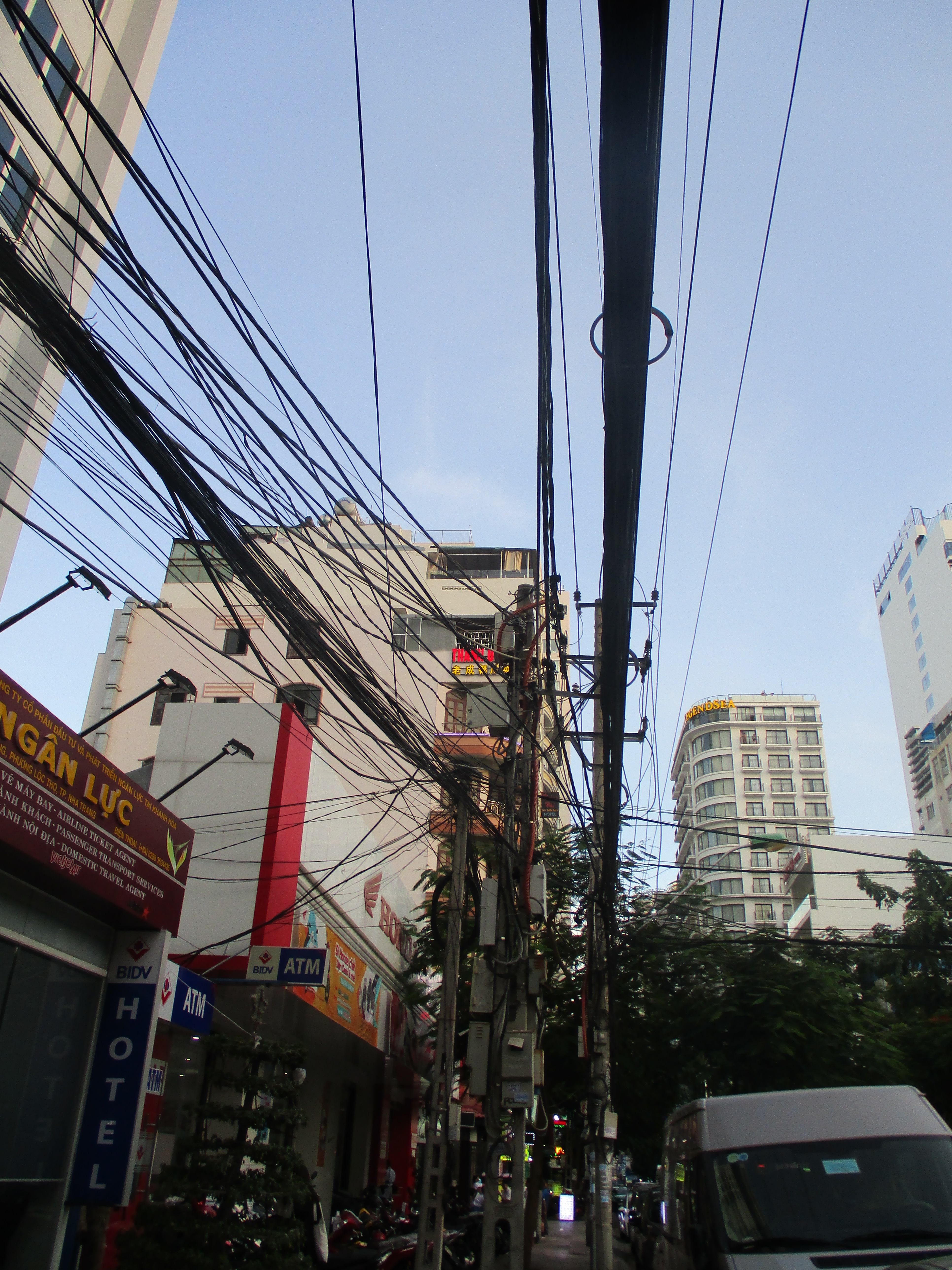
The wiring here is worse than in Hanoi. Perhaps it is because of the rampant, large-scale development: construction crews work 24 hours a day on towering new hotels. The electrician in our group is beside himself.
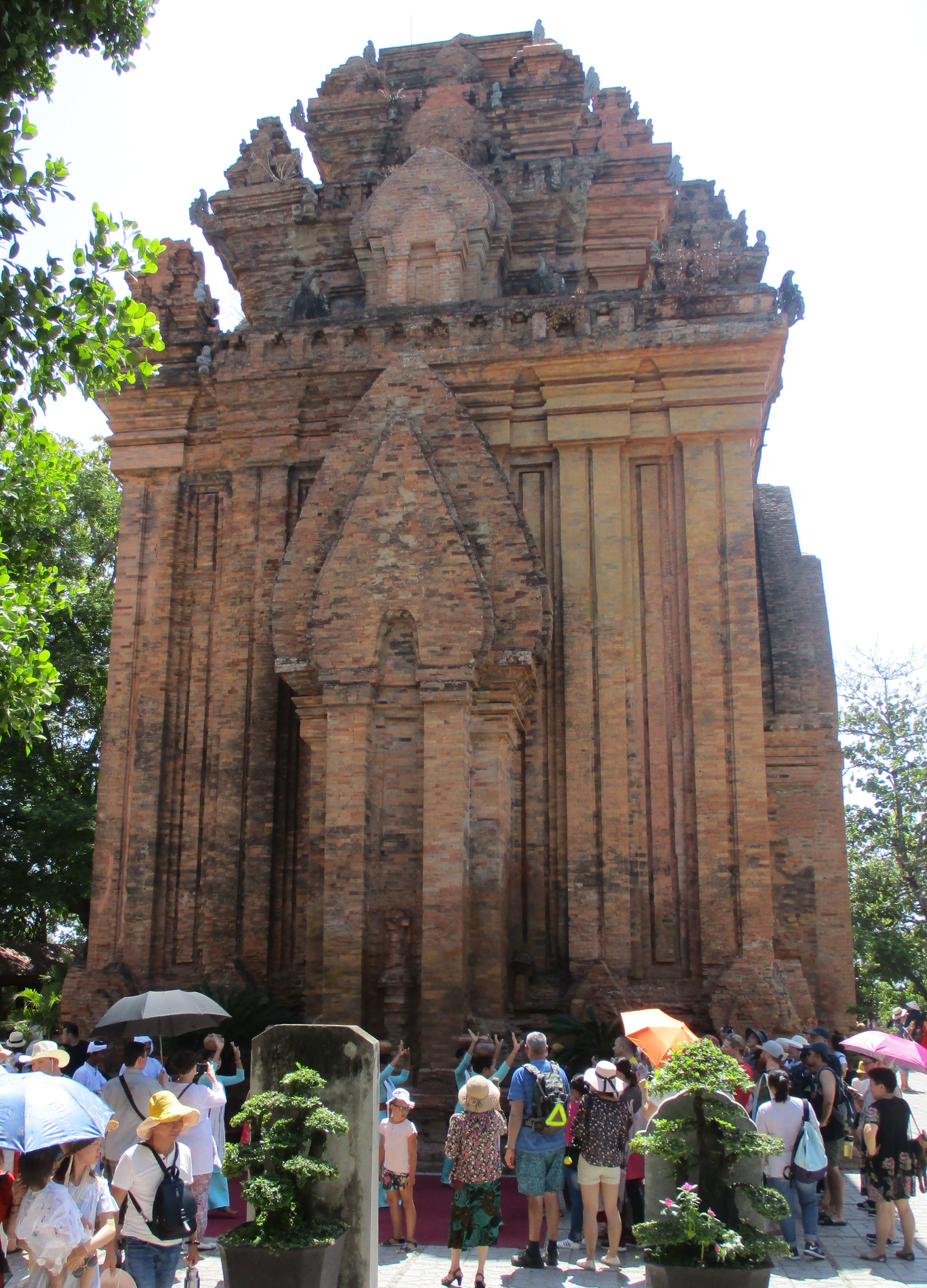
Po Nagar towers built by the Cham people, 781-817 A.D. There is ancient Hindu influence evident.
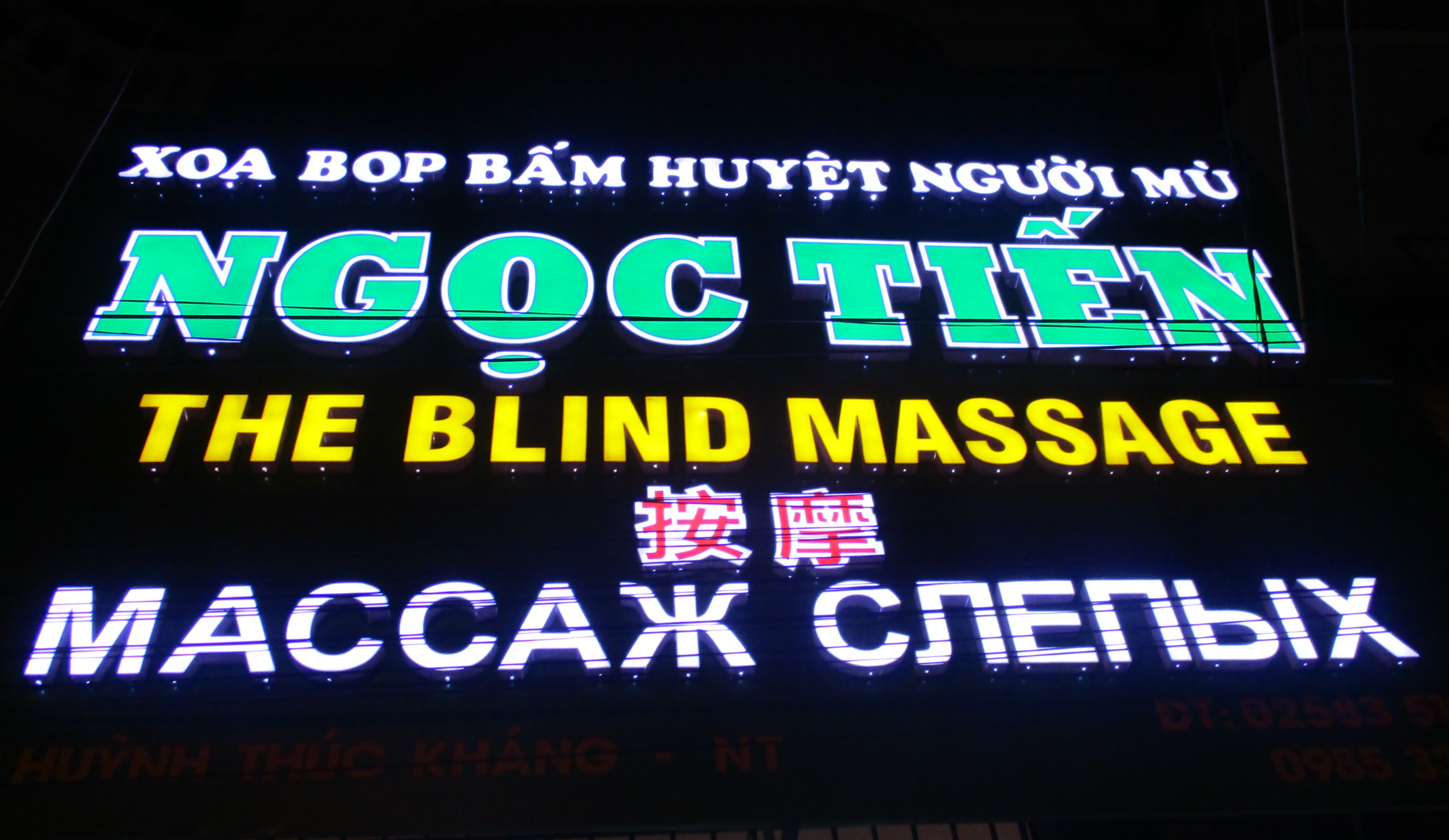
Nearly everything is available in four languages.
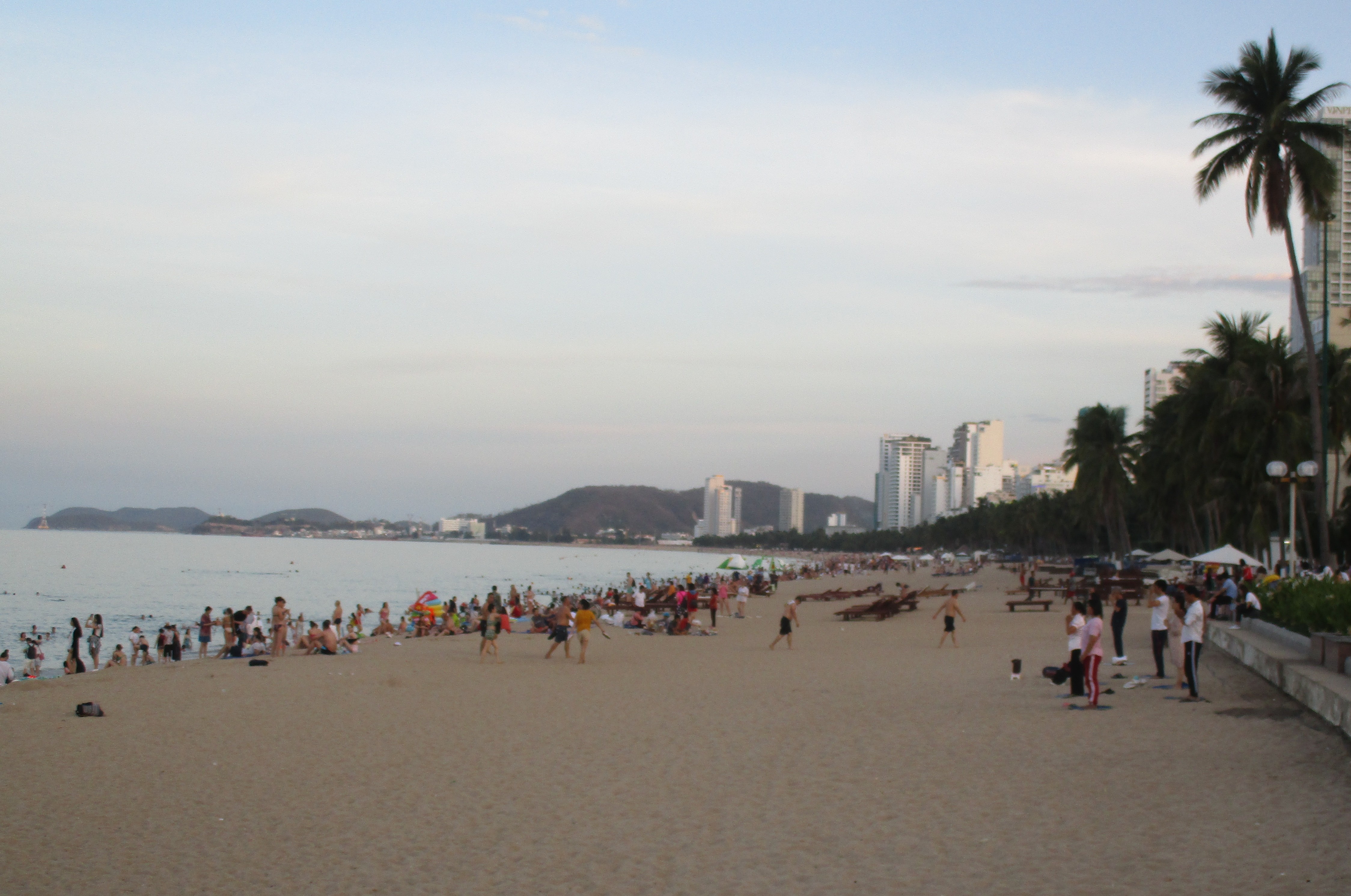
Nha Trang beach

Ride Logistics

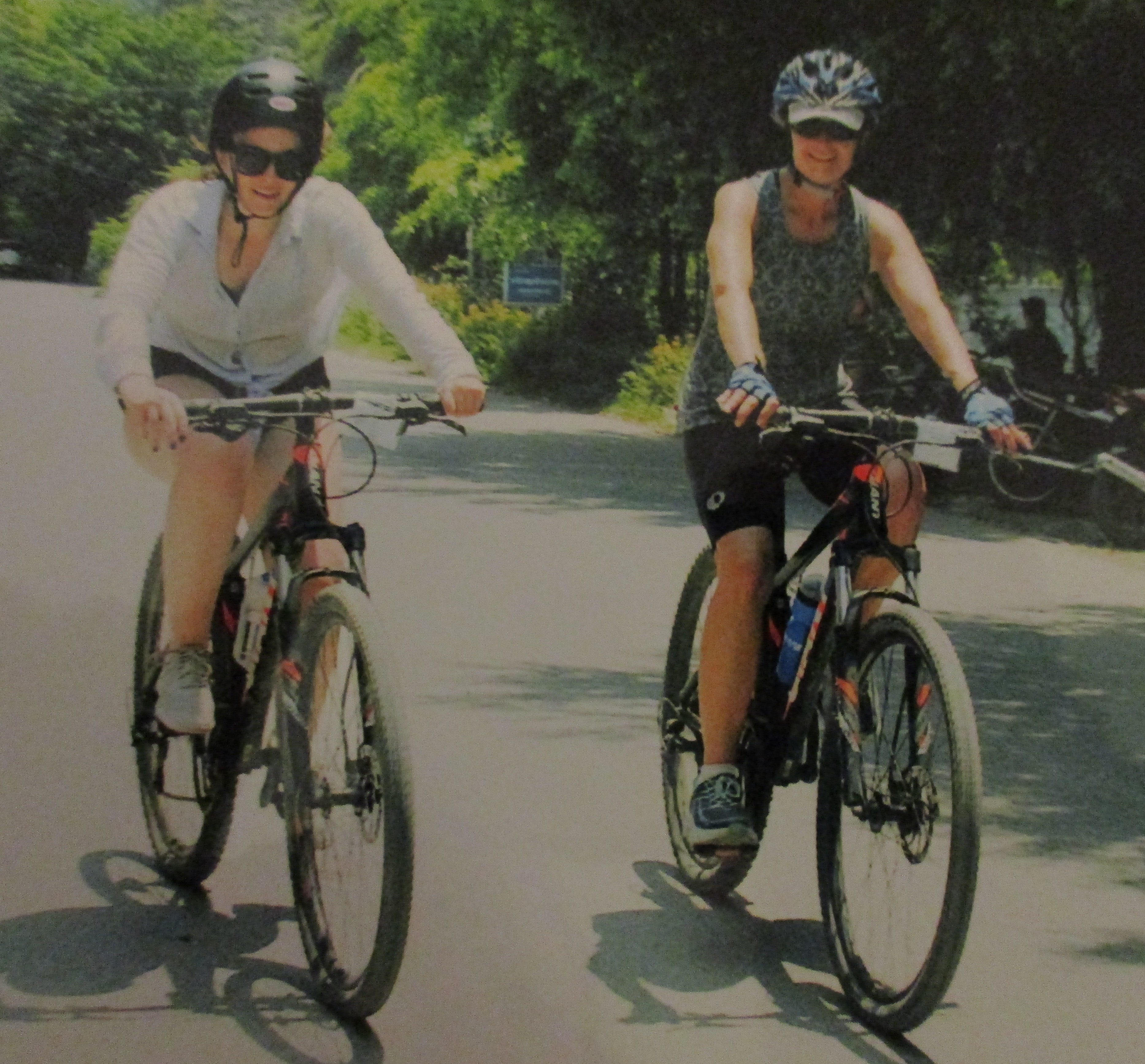
We’re a group of 15 riders and 4 crew: leader Chi, “mechanist” Linh, bus driver Thanh, and truck driver Cho. They work hard to make sure we are always well taken care of.

Typical day:
-wake up at 6:00am
-hotel breakfast at 7:00am
-ride, or bus to ride start, at 7:30am
-morning – ride 2-4 segments, 10-12 miles each, with breaks in between
-lunch (provided at a local eatery)
-afternoon – ride 1-2 legs, bus 1-2 hours to hotel
-shower
-dinner at 7pm with the group, or head out on your own

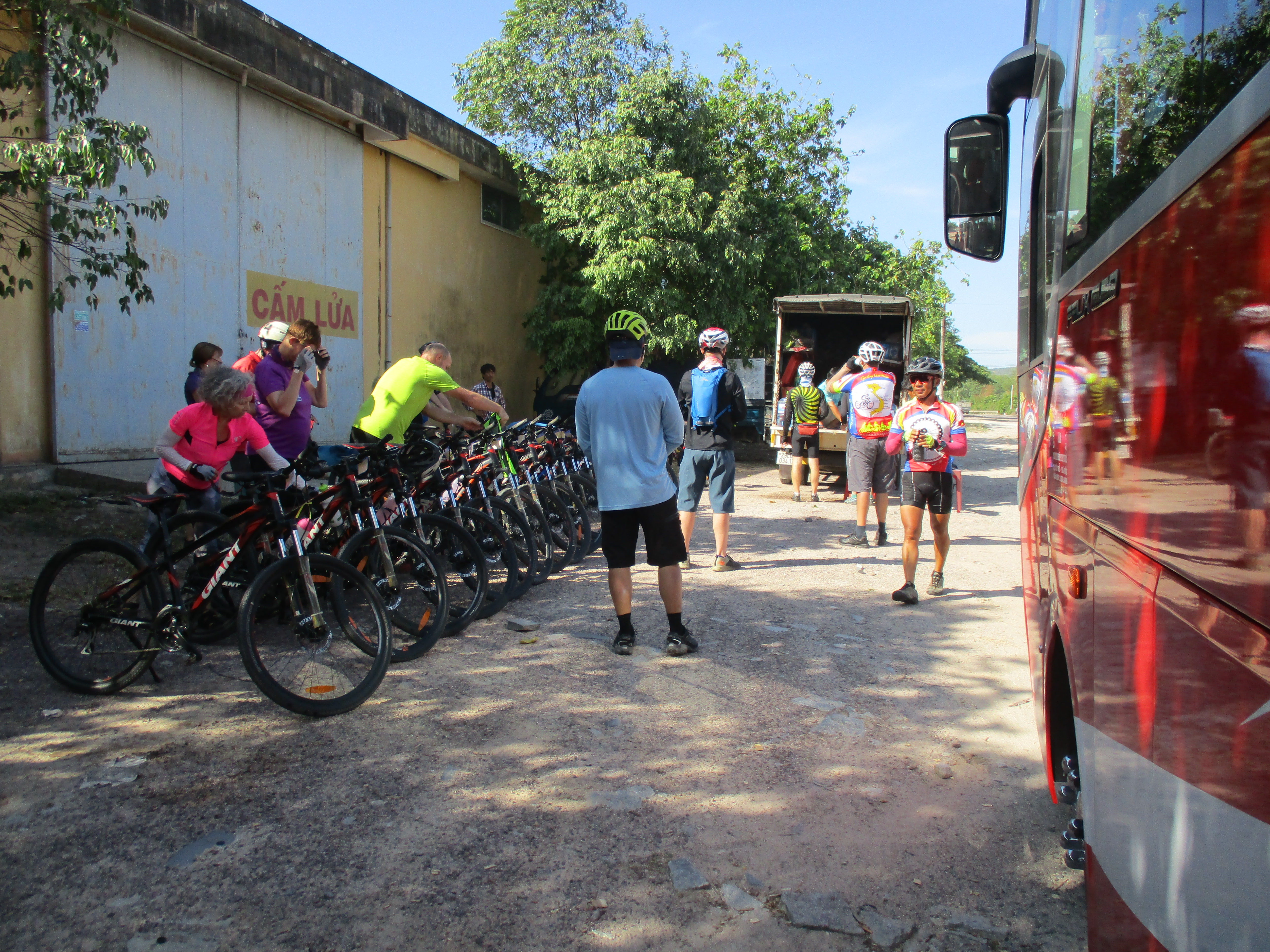
Mornings are always a bit of a scramble to fill water bottles, apply sun block, and assemble our various bike bits and bobs.

If our ride segments have turns, Chi leads us at a moderate pace. We stay in a group that ebbs and flows as banter abounds. I’m learning as much about the English-speaking world as I am about Vietnam. For instance, we’ve discovered that we all call a cooler something different:
-English – cooler box
-Irish – ice box
-Australian – esky (a brand that has become the name)
-New Zealand – chili bin (though with Jim’s accent it sounds like “chili bun”)

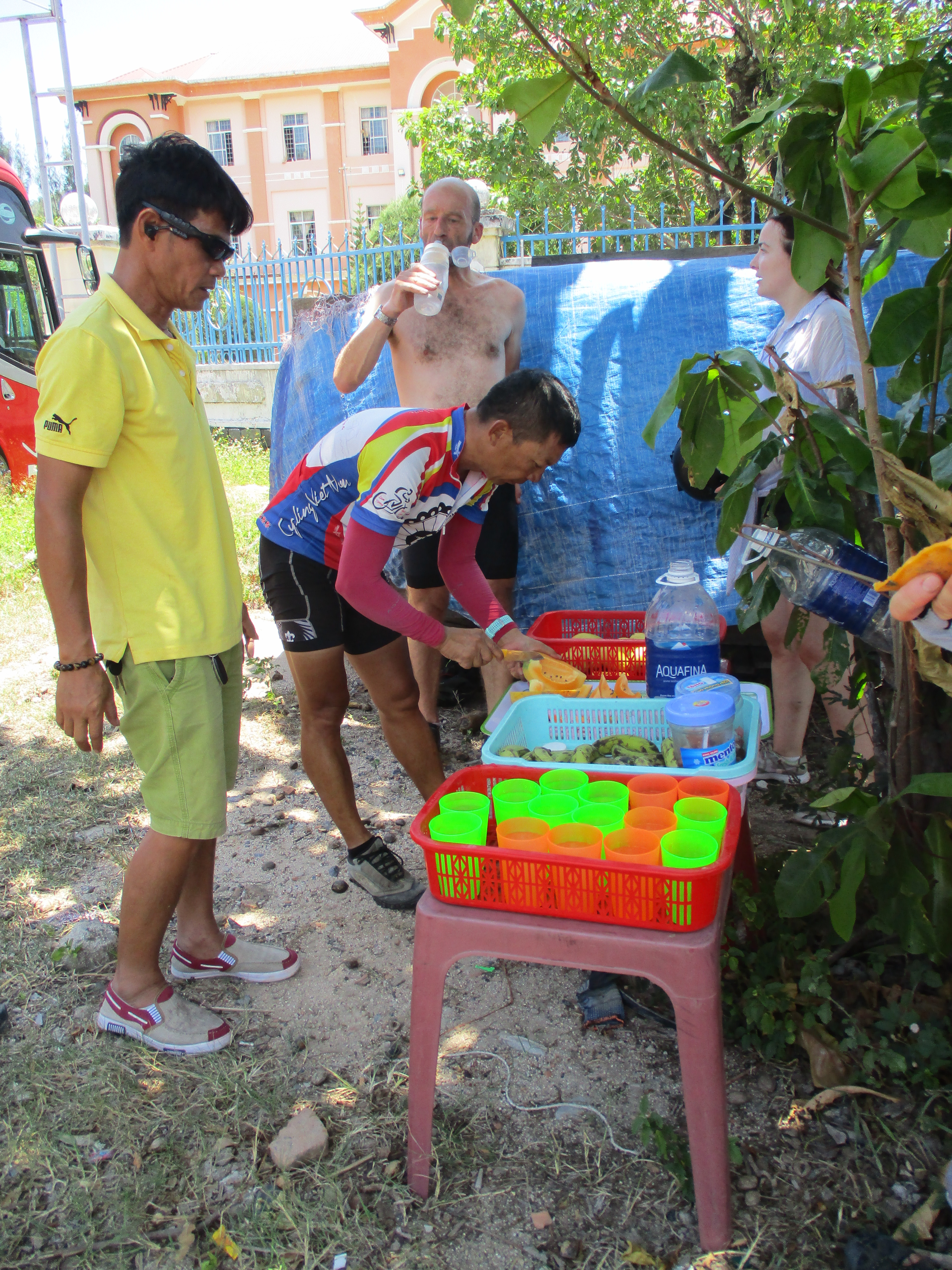
The bus and truck meet us at breaks with cold water, lemonade, fruit, peanuts, cashews, and peanut brittle. What luxury! We regularly enjoy bananas, pineapple, dragon fruit, rambutan, mangosteens, watermelon, and mangoes.

Chi and Thanh slicing papaya at a break.

If there are no turns, Chi lets everyone spread out and go at their own pace. Occasionally he will race one of the fitter guys at about 30 mph for a bit, then leave the winded Brit or Kiwi in his dust. Back on the bus, he explains local sights, history, food, the evening plan, and the next day’s itinerary.

the joy of setting your own cadence

Though I never went on a band tour, I have the feeling there are a couple of similarities. We each have claimed permanent bus seats, and by now I have my “nest” arranged. Nearly every day is a new hotel, so having very little luggage is a plus. The hotels are mid-range: comfortable, but not luxurious. Occasionally there is a pool, or along the coast we might be ocean front.

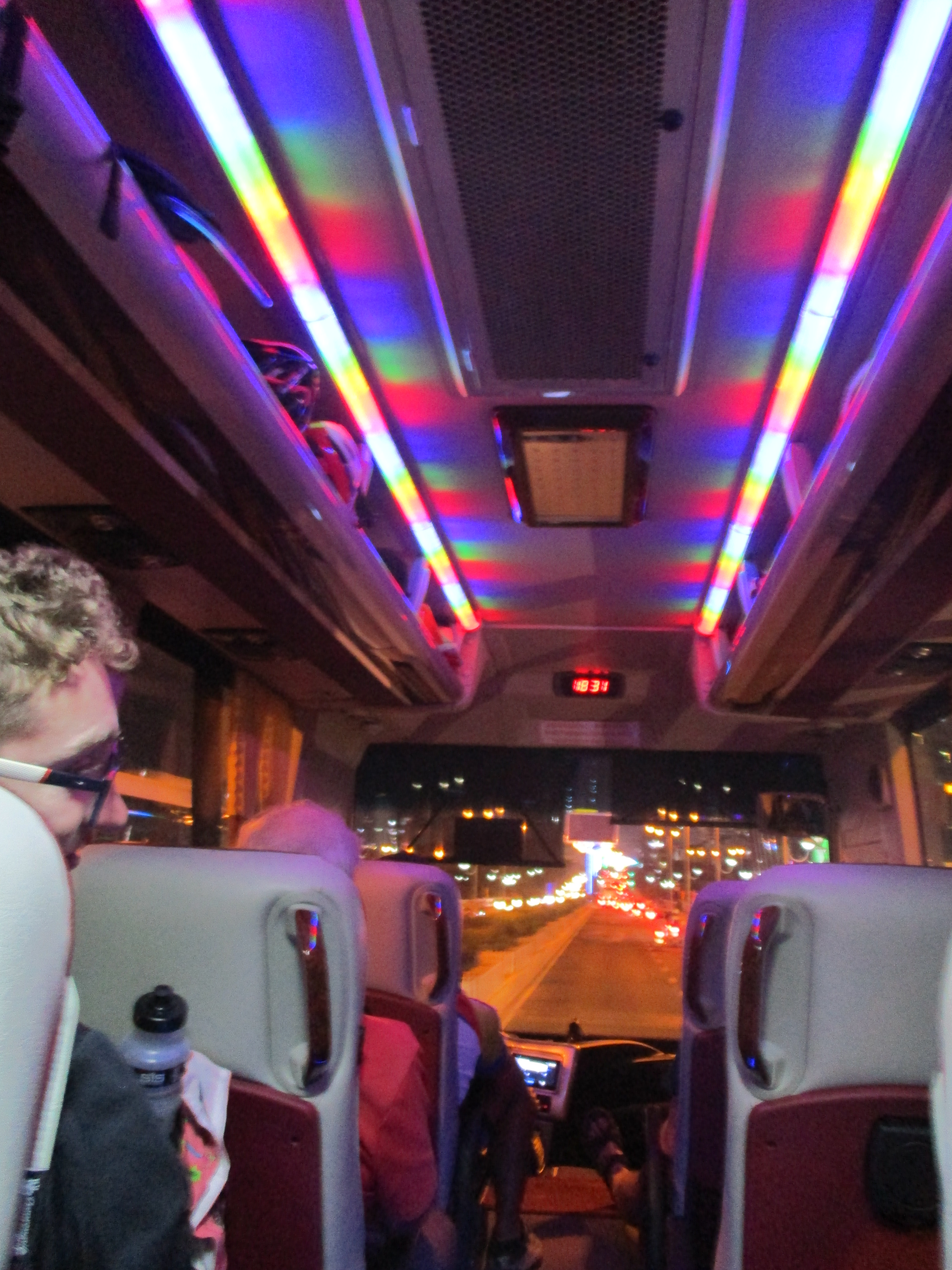
The one time we happen to be on the bus at night, we realize it has a distinct party vibe.

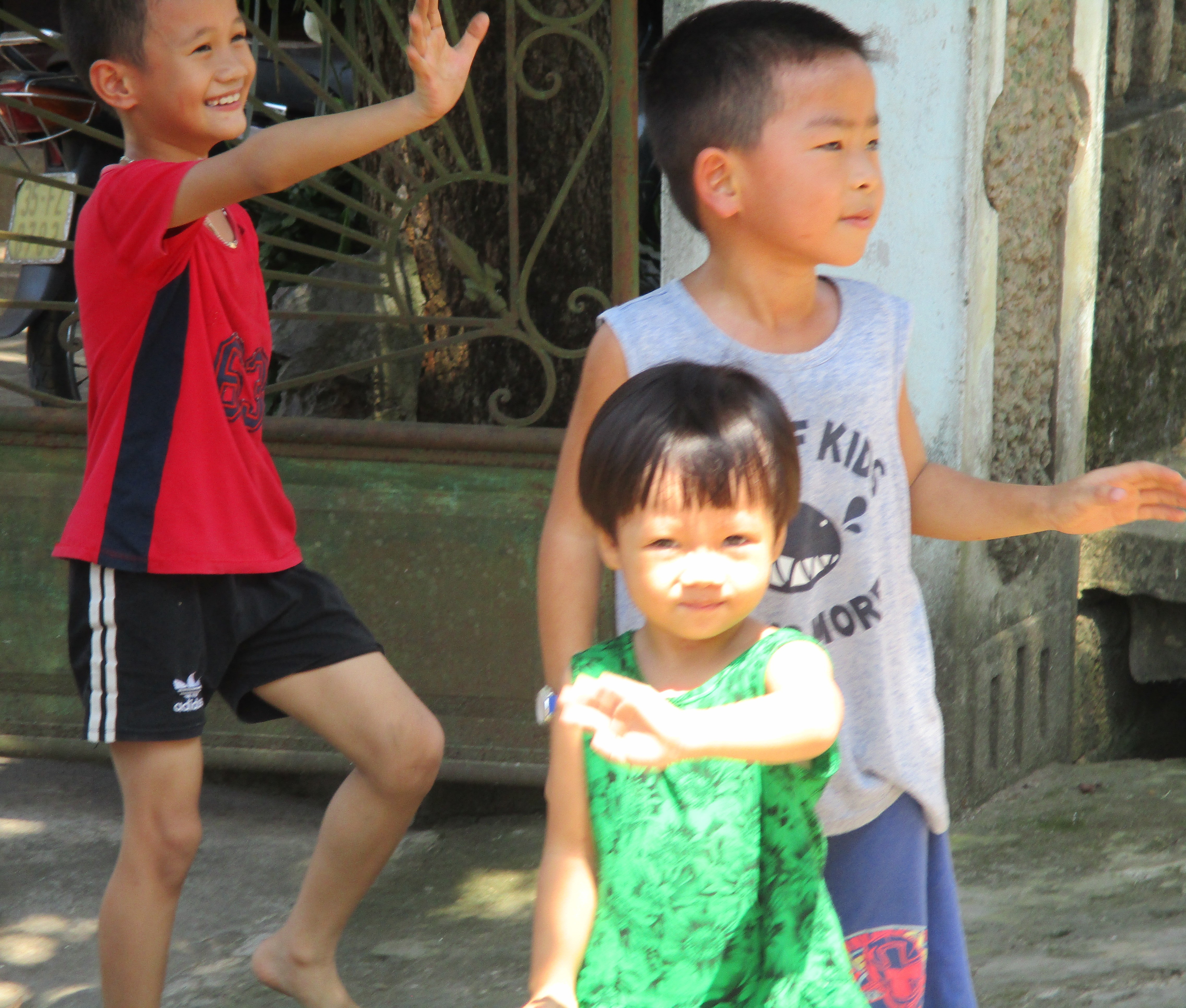
One constant throughout has been the children trilling, “Hello!” Many also hold out hands for a palm slap. They are adorable and add cheer to the hot miles.

On the Hue to Hoi An

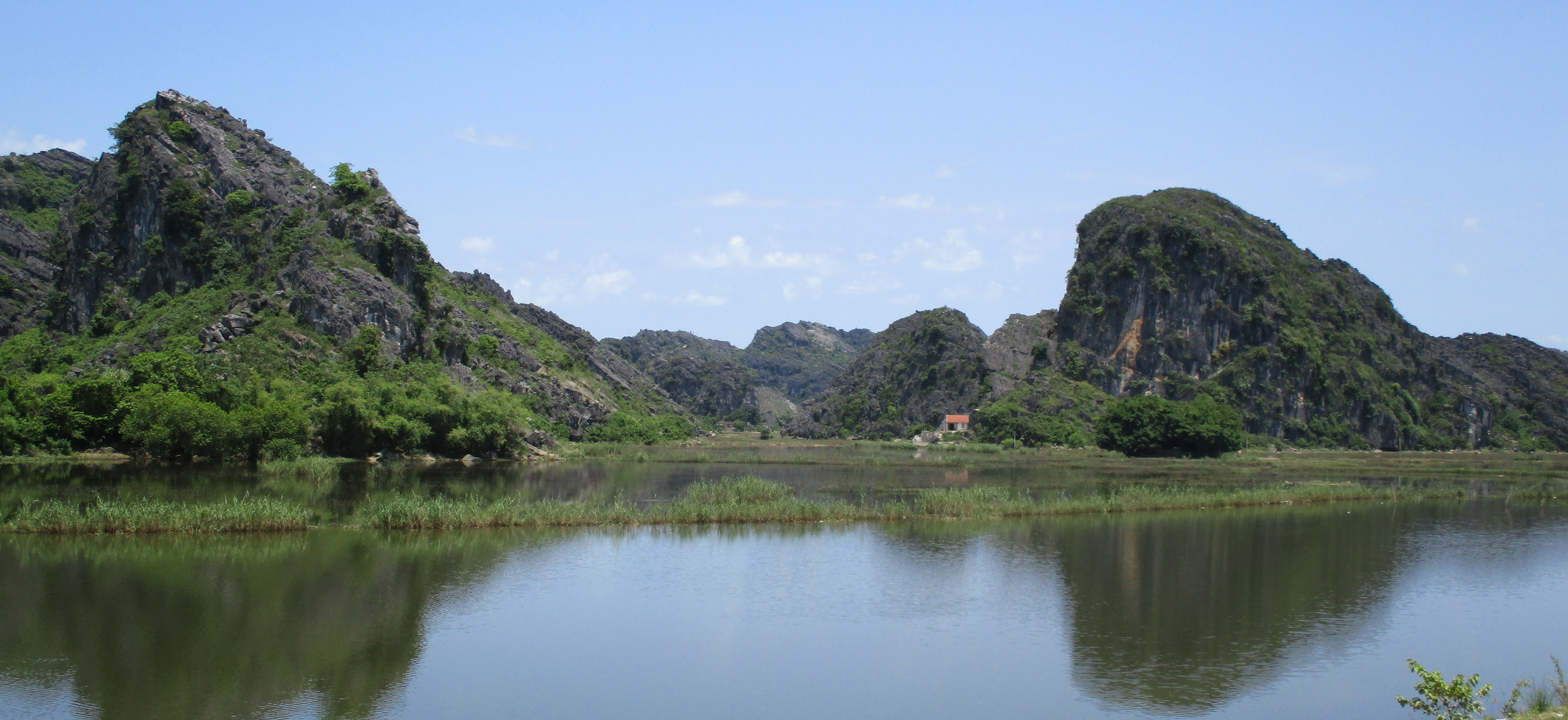
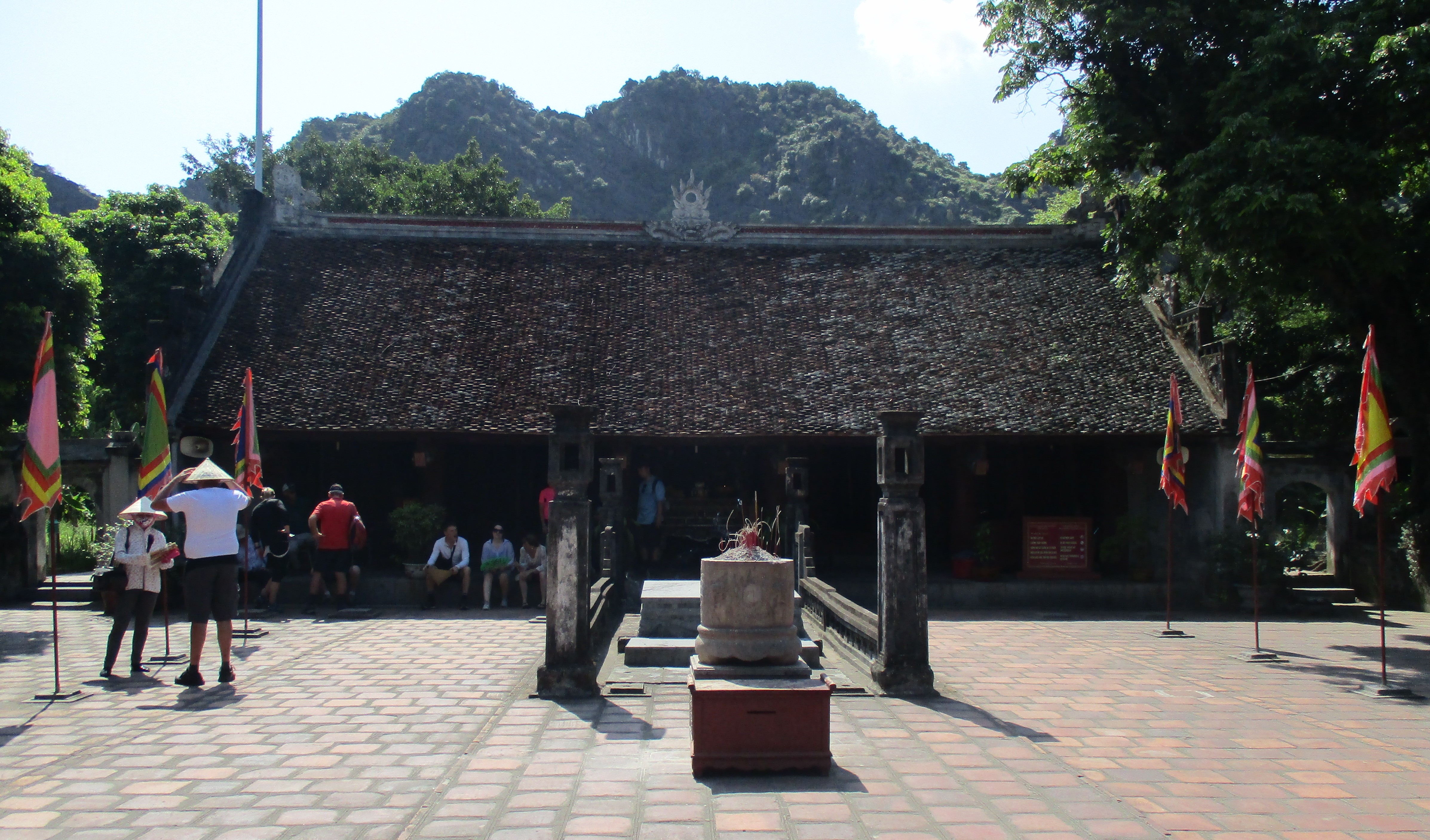
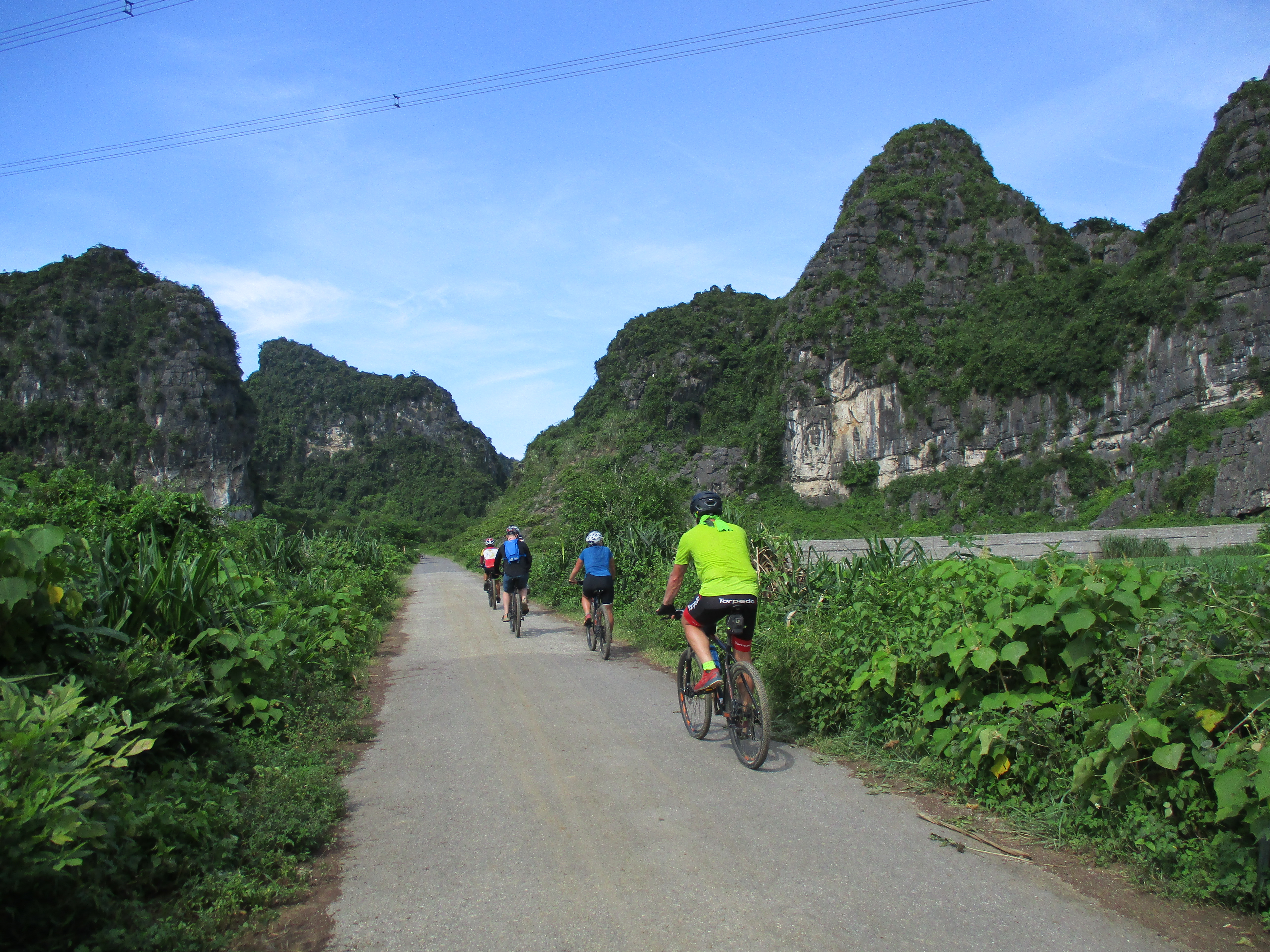
Our 35 miles around Ninh Binh were thankfully flat, but lacking in shade. We baked as we admired the limestone karst peaks and the temples and gardens of the Dinh Dynasty’s 10th century capital. The town had few food options, so we ate supper together before heading to the station. 

Dinh temple


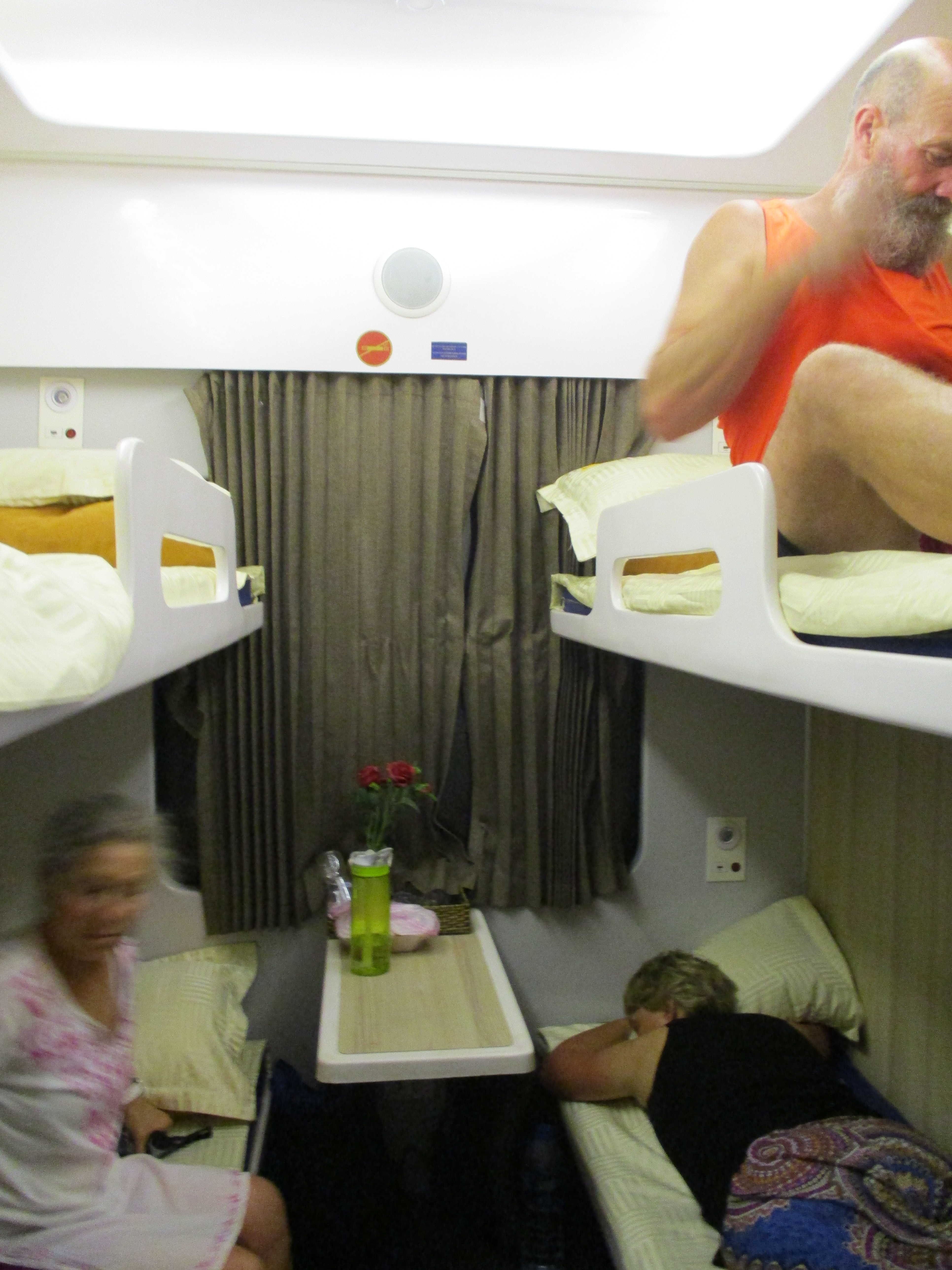
Night Train
No, not the 1951 Jimmy Forrest classic, but the overnight rail journey to Hue. The train was surprisingly nice and comfortable! Even so, only about half of us rested well. 


Hue
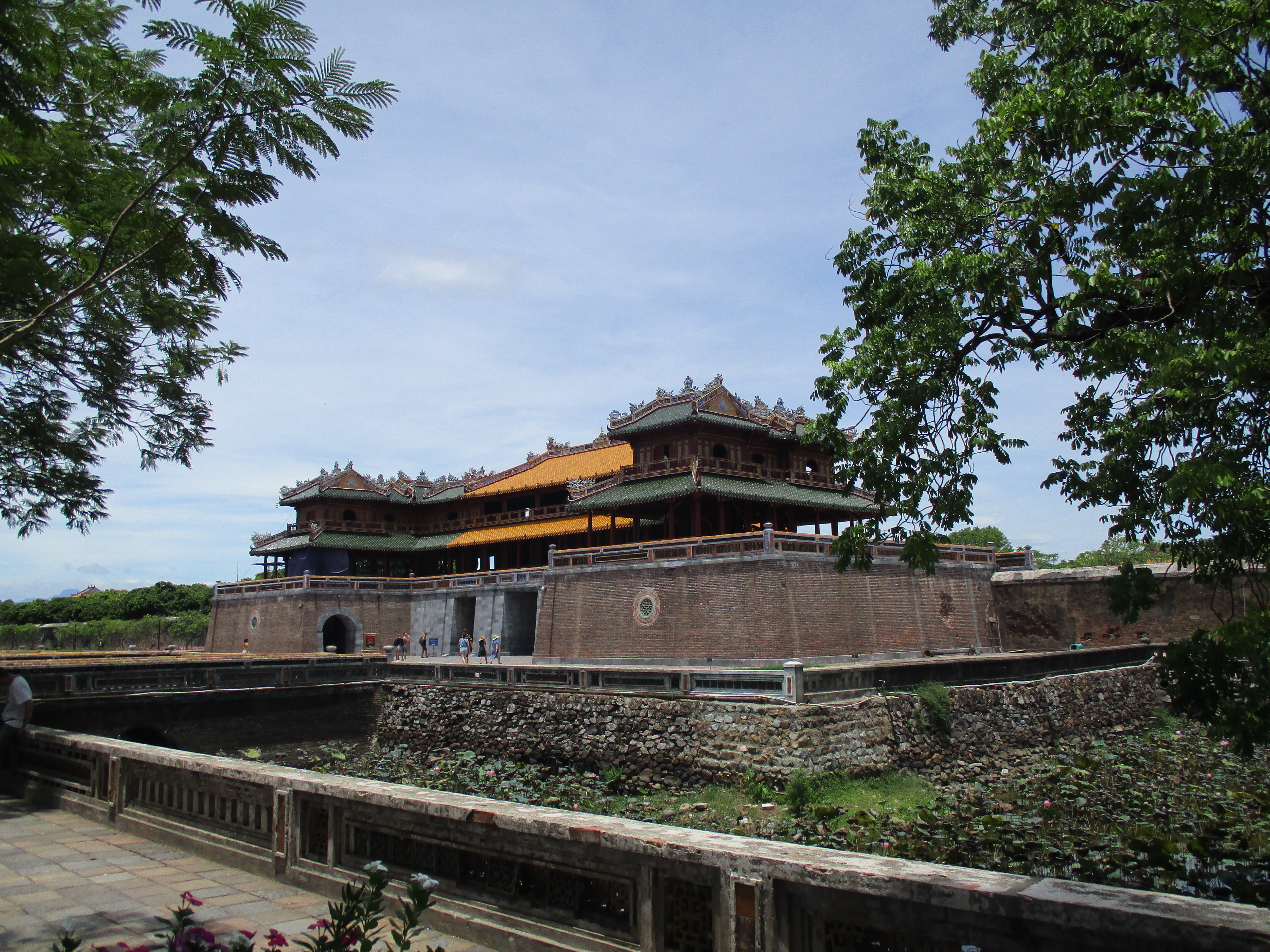
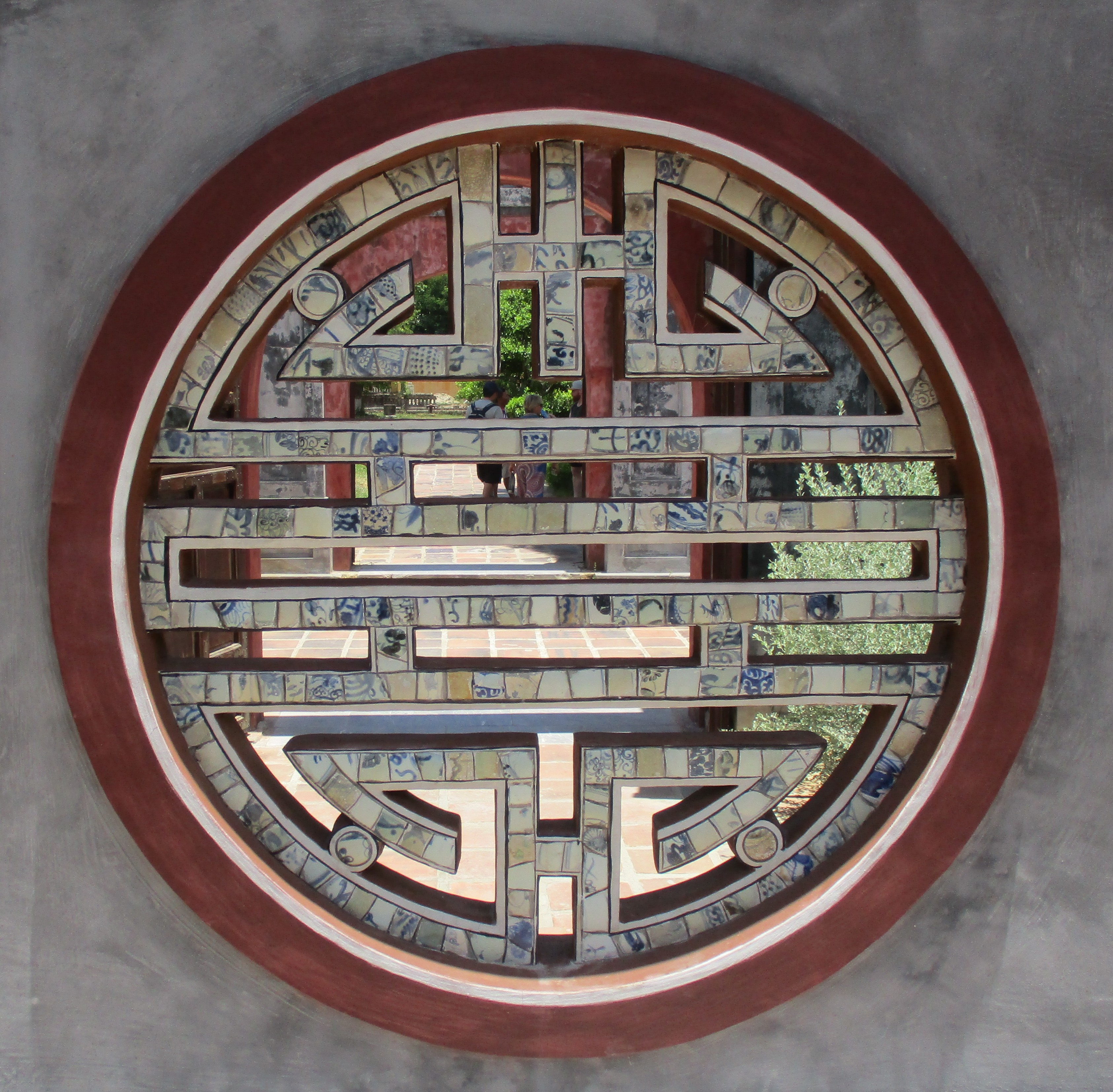
It was an easy 10-12 miles around town to the Citadel, Forbidden City, and a royal tomb. A little less jovial today, we downed water at every chance. Spirits revived in the evening as our hydration finally caught up with the past three days of hot miles, and there were hue too many Hue jokes. 🙂

I’m close to drinking a gallon per day now. I’ve never drank so much in my life, and peed so little (we’re all remarking on this phenomenon). 

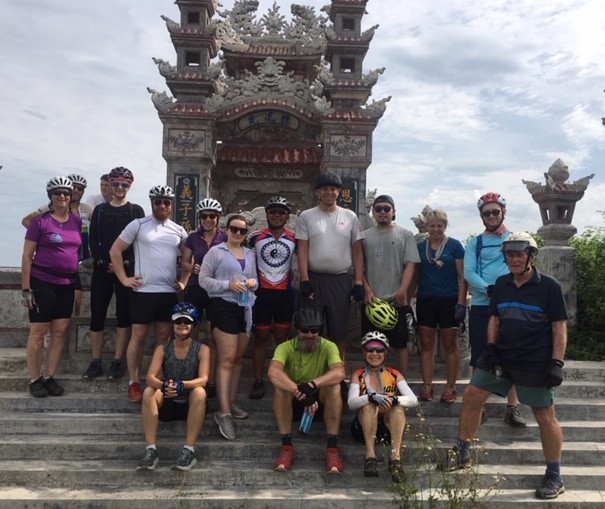
an great group of new friends


Hai Van (Sea Clouds) Pass
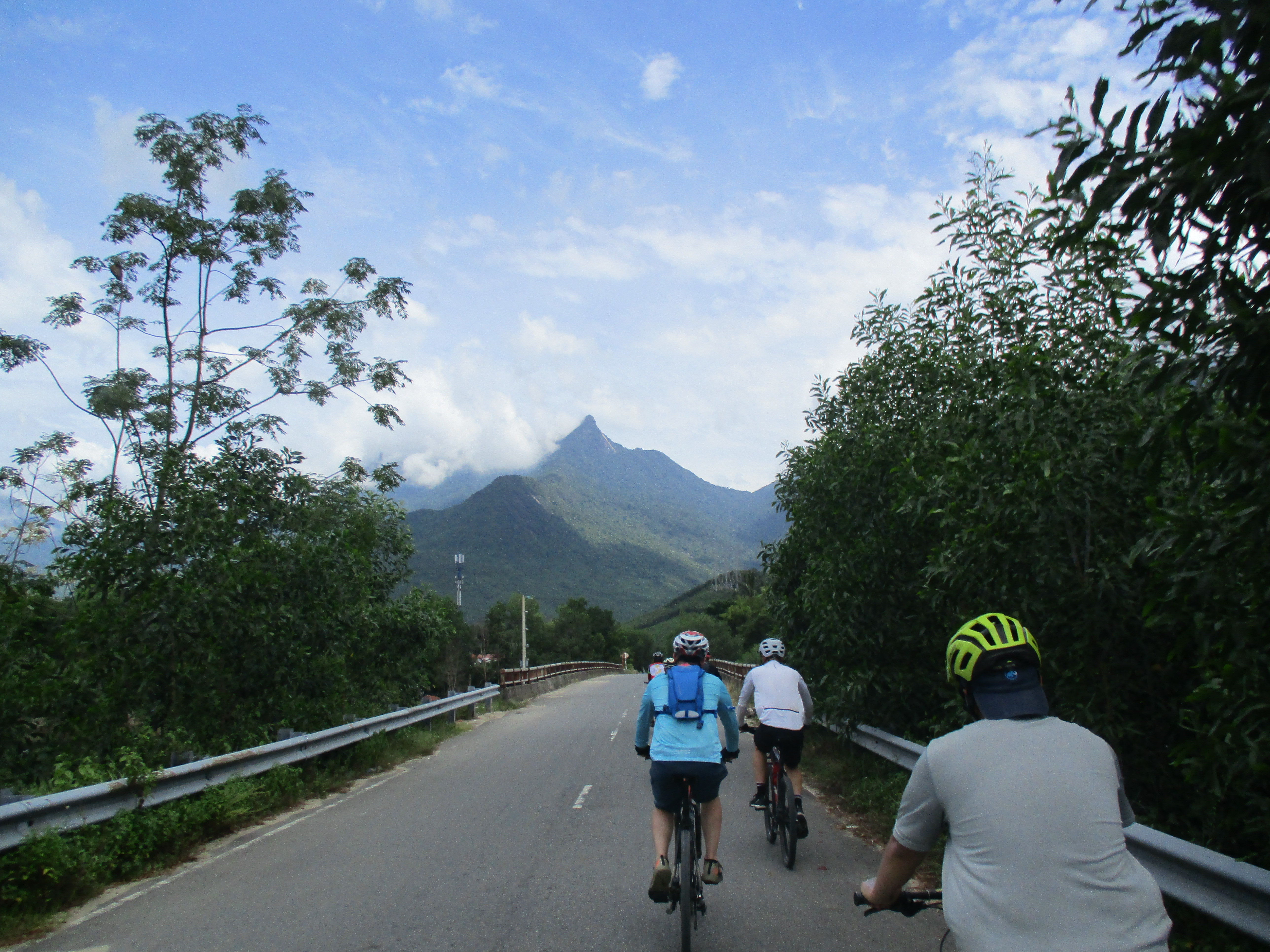
The easy day in Hue was a great setup for the ride to Hoi An along rice fields, rivers, and elaborate cemeteries. The first 36 miles were flat, cloudy, and flew by. After lunch we headed up Hai Van pass, 6 miles to 1600 feet. The views were amazing, and my ridemates called me “mental” for enjoying the climbing so much. The 6 miles down the other side to Da Nang were quite fun as well! 

view from the top
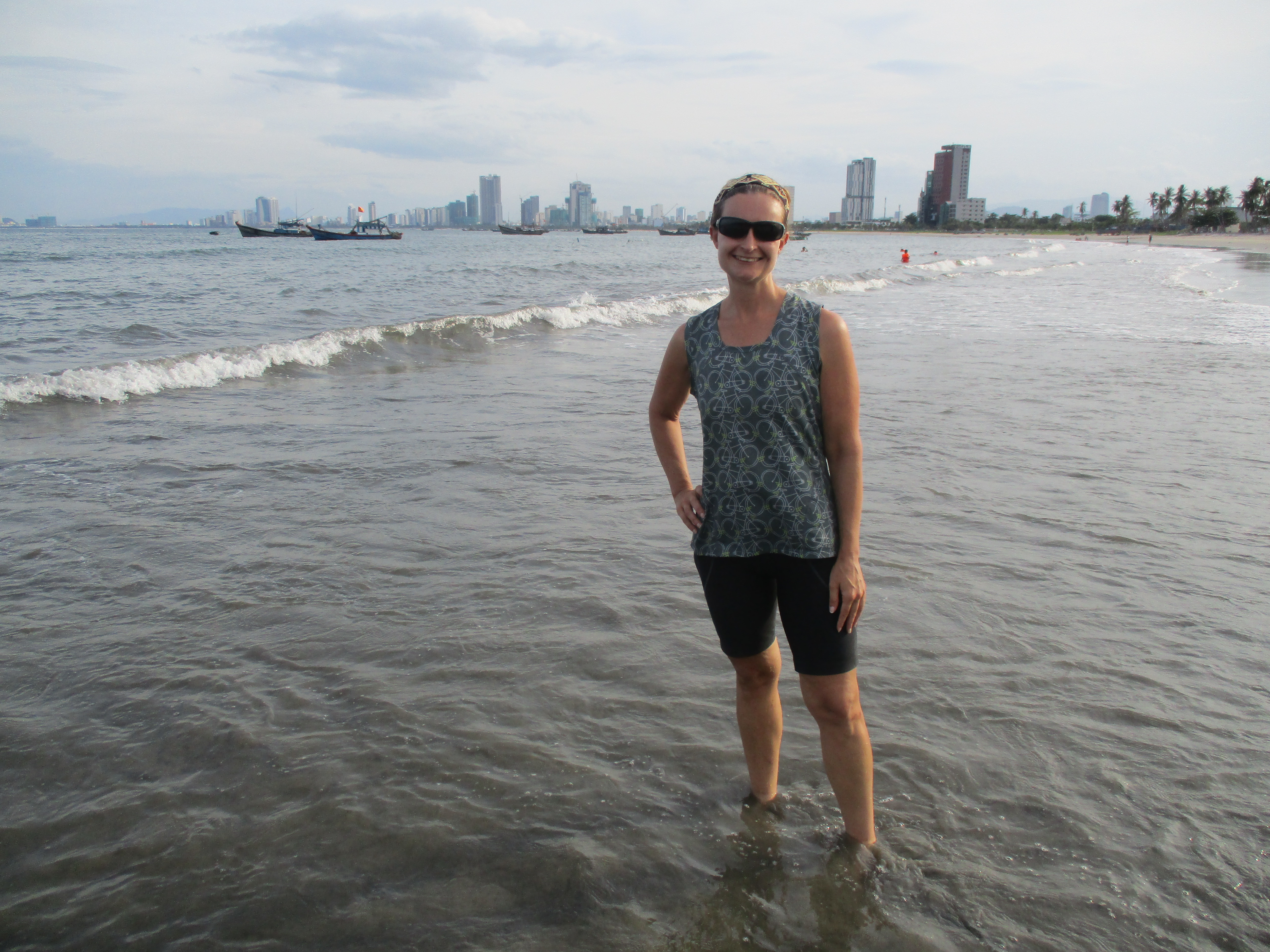
China Beach in Da Nang


Traffic Safety
To Westerners it seems like chaos: the lack of lines, seemingly few rules, and almost no traffic lights. Yet it is so much safer for cyclists here than in all of our countries. Drivers are alert and on the defensive, never aggressive. Everyone, and everything including cows and dogs, share the road equally. With no lanes, everyone gracefully swerves and weaves as needed to avoid anything in their path. We are rarely on large roads, if ever, so the traffic we encounter is fairly slow-moving, which also helps. 

Aisling and Jane
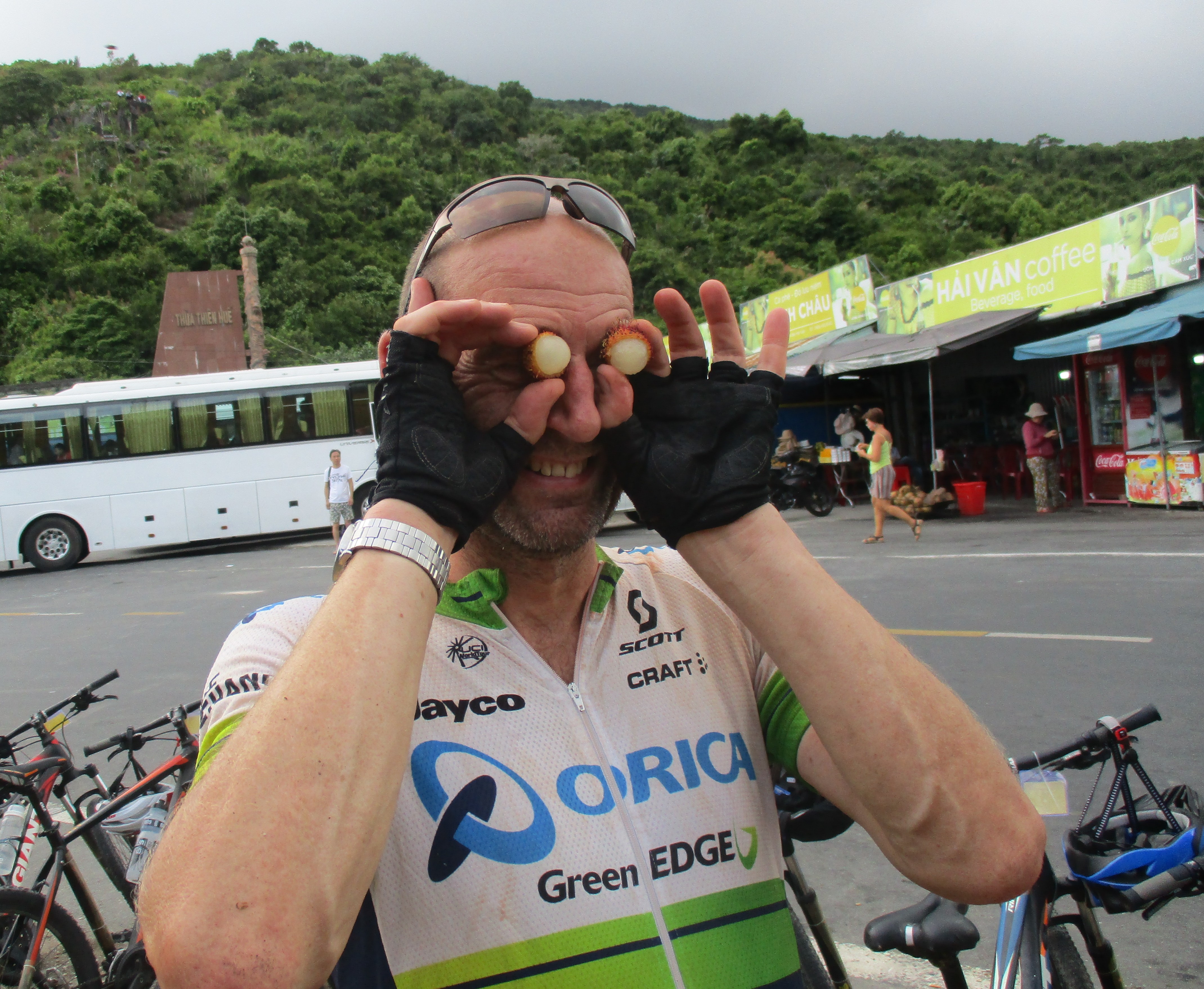
John having some rambutan fun after the climb.


Xin chao! (Hello!)

Hanoi

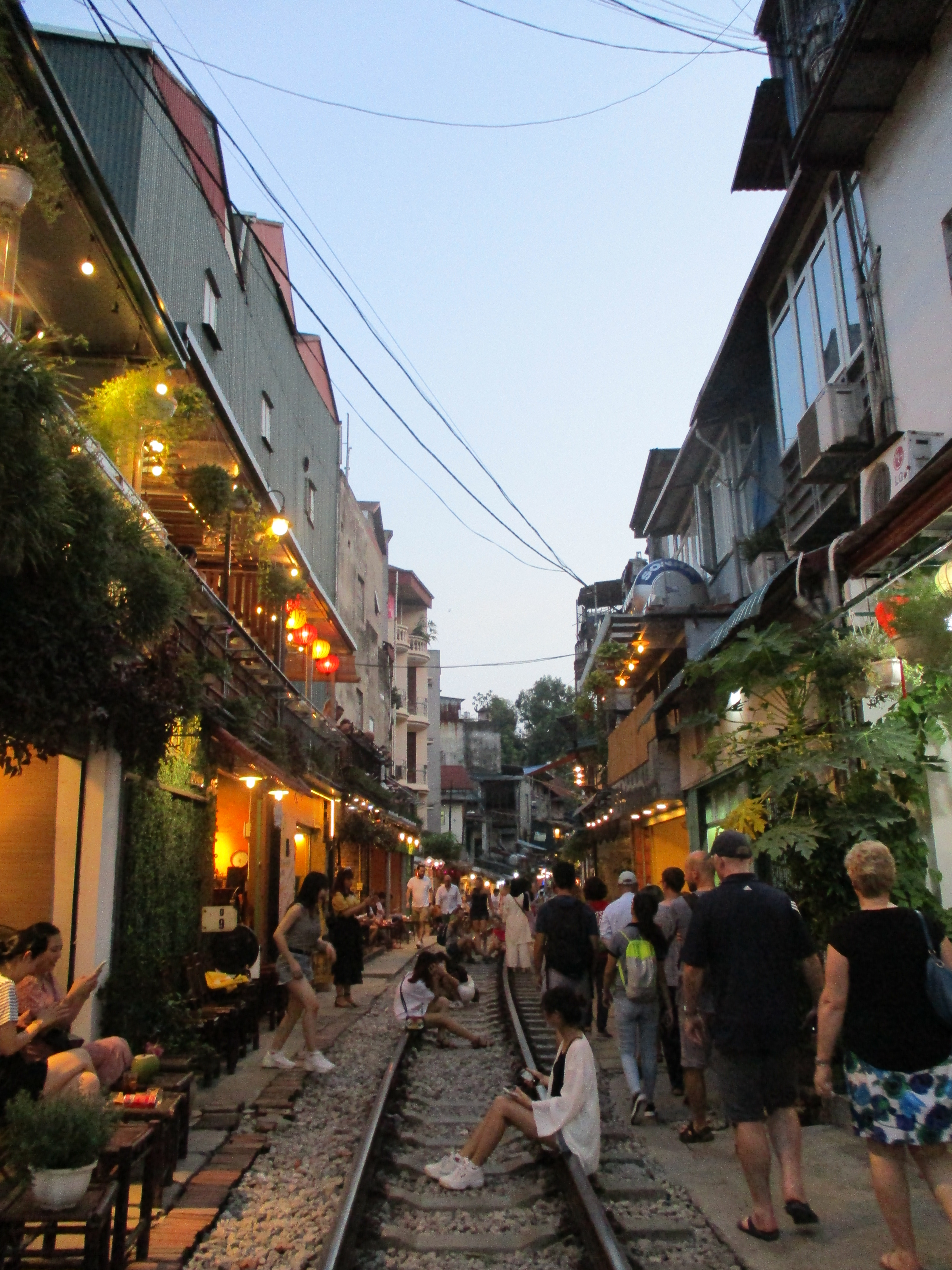
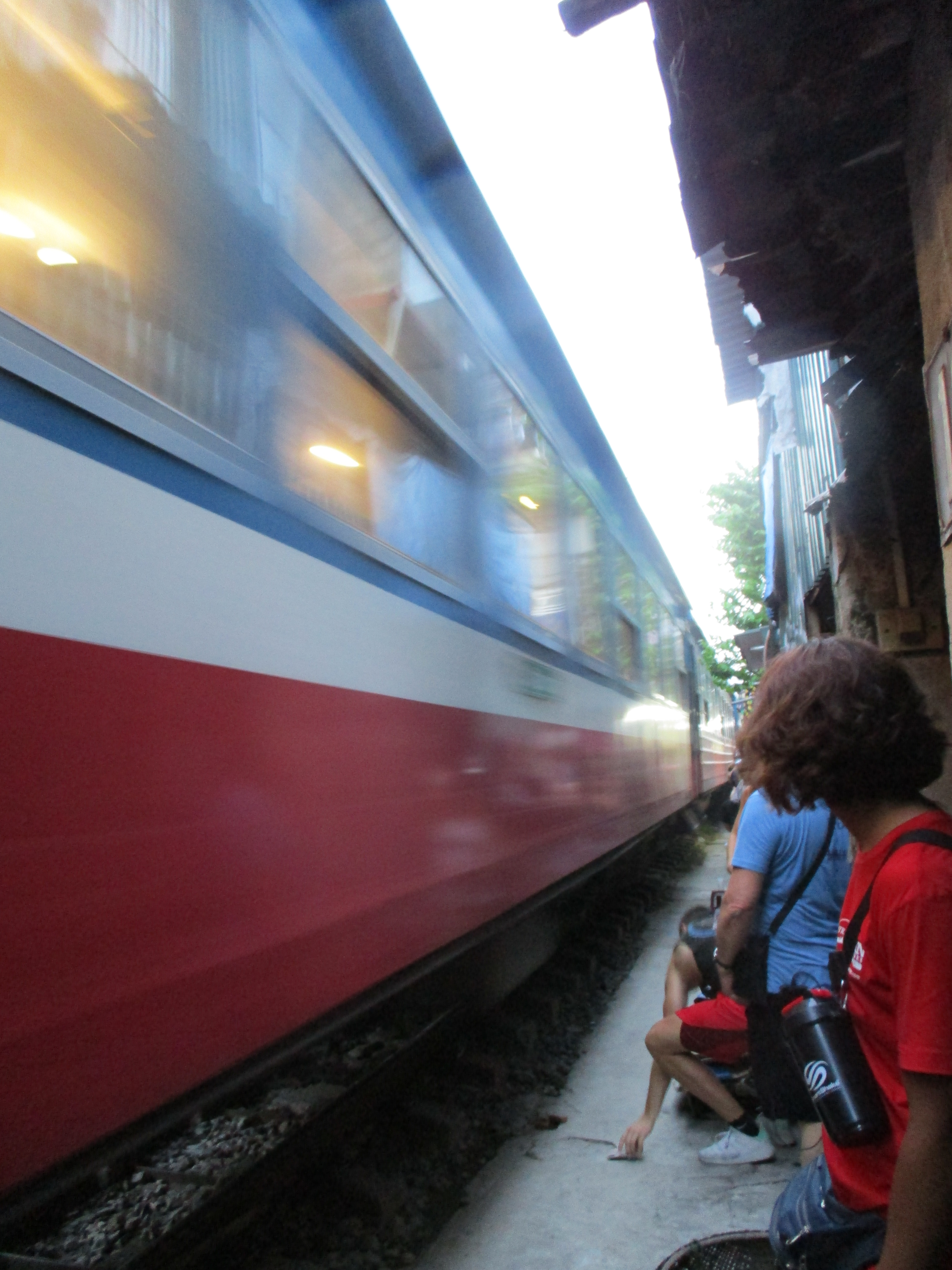
Train Street

I made it to Hanoi Saturday just in time to catch the bike tour. Whew! That evening we had the option of a food tour that included some local culture, such as the bizarre attraction of getting up close and personal with the train. Vietnam’s rail lines are very small gauge, so the trains to do not travel very fast, i.e. 48 hours from Hanoi to Saigon by train, or 45 minutes on a plane. However, when you’re standing next to one in motion, it seems fast enough!

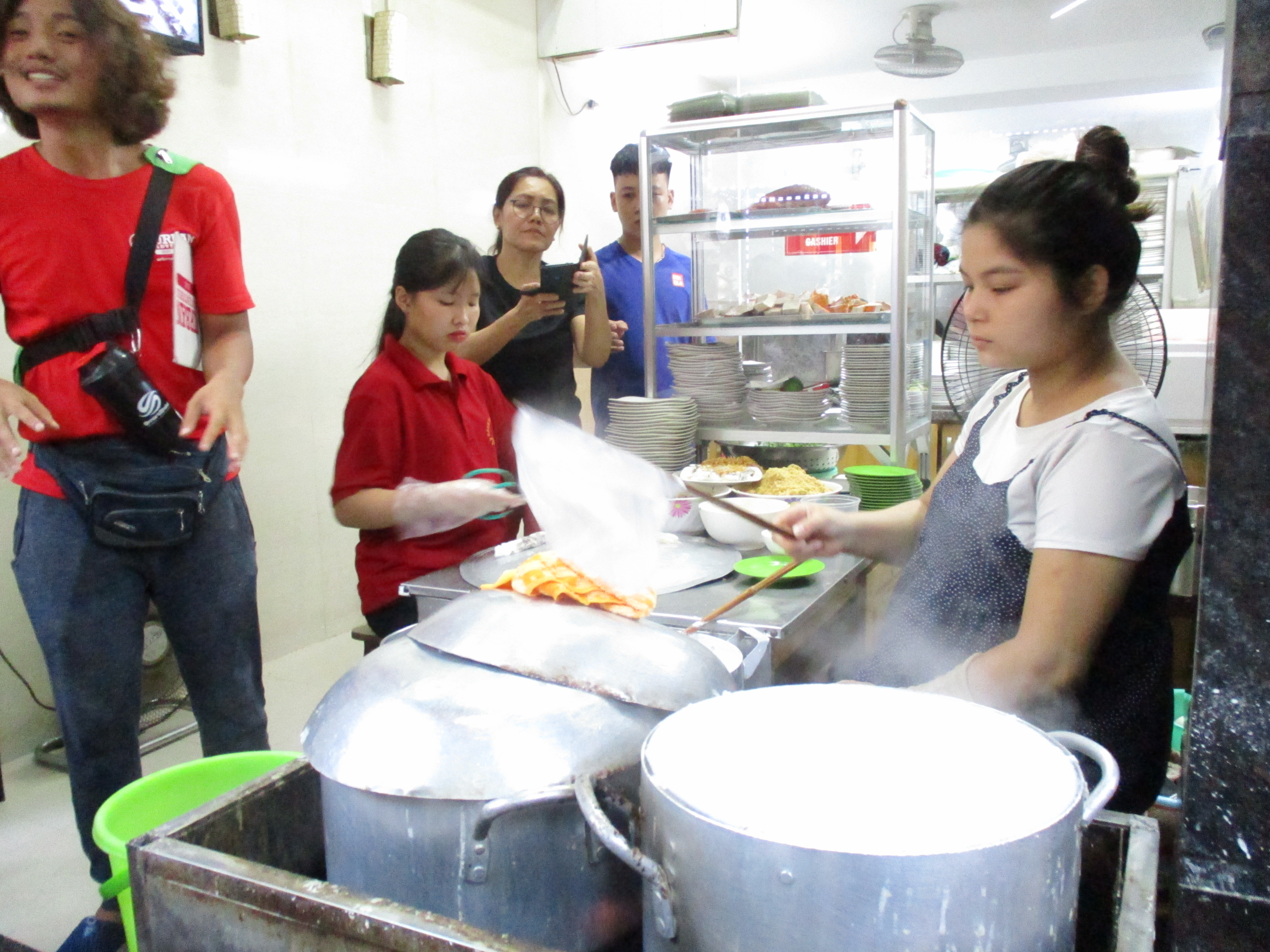
Banh cuon (“roll overs”) are tasty thin rice crepes filled with minced pork, shallots, and mushrooms.
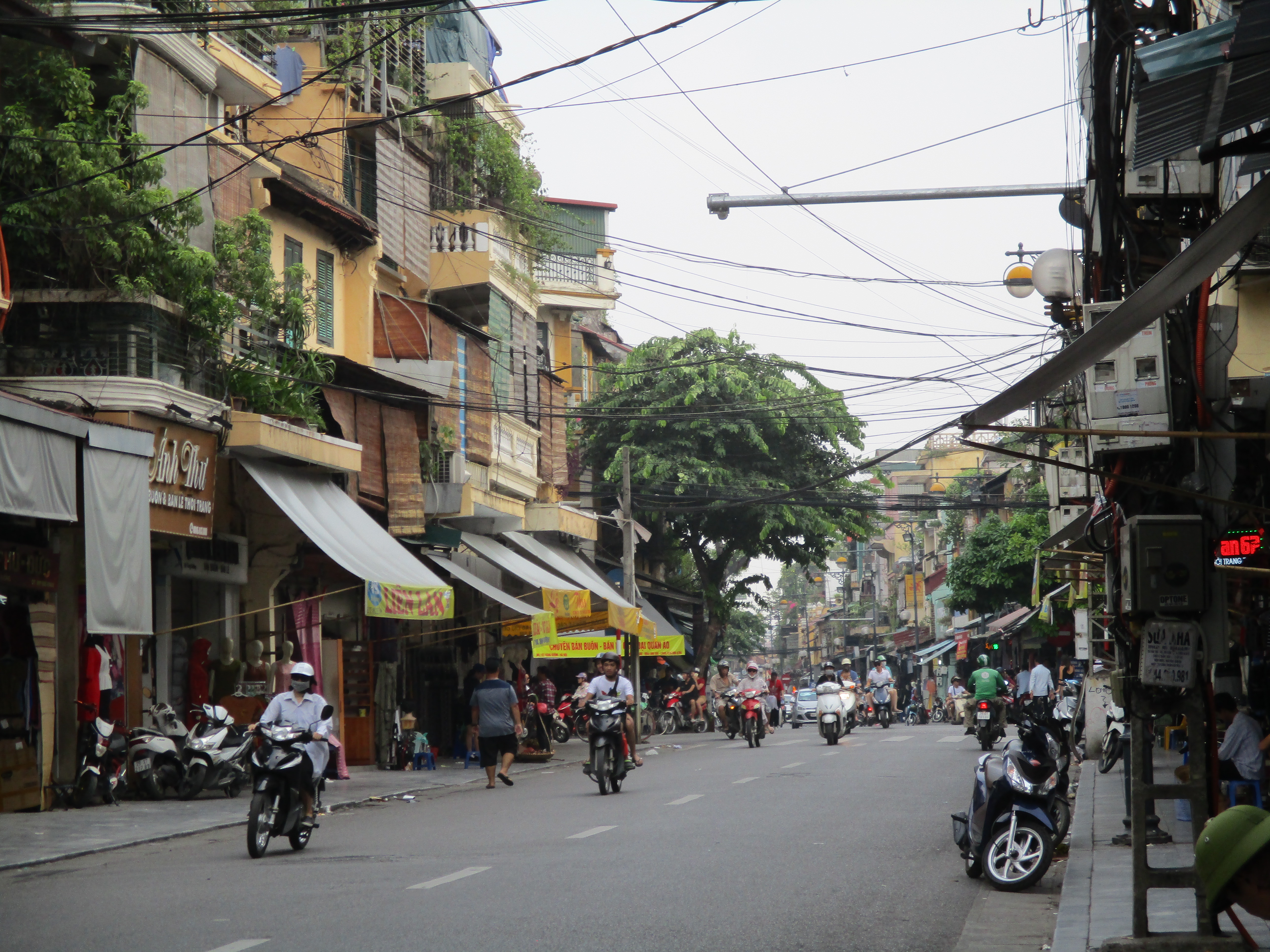
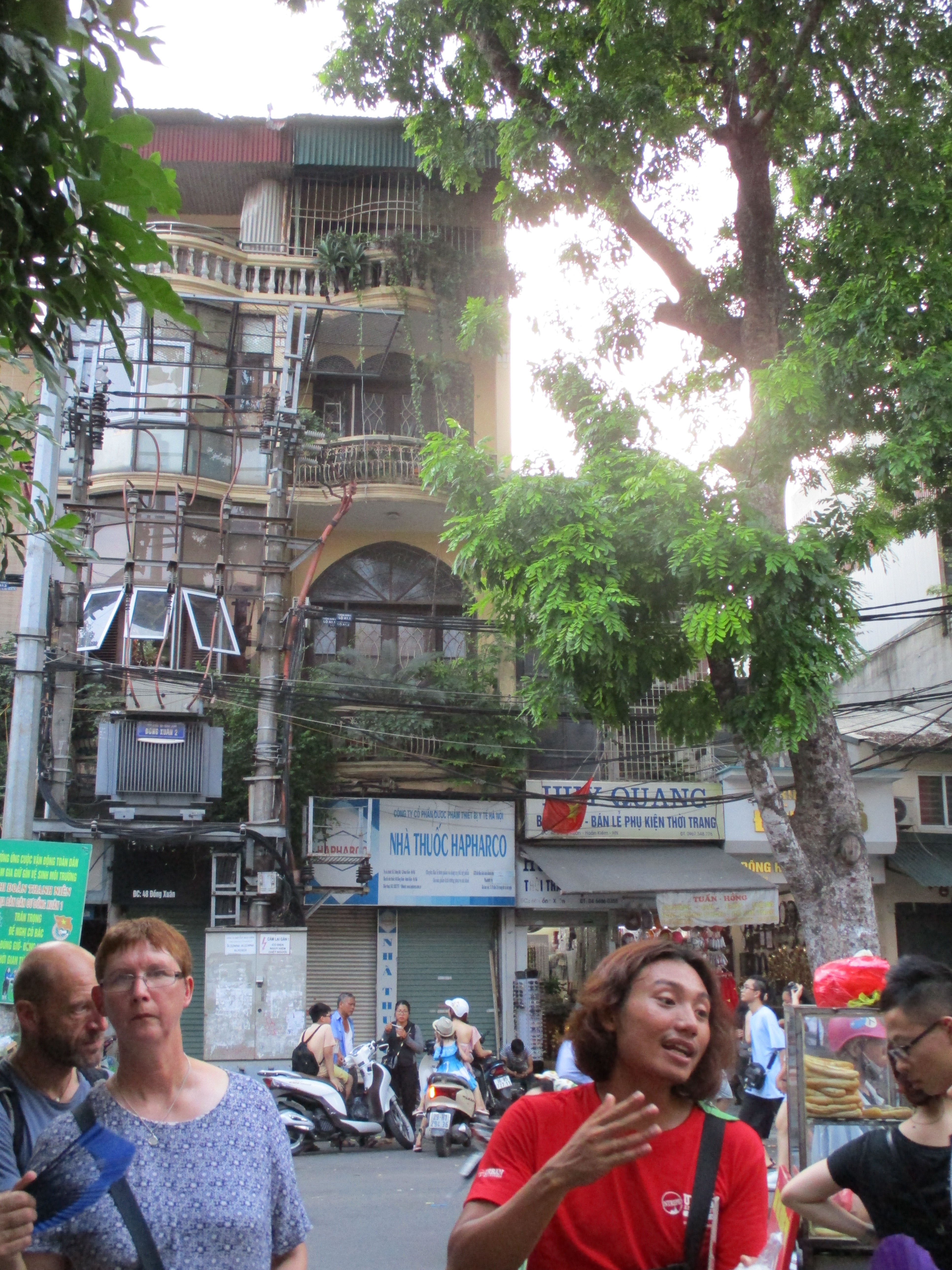
Our informative food guide with Hanoi’s “old quarter” architecture in the background. The French were here so long that they’ve had a marked influence on building styles, which continue to this day.
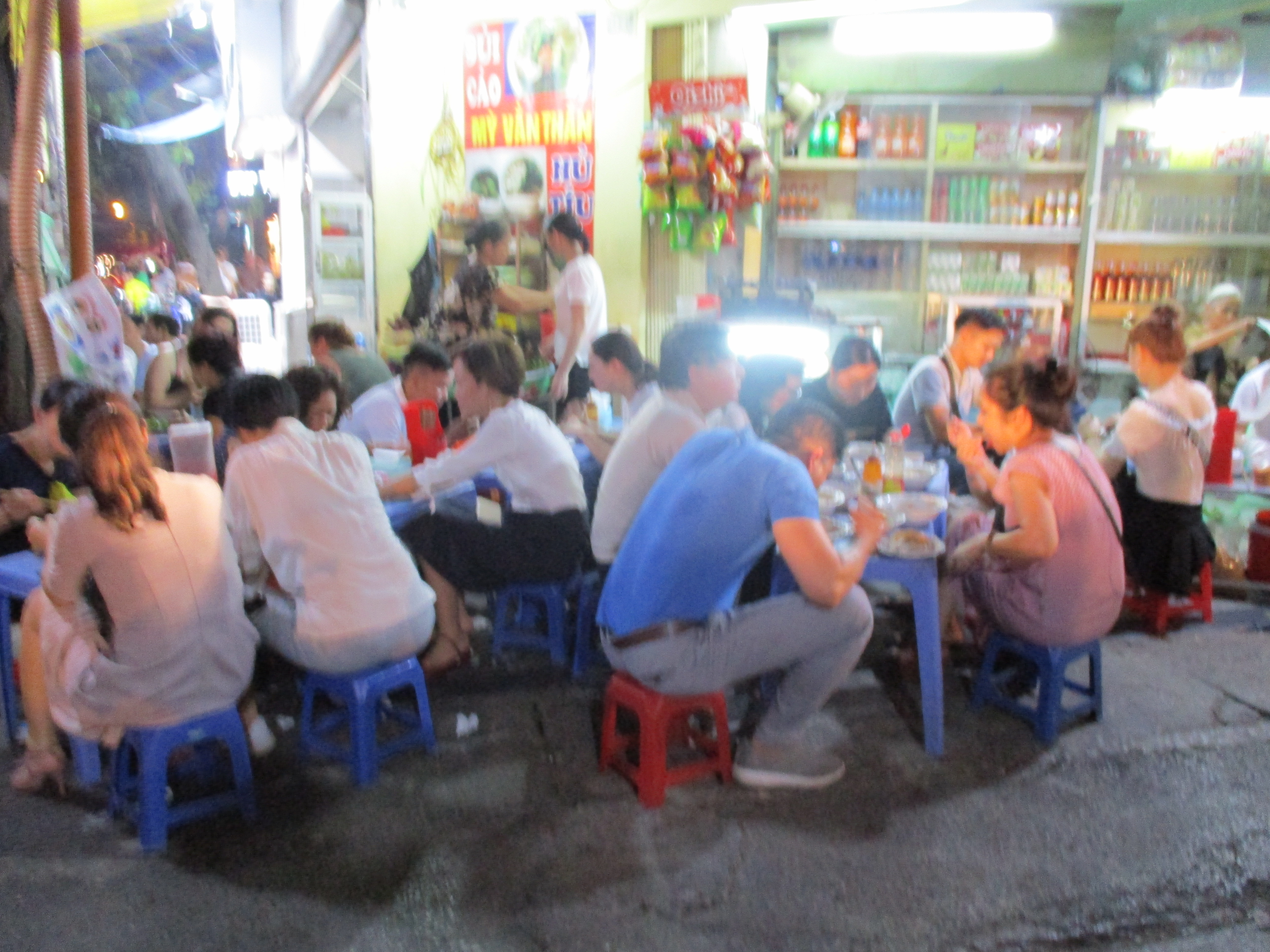
Like Bali, there are few restaurants. Most people seem to eat at tiny places. Unlike Bali, the dining spills out onto the sidewalk via tiny stools.
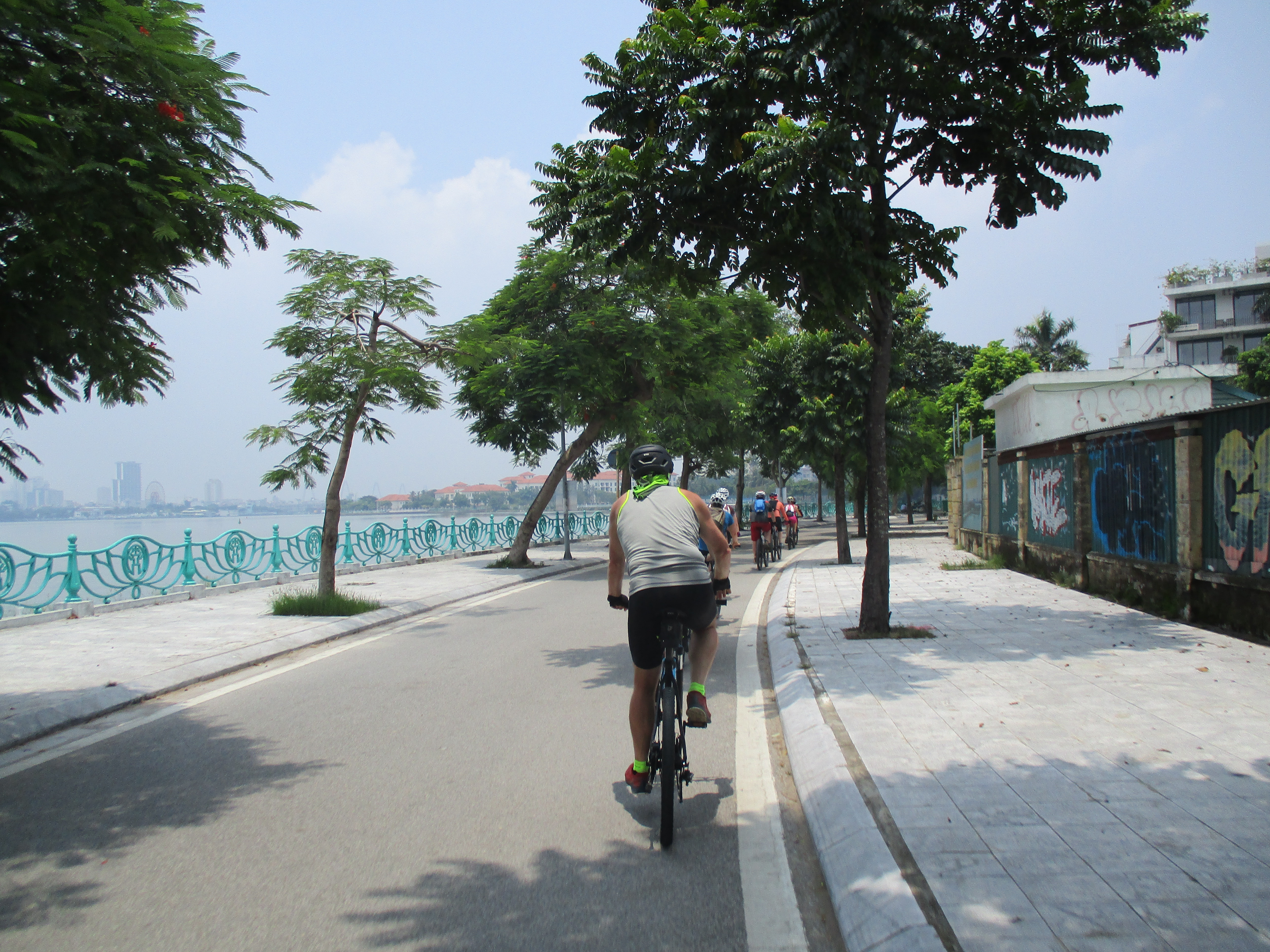
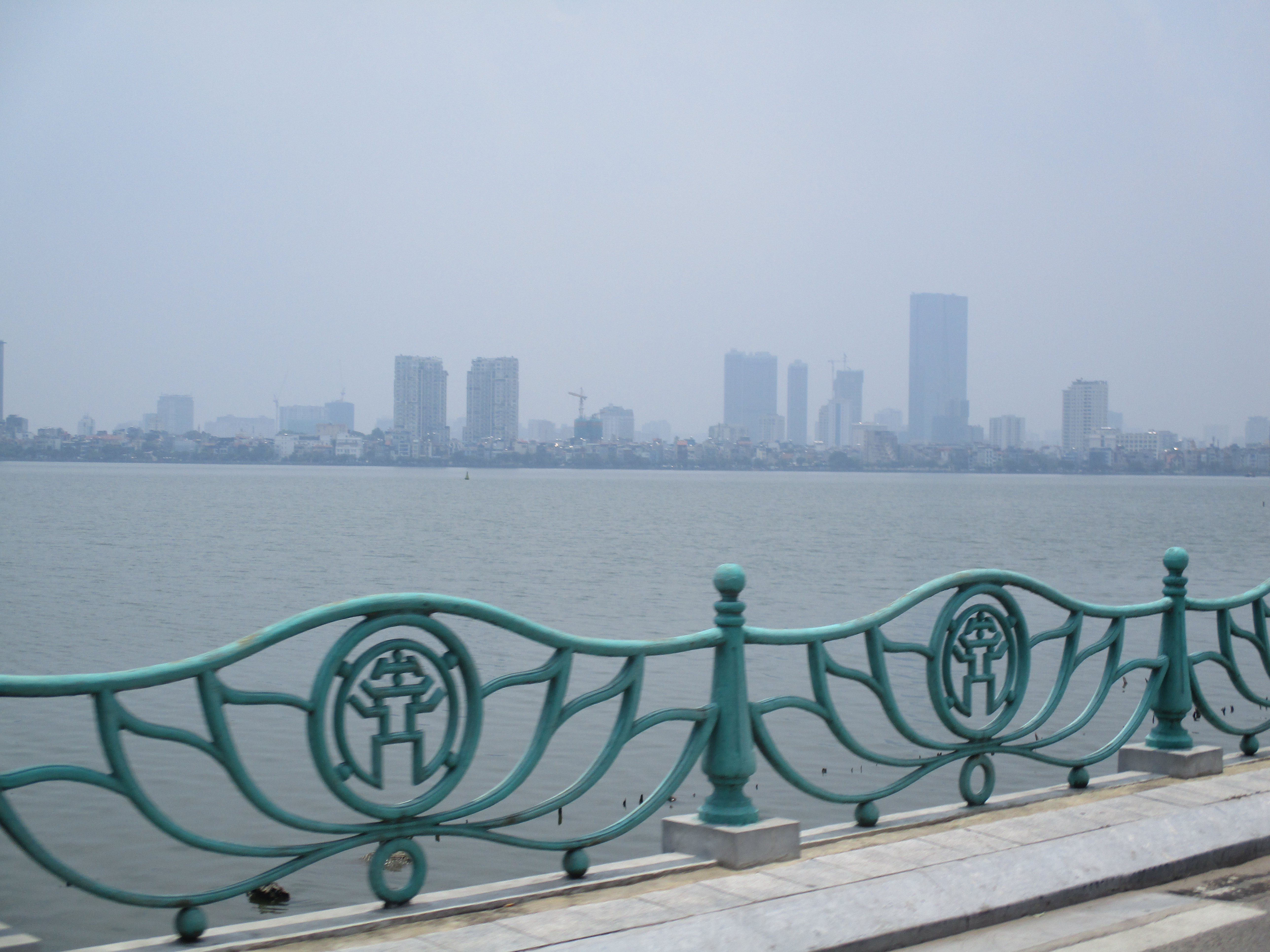
Sunday we cycled 12 miles around the lake in soaring humidity at 100 degrees.
Hanoi through its very poor air quality.

The Way to Mai Chau

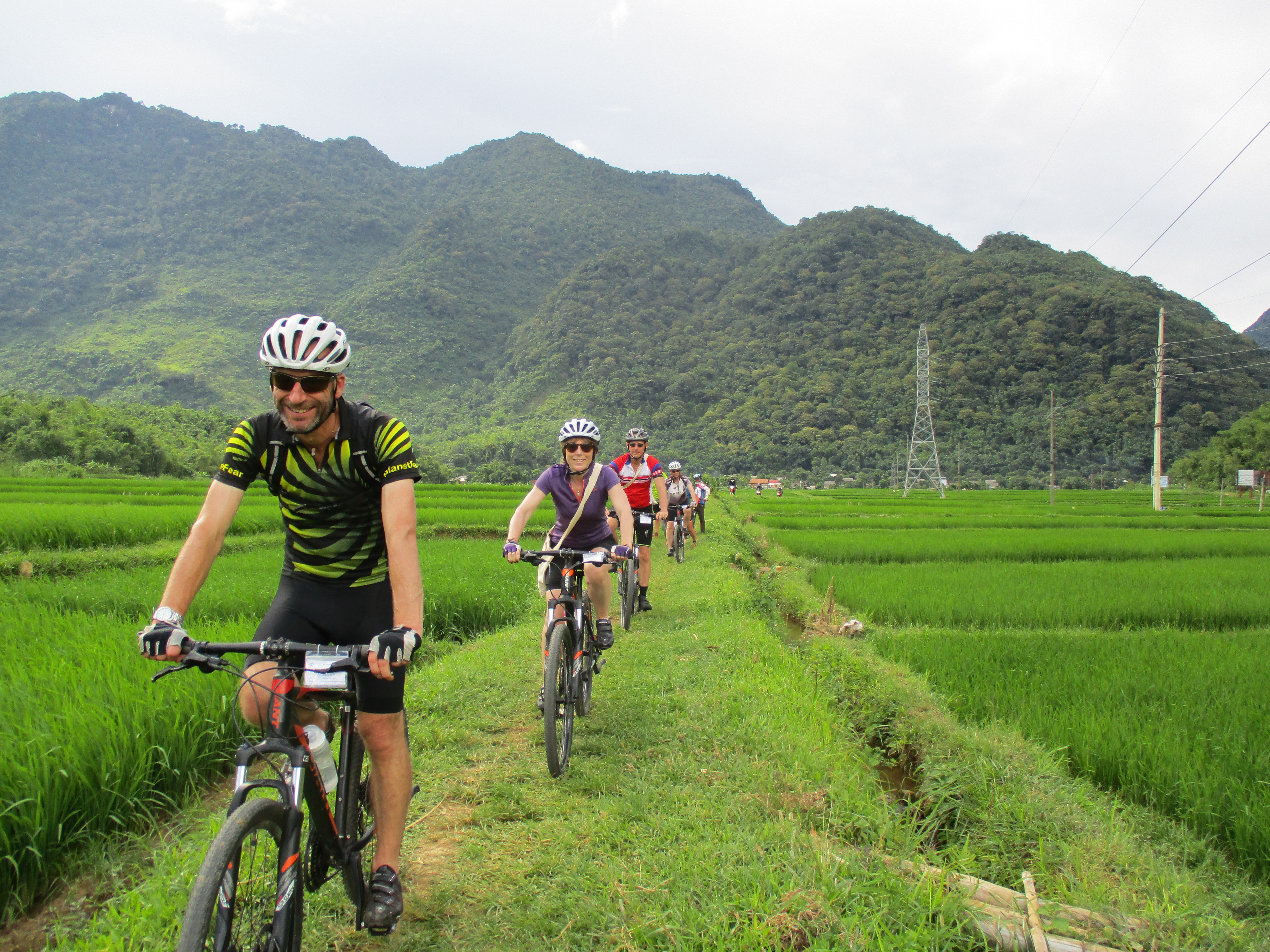
After a bus ride on Monday, we cycled 23 miles along the Red River on relatively quiet and wide main roads with good shoulders. After lunch, the bus took us up into the mountains, which were relatively cooler as temps dipped into the low 90s.
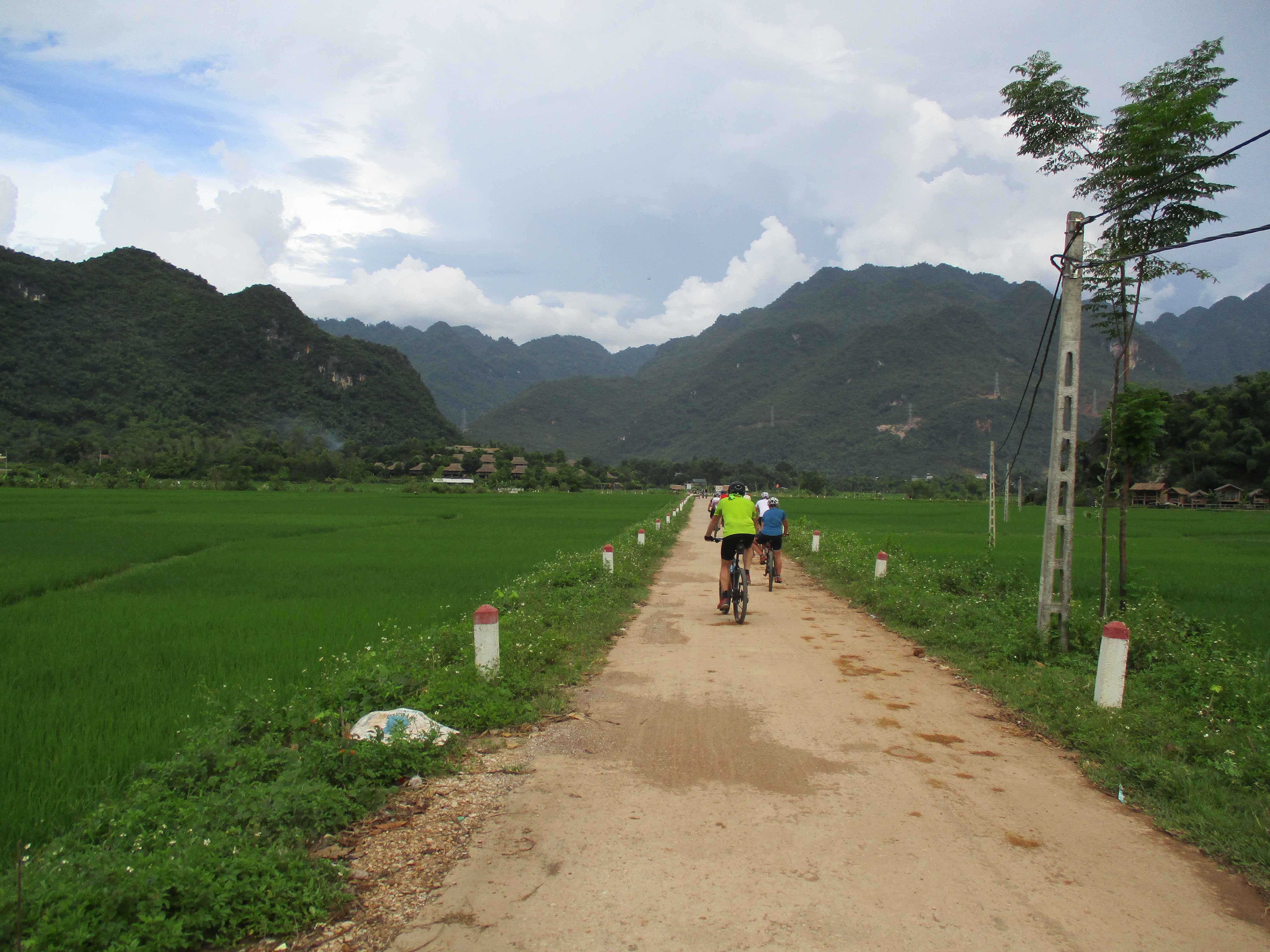
The last 12 miles were on village lanes and single track through the rice paddies. It was an incredible day!
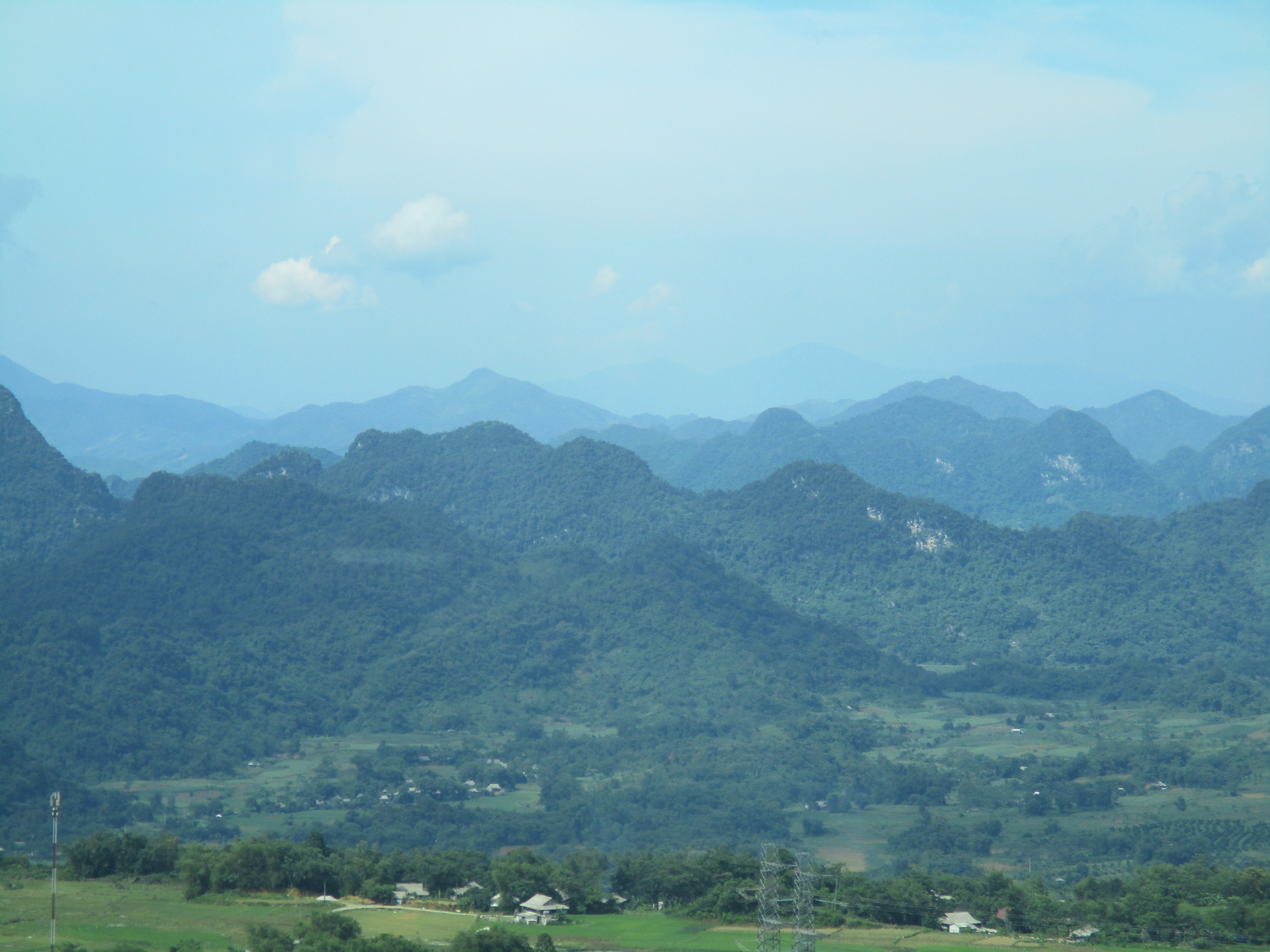
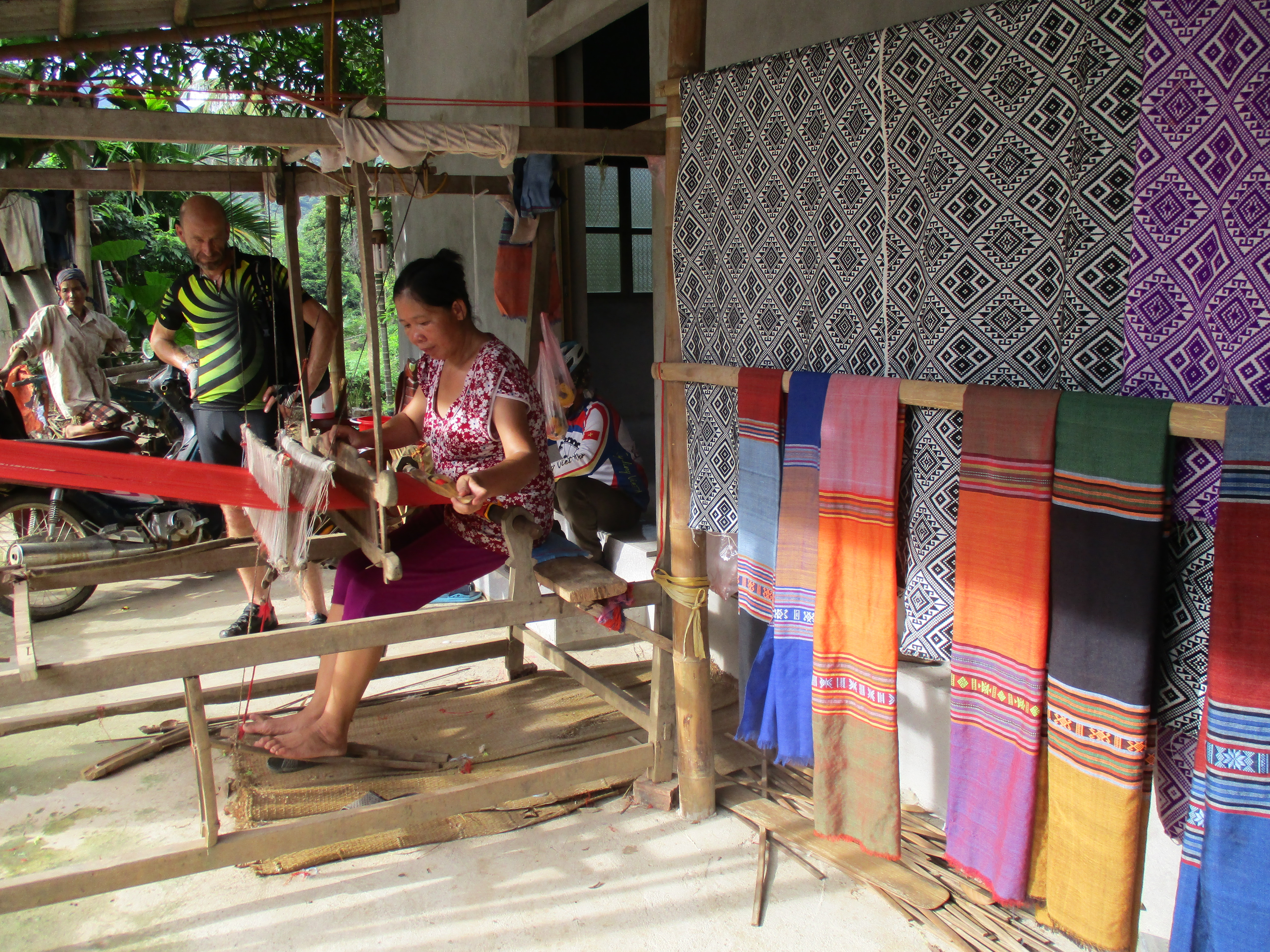
This is the region of the Thai and Hmong minorities, known for their beautiful weaving.

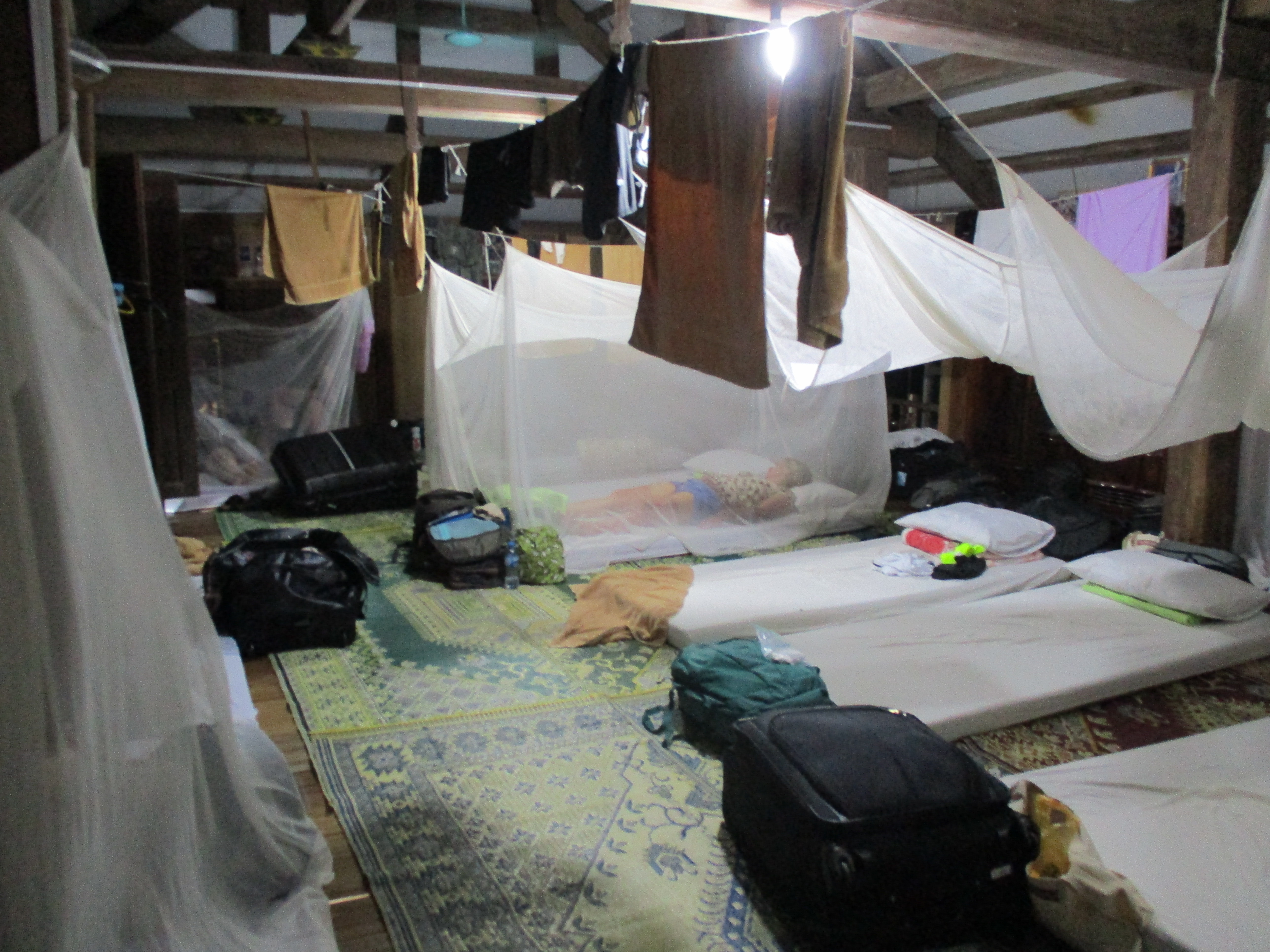
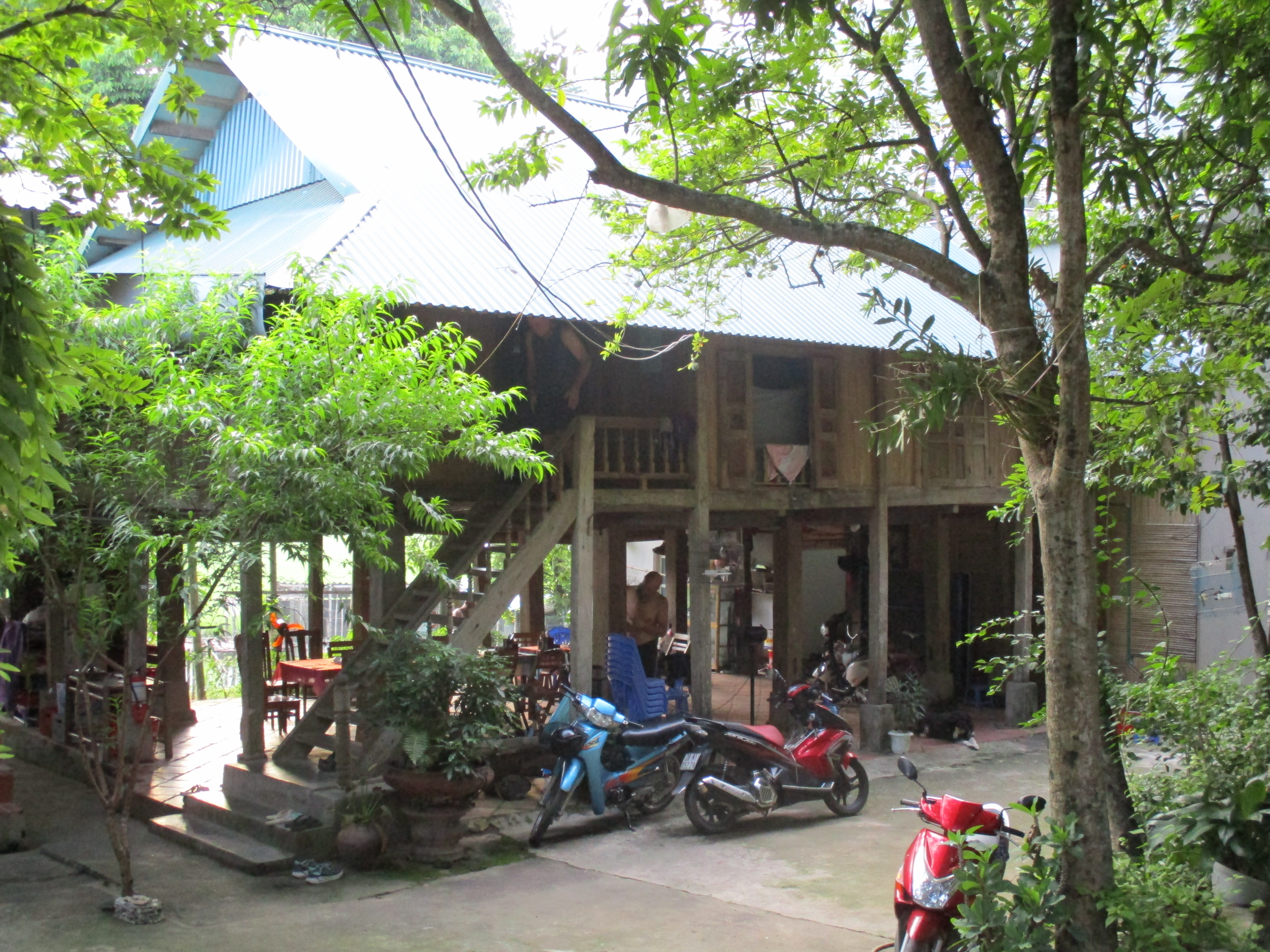
In Mai Chau, our accommodation was a homestay. All 16 of us shared the top floor of a traditional stilt house. I love the way our amazing leader Chi pronounces the insect our nets protect us from: “mosskweeto.” It was hot and a little noisy; most of us didn’t sleep much. Our group of Aussies, Kiwis, Irish, English, and Americans bonded quickly!

We range in age from 20s to 70s, and everyone is warm, funny, and generous.

On to Ninh Binh

53 miles Tuesday at 102 degrees and tropical humidity through rolling terrain
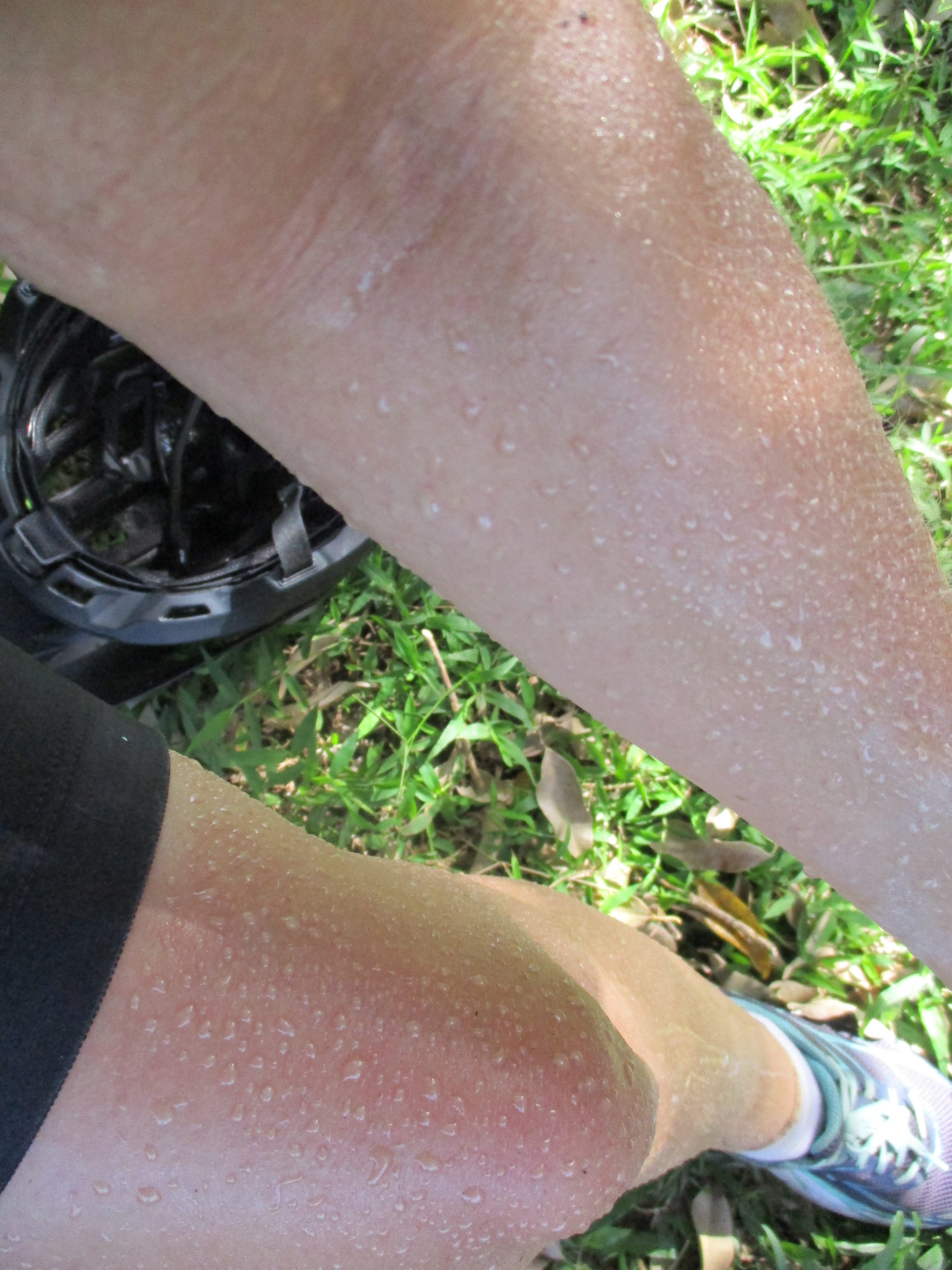
Yes, it was hard. The word “brutal” came to mind on the uphills. All I could think about was ice cold water; it was all I wanted. Yet the scenery was just gorgeous!
I’ve never sweated so much in my life. It is untelling how much water I’ve been drinking.

Two Days in the Lion City

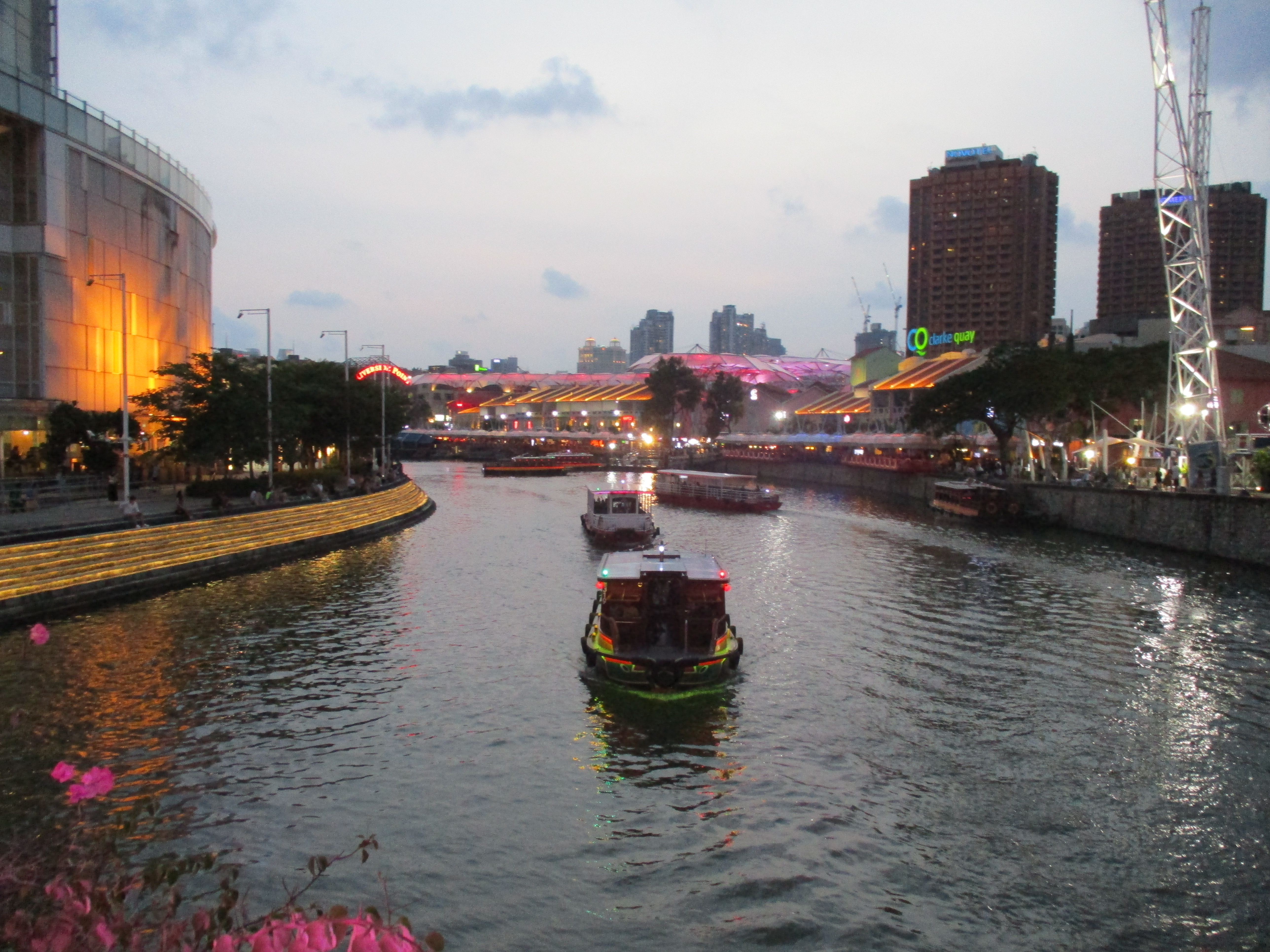
Singapore river at Clark Quay
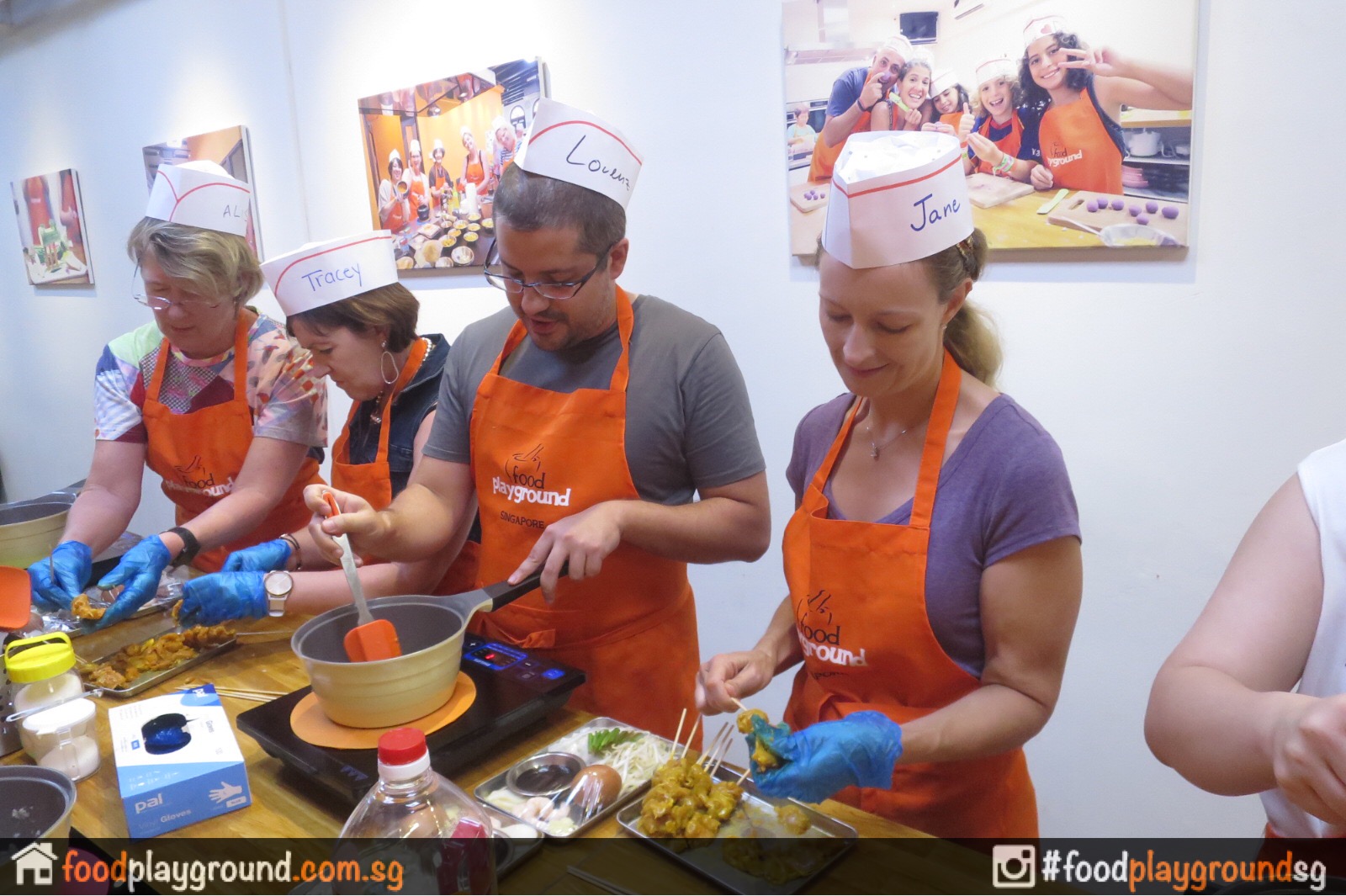
Lorenz from Lucerne and I cooked chicken satay with peanut sauce, char kway teow, and sago pudding in our heritage foods class.
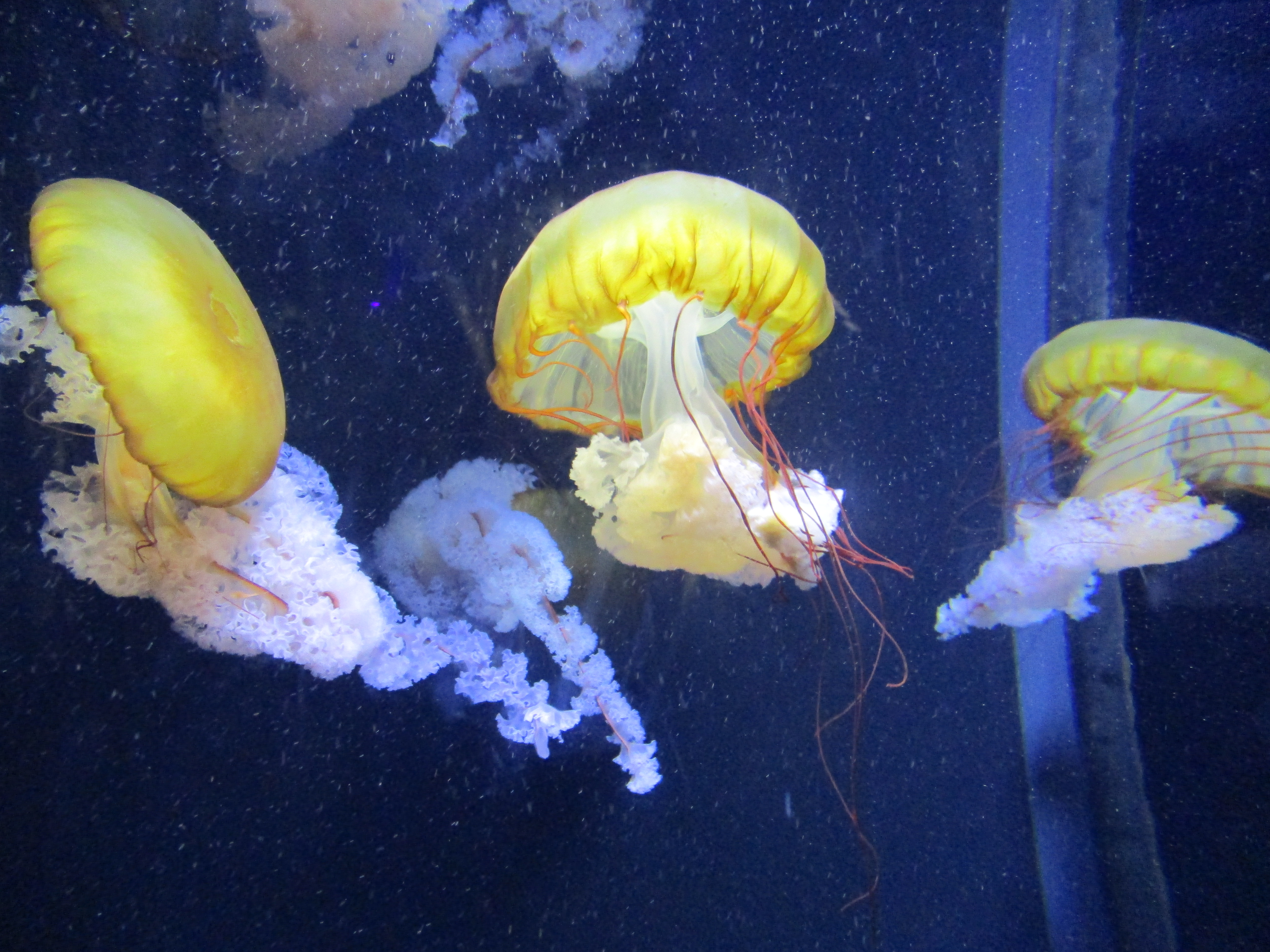
After snorkeling for two weeks, I was captivated by the SEA Aquarium on Sentosa Island.
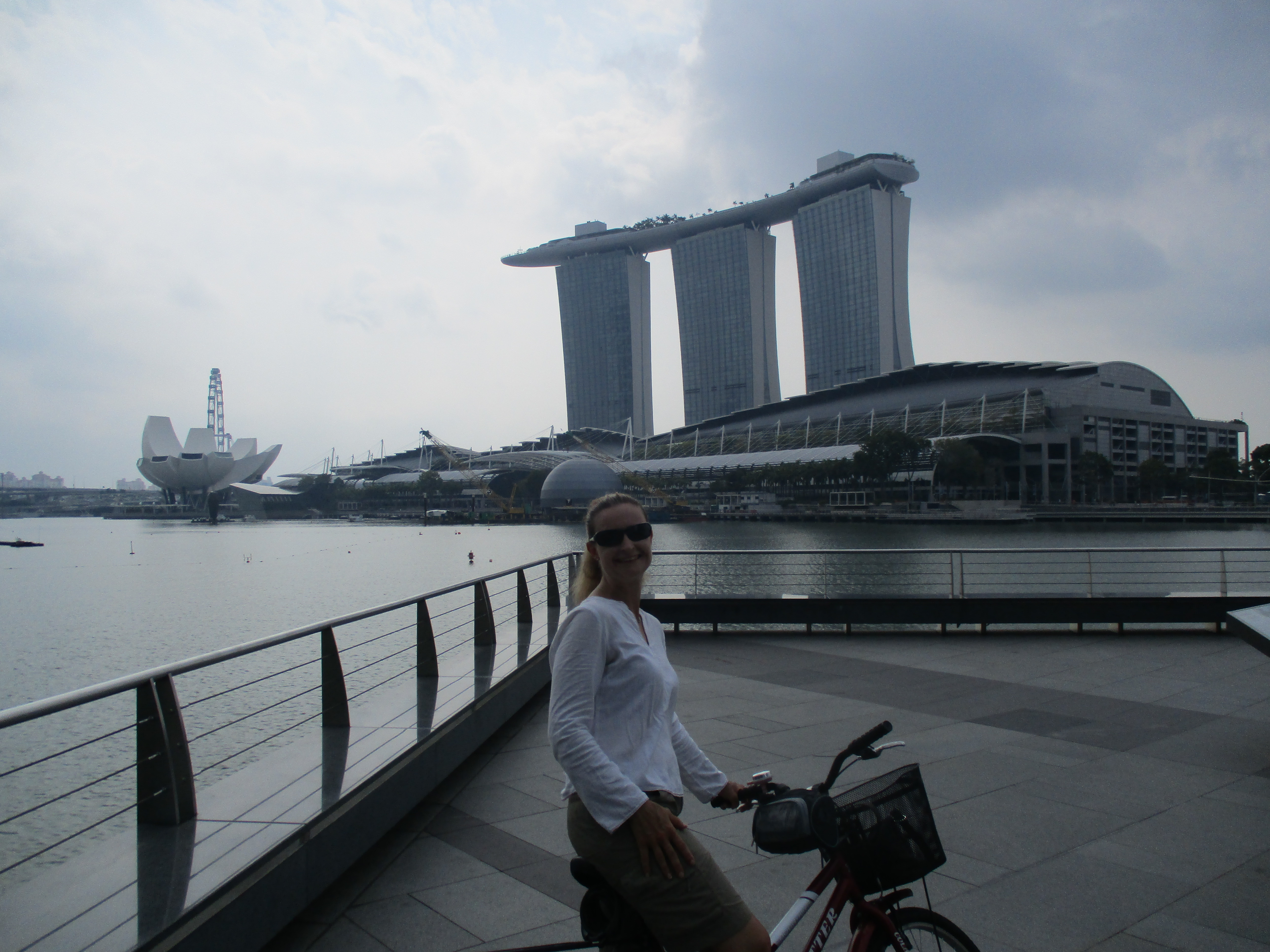
The bike tour was wonderful!
(background: Marina Bay Sands hotel)
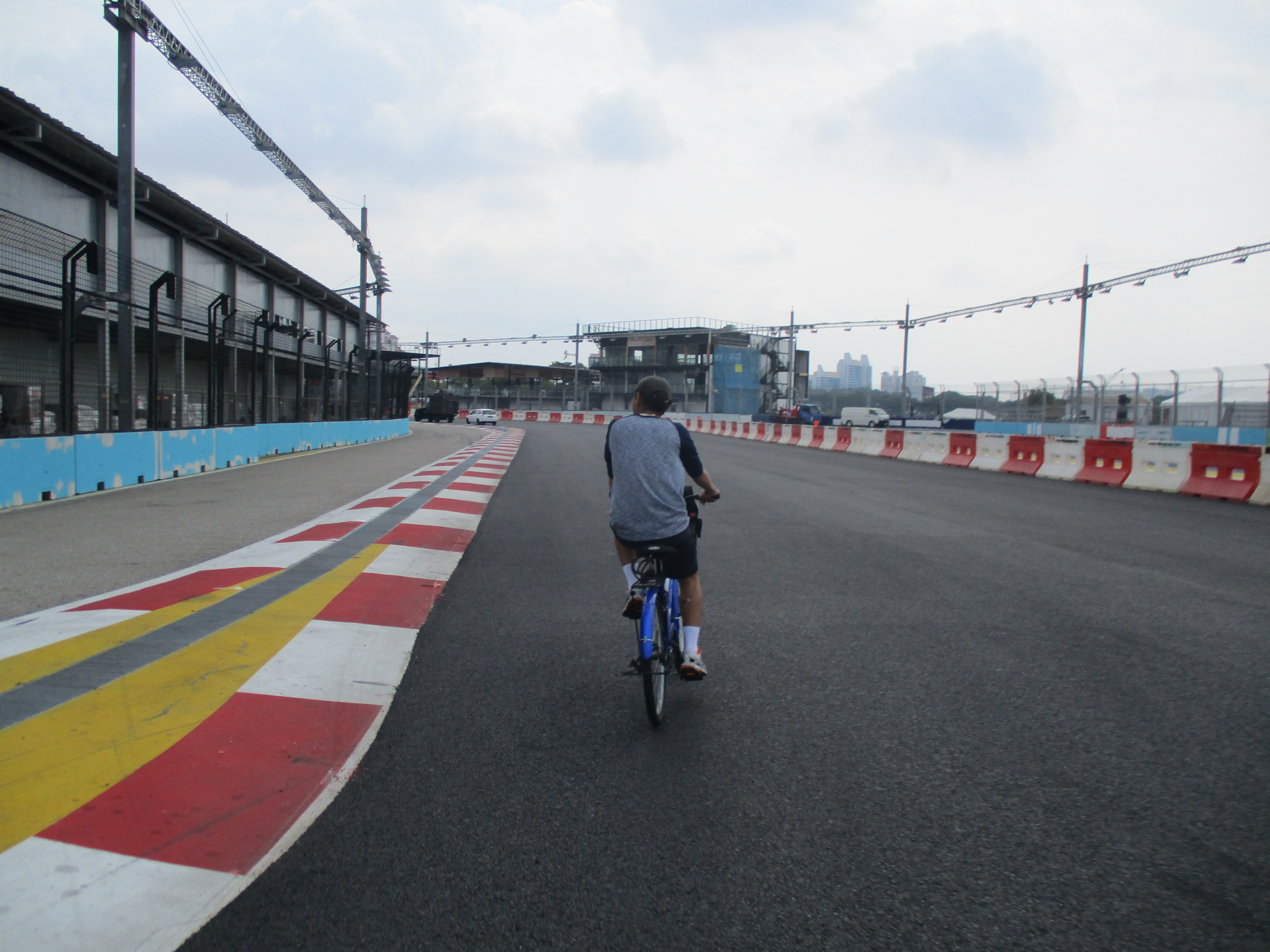
My fantastic guide even took me out on the F1 track.
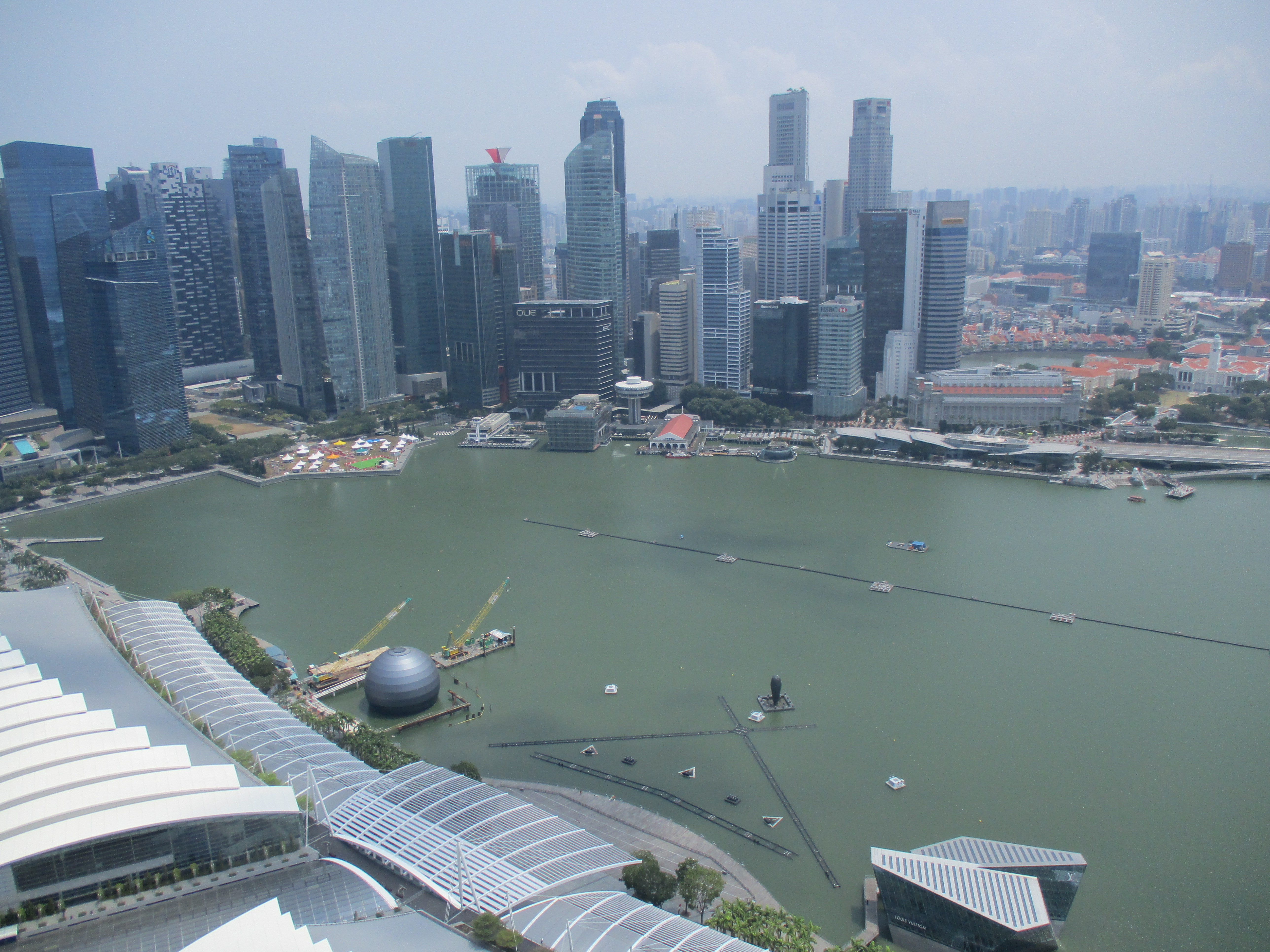
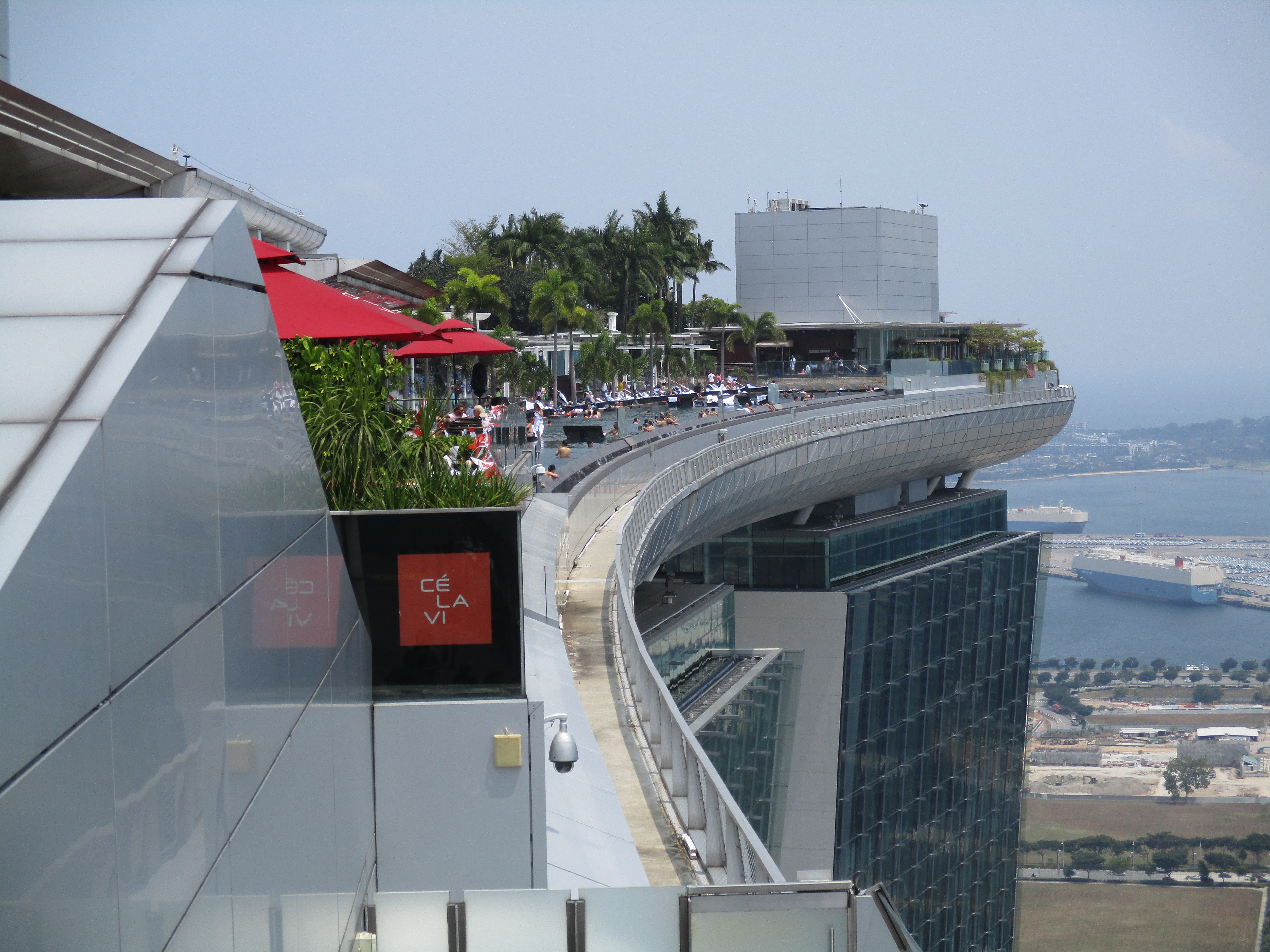
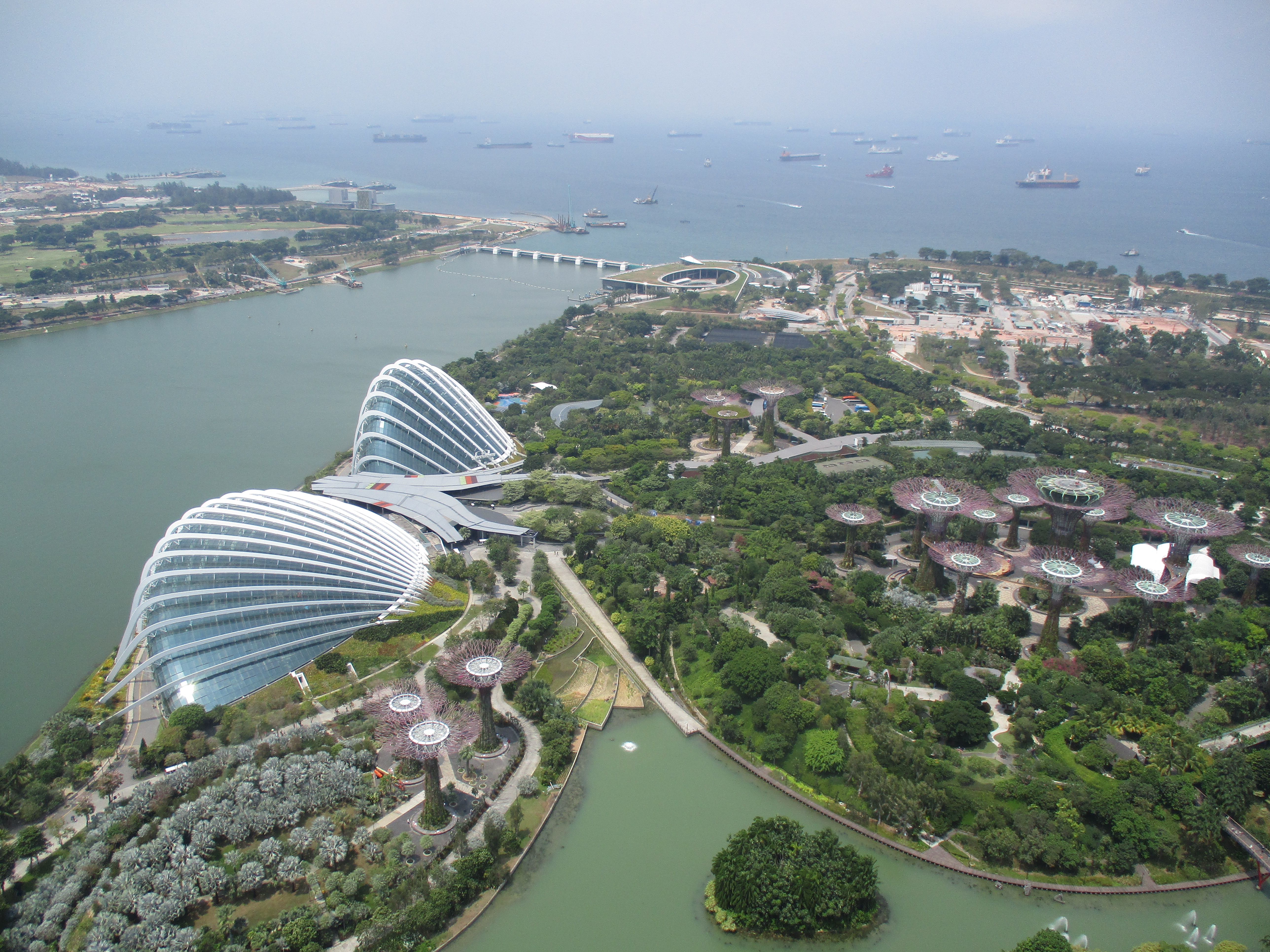
views from atop the Marina Bay Sands hotel
The infinity pool on top of MBS is the world’s largest rooftop pool.
Marina Bay Gardens and its “super trees”
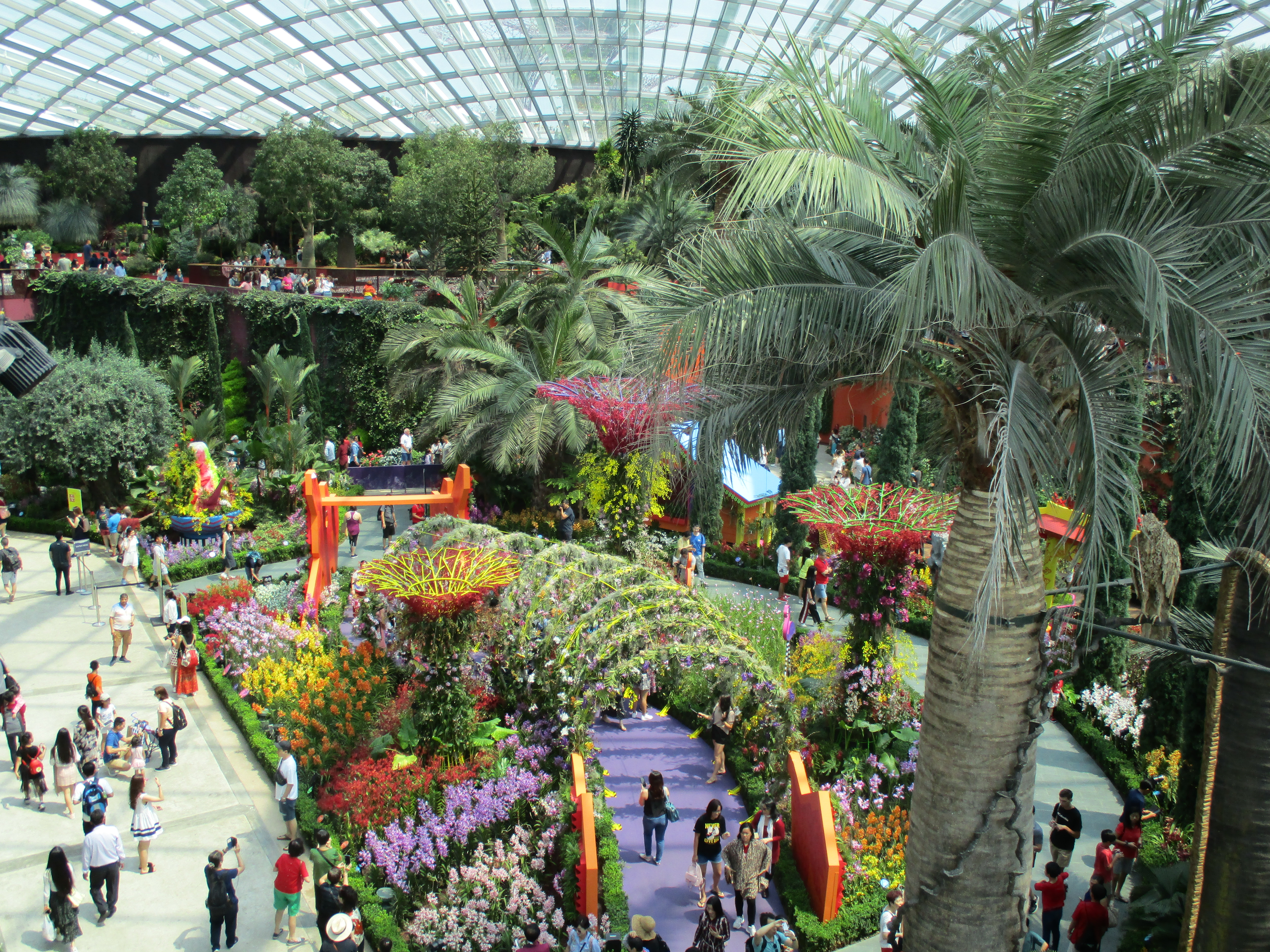
lucky to catch the orchid exhibit in the Flower Dome
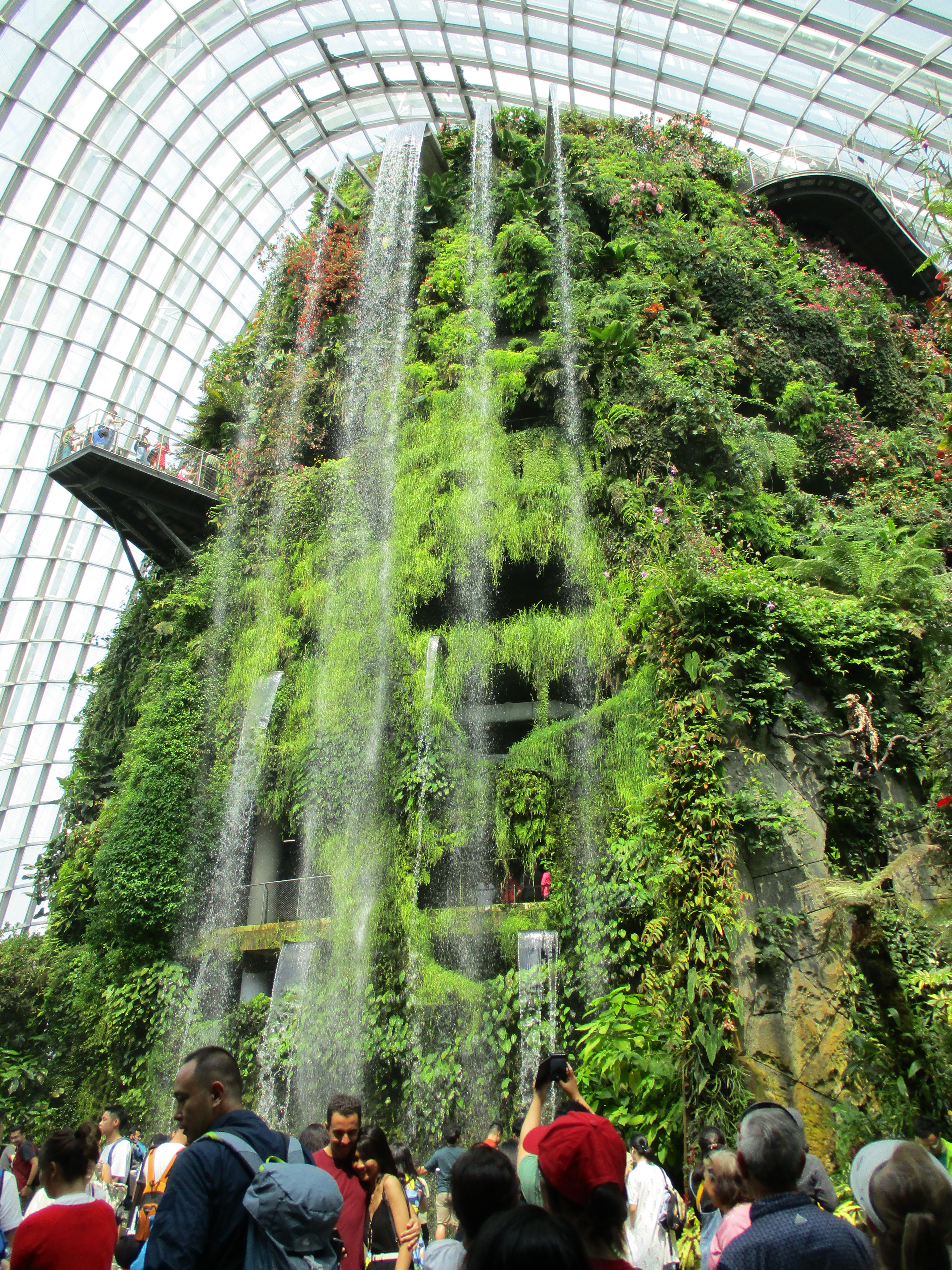
That’s about 100 feet of indoor waterfall in the Cloud Forest dome. All of this makes our little US Botanic Garden seem…quaint.

A tiny taste of the food scene

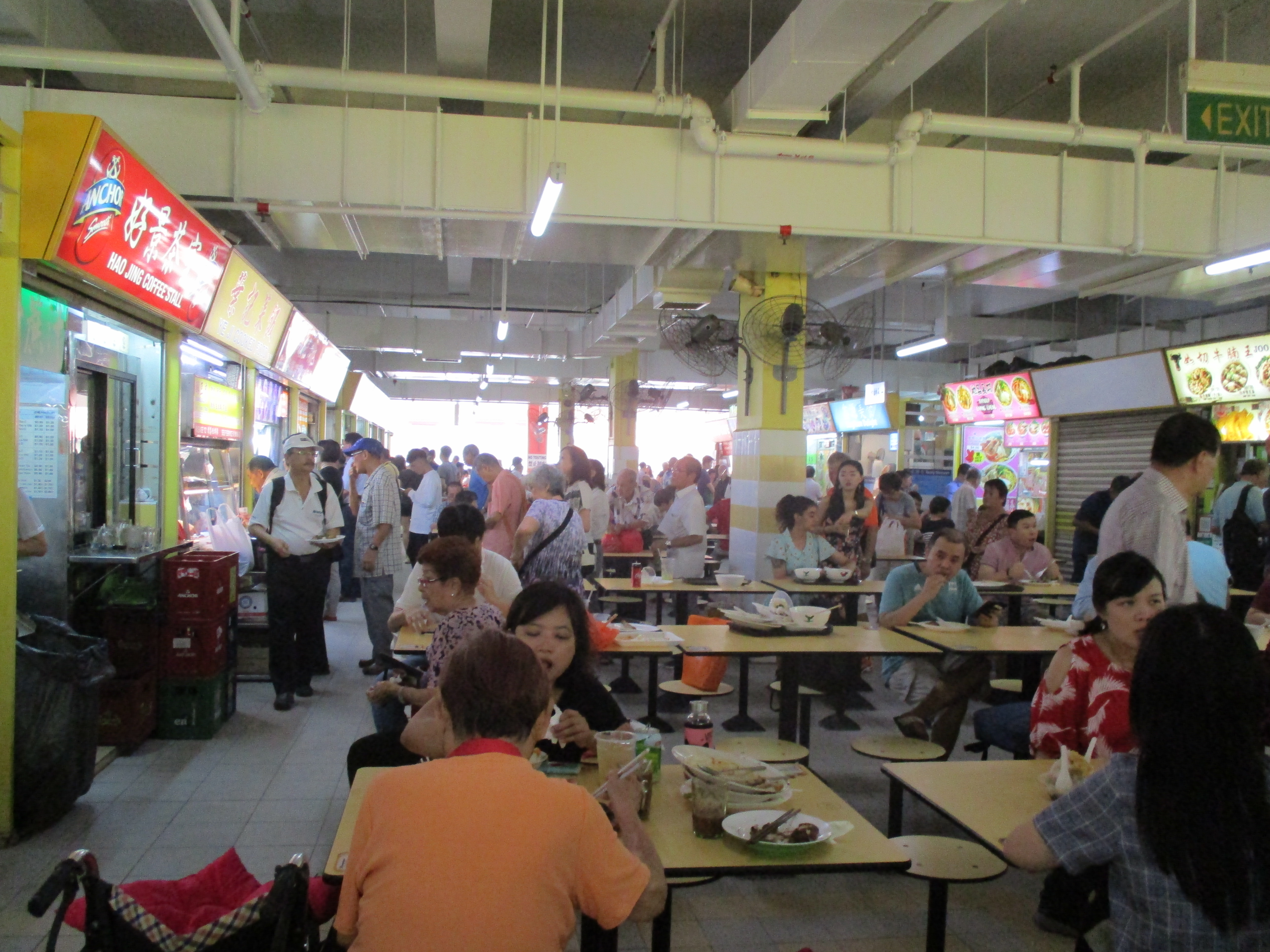
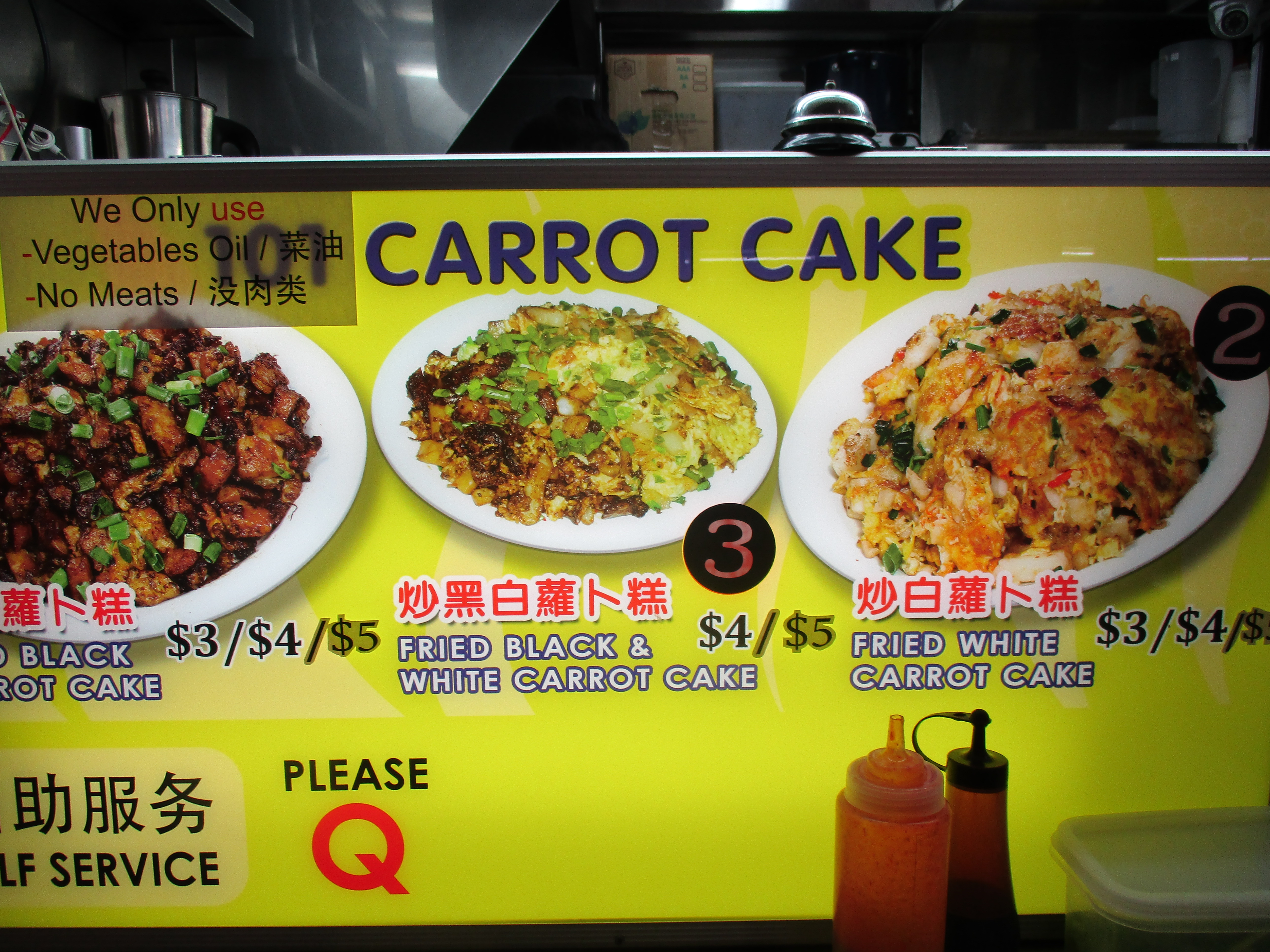
Singapore is renowned for its melting-pot food culture, primarily comprised of Chinese, Indian, and Malay influences. This is just a few of the 240+ hawker stalls in the Chinatown complex. Each stall specializes in a particular dish, the recipe for which can cost upwards of $1 million.
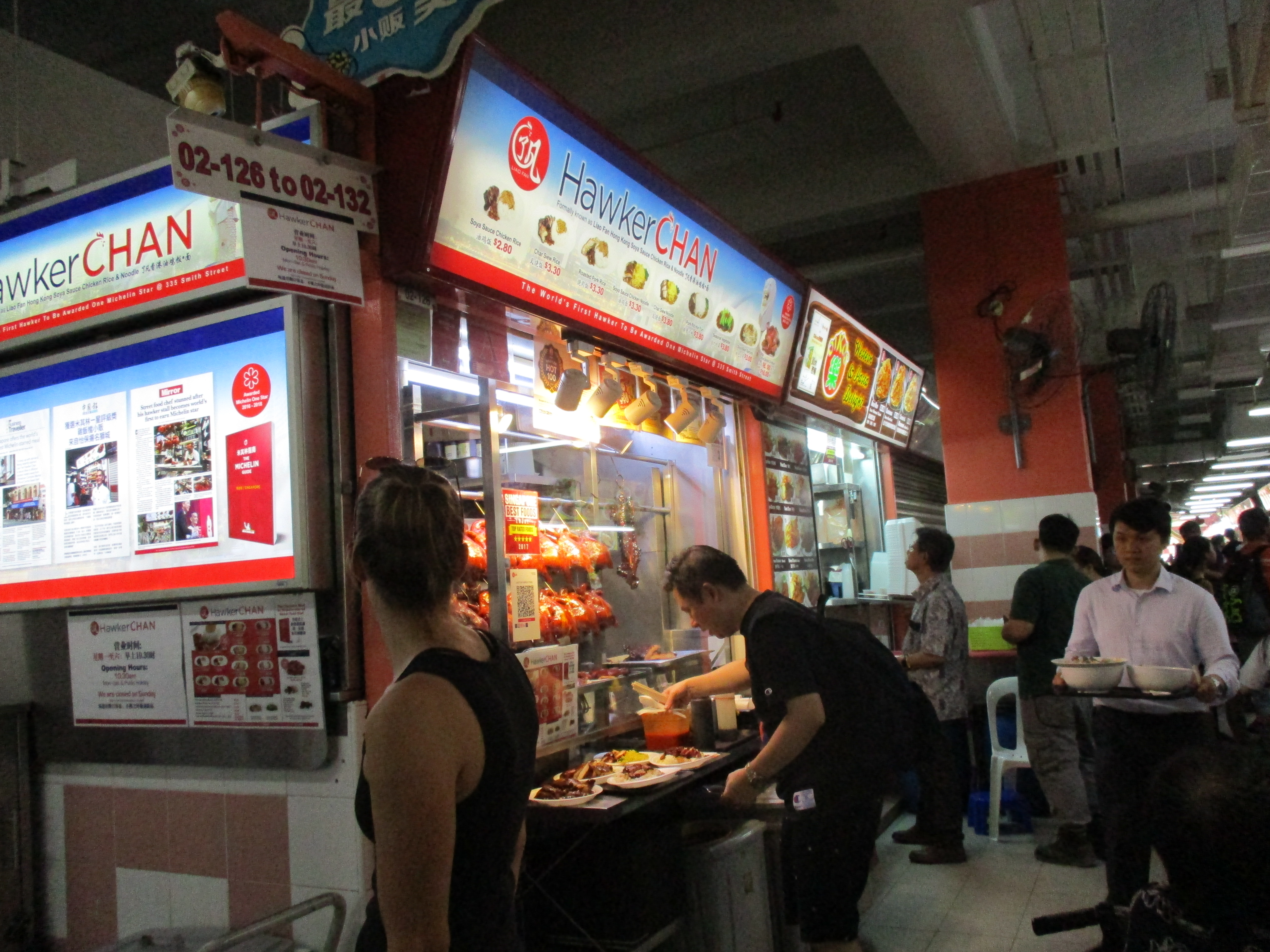
This stall has a Michelin star! Cheapest Michelin meal you’ll ever eat: soya sauce chicken rice.
?
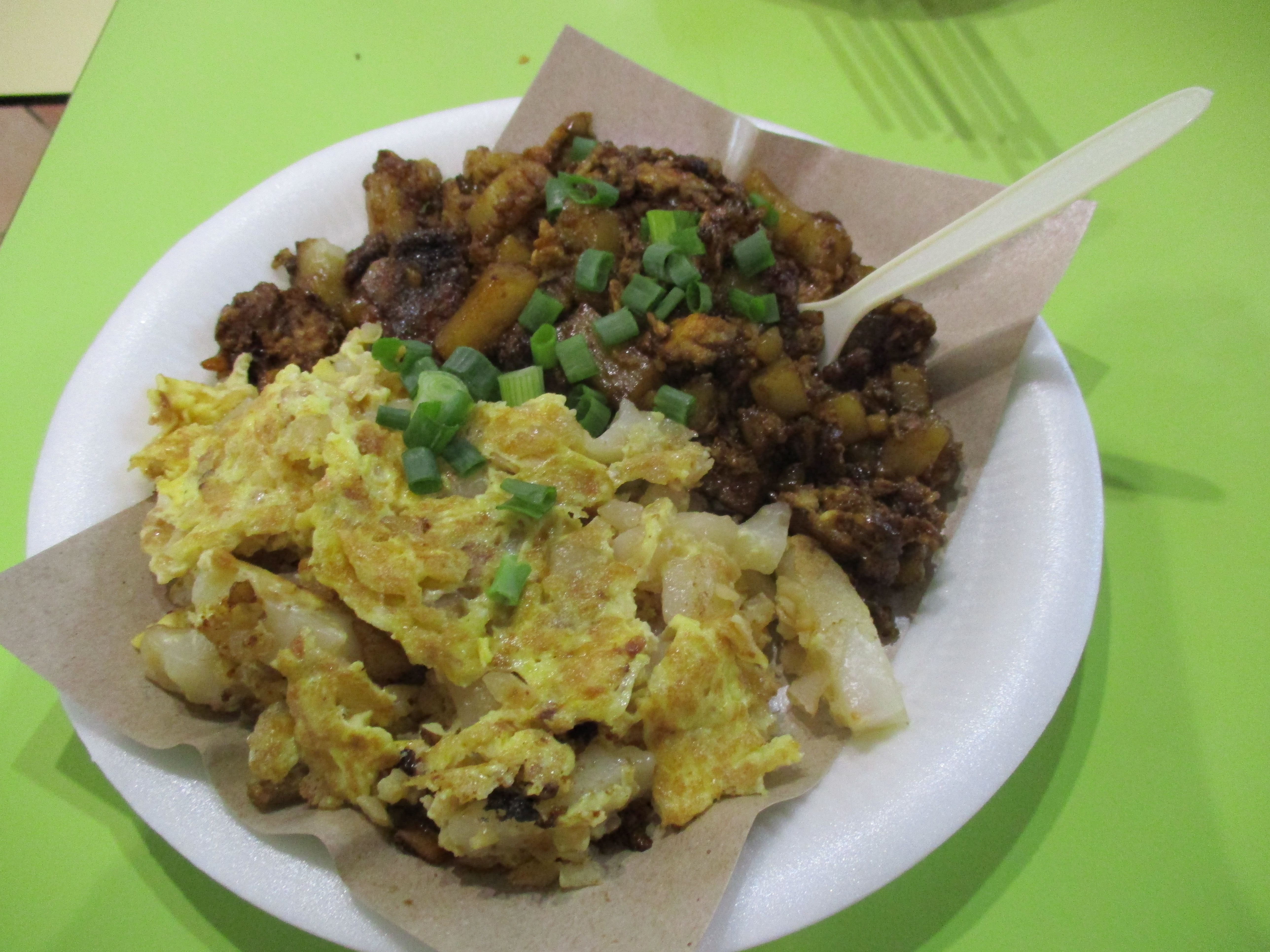
Daikon radishes (white carrots) are shredded and formed into cakes that are fried, then sliced and stir-fried again with egg and other goodness.
The “black” version has a sweet soy sauce added. I preferred the white, though.
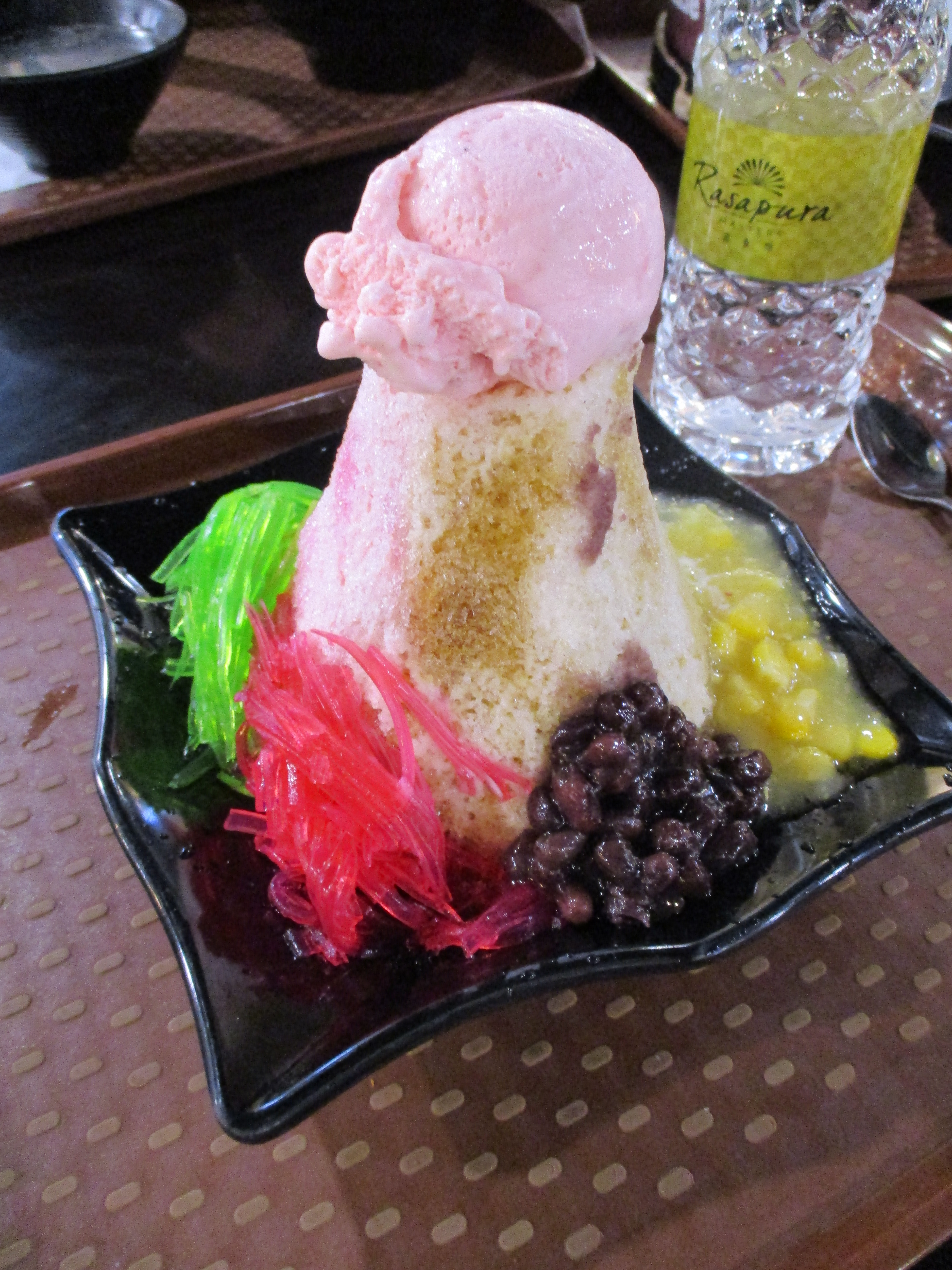
This is a close relation of the dessert called chendol. The beans and corn were good; the green and pink rice jellies were tasteless.

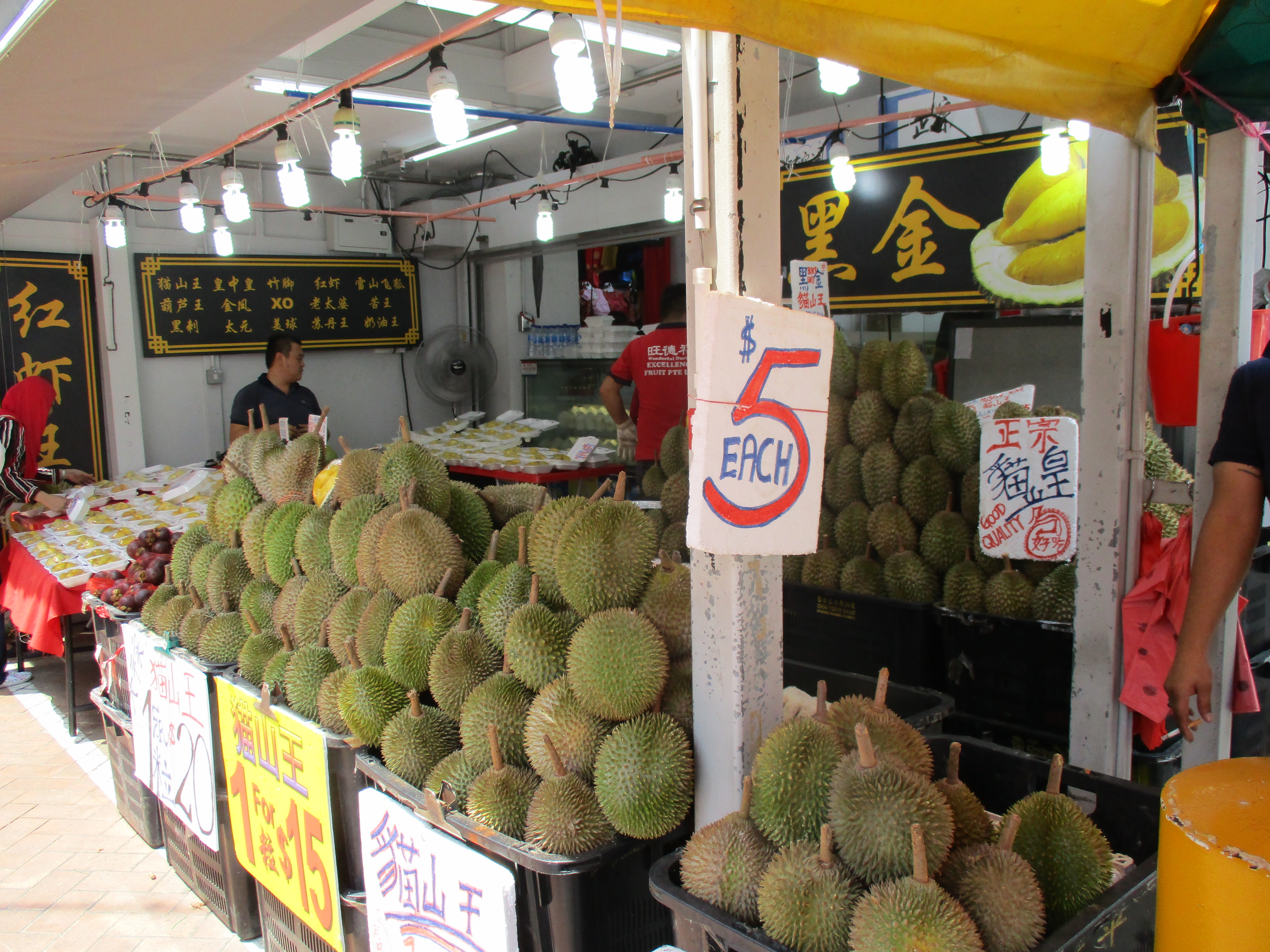
Durian: the haunting

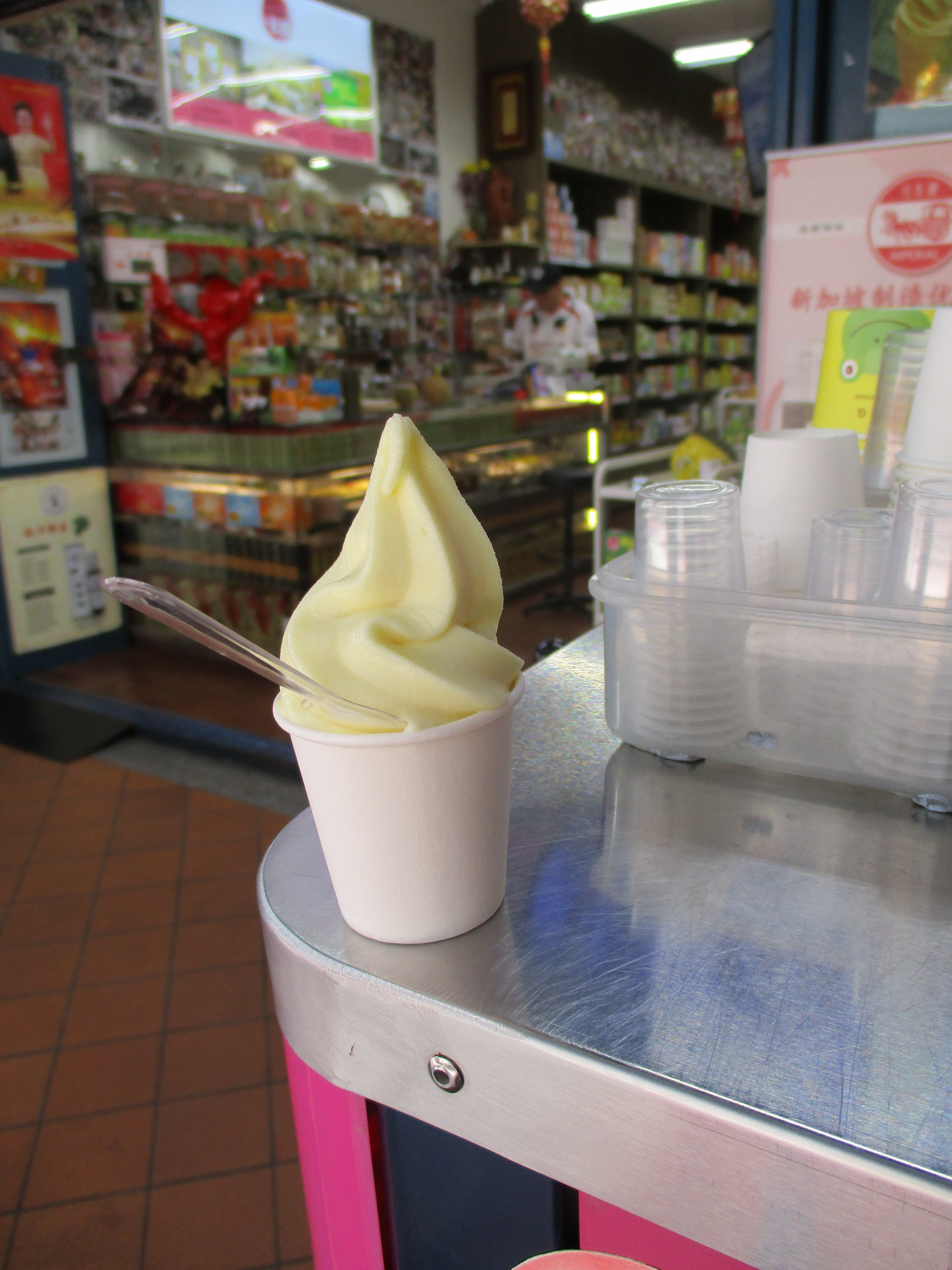
That innocent-looking little ice cream is durian ice cream. Imagine rotten onions and garlic. It was truly foul, and I finished it anyway. I was STILL tasting it hours later, much to my disgust.
It is the national fruit – they love this nasty thing.
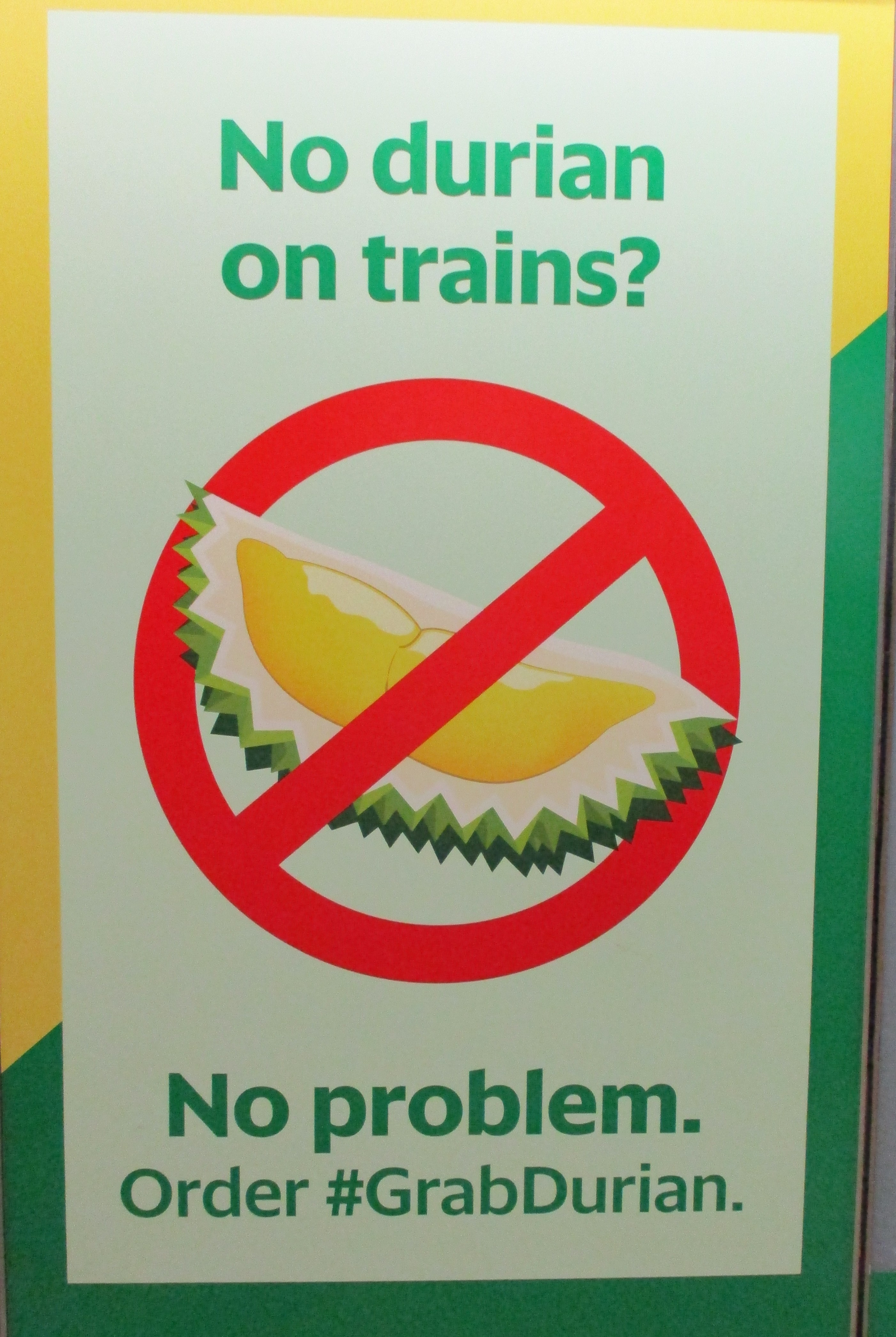
It is also not allowed in hotels due to the awful stink.
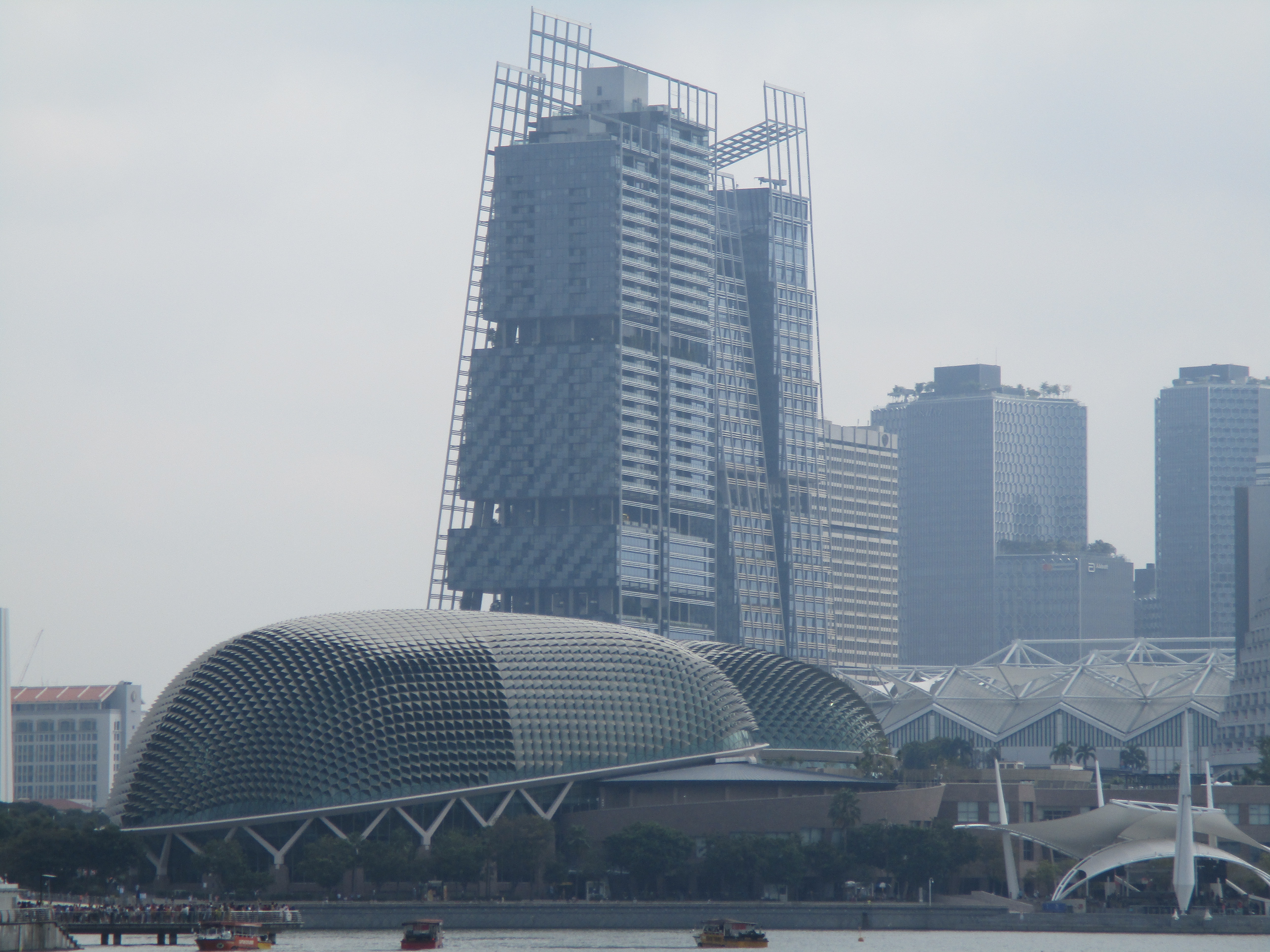
They claim Symphony Hall was not intentionally constructed like a durian. Right….
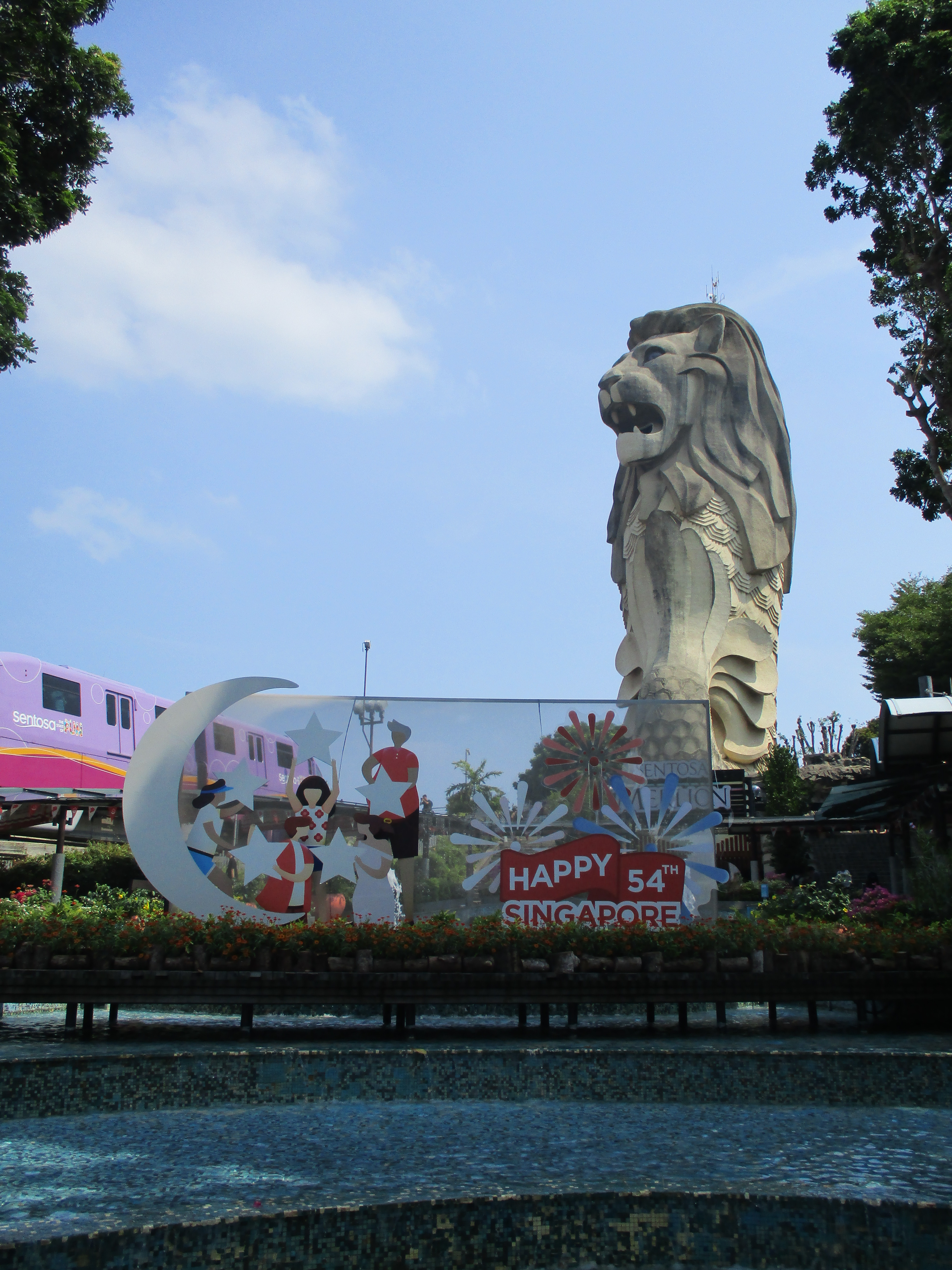
Happy birthday Singapore! It was exciting being here for your national day festivities.